
How to develop lip strength on the trombone with exercises.
To develop lip resistance on the trombone It requires daily discipline, efficient breathing control, and a structured exercise routine to strengthen facial muscles without causing excessive fatigue.
Advertisements
Trombonists of all levels face the challenge of lip fatigue during long performances, which compromises sound quality, intonation, and the accuracy of both low and high notes.
Building a firm and flexible embouchure involves training the orbicularis oris muscle in conjunction with diaphragm support, avoiding pressing the mouthpiece against the lips improperly.
We will analyze the most effective methods, the physiology of the embouchure, and a practical training plan to increase your instrumental durability with technical safety and consistency.
What is embouchure and how does it affect a trombonist's physical stamina?
The embouchure is the muscular and anatomical confluence formed by the lips, jaw, and teeth, responsible for transforming the airflow into acoustic vibration within the instrument's mouthpiece.
Advertisements
When facial muscles are weak, the performer tends to compensate by exerting excessive mechanical pressure with the trombone against the face, cutting off local tissue blood circulation.
This unnecessary force drastically reduces blood flow to soft tissues, causing immediate swelling, loss of flexibility, chronic muscle pain, and an inability to sustain notes for extended periods.
Strengthen the muscles with a focus on lip resistance on the trombone It allows you to channel the air column with less physical effort, maintaining a clean and full-bodied sound for hours.
What daily exercises are most effective for strengthening the lips?
Long notes represent the fundamental basis for building muscle endurance, as they stabilize the centralized lip vibration while aligning abdominal support without tension in the neck or shoulders.
Harmonious glissandos, without altering the position of the stick, develop lip flexibility, strengthening the muscle edges without requiring excessive mouthpiece pressure against the front teeth.
Exercises buzzing Using only the isolated mouthpiece helps to focus on the center of the sound, training the lips to vibrate efficiently without the acoustic resistance of the tube.
Moving up and down scales at gentle dynamics protects the lip tissue from microtrauma, ensuring fine muscle control, pitch accuracy, and greater ease in producing high notes.
Daily Training Plan Schedule for Lip Strength
| Training Stage | Recommended Duration | Specific Exercise | Main Technical Objective |
| Heating | 10 to 15 minutes | Buzzing in the mouthpiece and long, low notes. | Activate blood circulation without fatigue. |
| Flexibility | 15 to 20 minutes | Harmonic connections in the same position | Strengthen the corners of your mouth without pressure. |
| Strengthening | 20 minutes | Progressive scales and sustained notes | Increase muscle density and control. |
| Cooling down | 5 to 10 minutes | Smooth pedals and loose lip vibration | Relax the muscles and remove lactic acid. |
How does proper breathing prevent premature fatigue in the embouchure?
Air is the trombonist's primary fuel, acting as a constant column of support that relieves the direct physical strain concentrated on the facial muscles.
Read more: Ergonomics in a nutshell: avoid pain when studying for hours.

Breathing deeply using abdominal and lower rib expansion provides the necessary air pressure to project sound easily, eliminating the need for excessive tightening of the mouthpiece.
Maintain a continuous and relaxed airflow so that the lips only vibrate freely at the ideal resonance point, optimizing the body's energy expenditure during demanding performances.
Consult guidelines on musical acoustics, the history of wind instruments, and official academic collections by browsing the research portal of [website/organization name]. National Institute of Music (Funarte) regularly.
Why is adequate rest essential for increased longevity?
Facial muscles need sufficient time to regenerate after intense study sessions, assimilating the normal micro-lesions that occur during the tissue strengthening of the embouchure.
Practicing without regular breaks leads to overexertion, a clinical condition that degrades muscle fibers and causes a progressive loss of range, control, and sensitivity in tuning.
Learn more: Typical of the Christmas Orchestra: Besides the Bell and the Violin
Taking short five-minute breaks every twenty minutes of continuous training restores blood flow to the lips, prolonging the ability to study daily with high productivity.
Develop the lip resistance on the trombone It requires methodological patience, since real muscle gain happens during rest periods and not during moments of extreme fatigue.
When should you use the cool-down routine to speed up recovery?
Playing extremely low notes in the pedal area at the end of the daily routine relaxes contracted muscles, promoting a natural massage through the wide vibration of air in the tube.
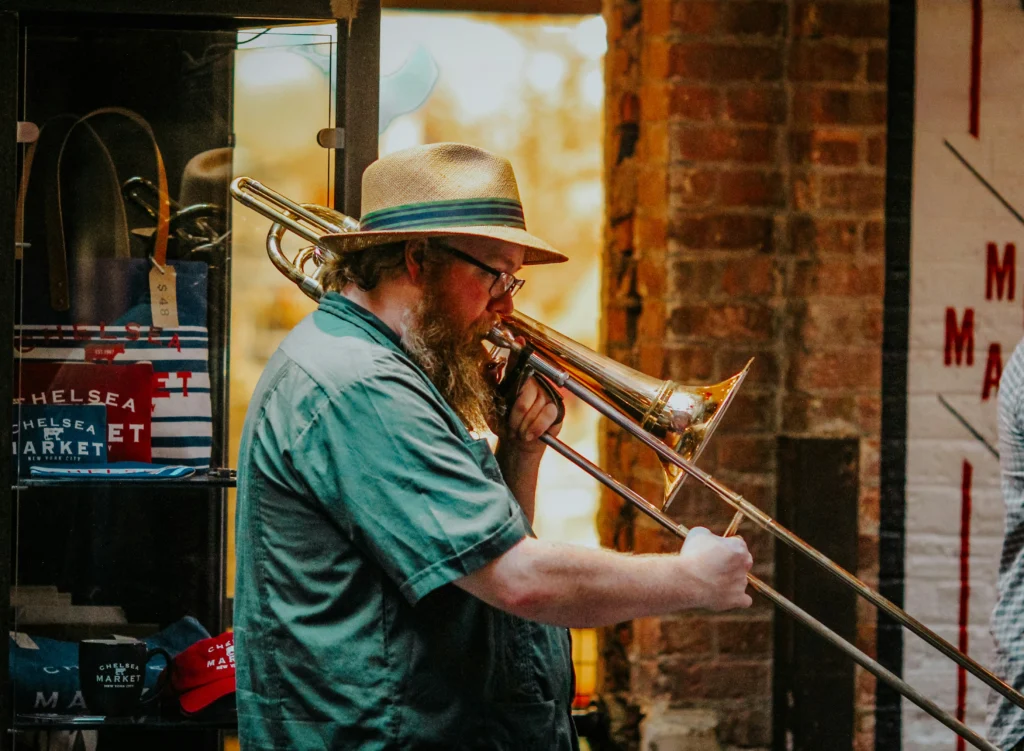
This practice stimulates blood flow to the oral region, accelerating the removal of lactic acid accumulated in the orbicularis oculi muscle during periods of high physical exertion in acute situations.
Read more: How the pipe organ works and its sound complexity
Combining the cool-down with loose lip vibration outside the mouthpiece eliminates residual tension, ensuring that the lips are rested for the next day's rehearsals.
To research pedagogical methods for brass instruments, orchestral collections, and reference scores for practical studies, visit the collection of... National Library of Brazil continuously.
Frequently Asked Questions (FAQ)
How many hours a day should I practice to build endurance?
The ideal study time ranges from one to two hours daily with regular breaks, as the quality of focused practice outweighs the total study time under muscle fatigue.
Does a larger mouthpiece help or hinder the development of the embouchure?
A mouthpiece that is proportional to your anatomy helps, but mouthpieces that are too large require more muscle strength, while models that are too small clean up the sound but limit the bass.
What should I do if my lip swells or hurts during a workout?
Stop playing immediately and apply cold compresses, allowing the muscles to fully recover before resuming playing the instrument to avoid serious and permanent injuries.
Does touching too hard damage the resistance of the lips?
Playing at the limit of dynamics without adequate air support quickly wears down the lips, so it is recommended to train at moderate dynamics to build resistant muscle fibers beforehand.
Improve the lip resistance on the trombone It's a gradual process based on correct technique and a balance between conscious study and rest. Apply these exercises to your daily routine and achieve a consistent, in-tune, and pain-free musical performance.
