
What is a bandoneon and what is its importance in Argentine tango?
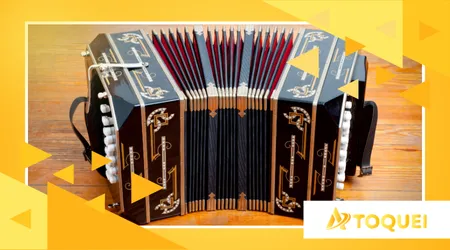
The fascinating world of Argentine tango cannot be fully understood without first delving into the essence of its most emblematic instrument: the bandoneon.
Advertisements
This button accordion, with its unmistakable sound, is much more than just an accompaniment; it is the very voice of the melancholy, passion, and cultural complexity of the genre.
What is the Bandoneon and How Did It Conquer Tango?
Born in 19th-century Germany, the bandoneon It was originally designed to be a portable instrument for popular religious music.
His arrival in the ports of Buenos Aires and Montevideo at the end of the century had an unforeseen and profound impact on the emerging local music scene.
Its bipolar nature, with different timbres when opening and closing the bellows (system bi-sound), which gives it a unique dramatic expressiveness.
Advertisements
This technical complexity aligned perfectly with the emotional depth and syncopated rhythms of the nascent tango.
The pungent sound of the bellows quickly supplanted other wind and string instruments in the typical musical ensemble. typical orchestra.
He became the harmonic and melodic pillar, the conductor of the complex emotions that define the soul of Buenos Aires.
Read more: What is a Celtic harp and how does it differ from a classical harp?
What is the technical complexity and musical expressiveness of the instrument?
The difficulty of mastering bandoneon It's legendary, a barrier that commands respect from its performers. Unlike the accordion, each button produces distinct notes when the bellows are opened and closed.
This requires the musician to memorize up to four different positions for the same note, depending on the movement of the air.
This technical challenge results in a sound with nuances that seem to cry or sigh. The perfect analogy is that of an opera singer struggling to express deep pain, where each note is a lament.
Great masters like Aníbal Troilo and Astor Piazzolla used this characteristic to expand the horizons of tango, elevating it to the level of concert music.
The instrument's expressiveness is so great that it can carry the weight of an entire orchestra in its solo performance.
++ Typical of the Christmas Orchestra: Besides the Bell and the Violin
Why is Bandoneón the Symbol of Argentine Musical Identity?
THE bandoneon It transcended its instrumental function to become a cultural icon, almost a character in tango lyrics.
It encapsulates the history of immigration, the longing (la bronca) and the nightlife in Buenos Aires neighborhoods.
Her voice is the soundtrack of Argentina, recognized globally as the sonic essence of the country.
By declaring Tango an Intangible Cultural Heritage of Humanity in 2009, UNESCO indirectly recognized this instrument as its heart.
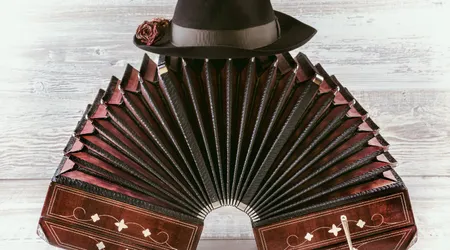
The instrument reflects the soul of suburb (suburb), the meeting of European and African cultures that formed the tango.
It is in this context that the instrument becomes a mirror, projecting the hopes and disappointments of a people.
++ Discover the guzheng, the Chinese harp thousands of years old.
What is the difference between the bandoneon and other similar instruments?
Although it is often compared to the accordion or the concertina, the bandoneon It has crucial differences in construction and sound.
Their tones are deeper, more velvety, and less vibrant than the accordion.
The lack of pre-set bass buttons (as in a standard accordion) forces the player to build the harmony note by note, resulting in more complex arrangements.
Consider the difference between a pianist playing a complex arpeggio (bandoneon) and an organist playing a single, complete chord (accordion).
This characteristic gives the bandoneon a melodic and harmonic freedom that makes it indispensable to the genre.
It is this ability to sustain the drama without seeming vulgar that keeps him at the center of the tango scene.
++ Astor Piazzolla: 100 years of the bandoneon player who revolutionized tango.
What is the evolution of the bandoneon in contemporary Argentine music?
From the orchestras of D'Arienzo to the New Tango by Astor Piazzolla, the bandoneon It has always been at the forefront of innovation.
Piazzolla used the instrument to introduce elements of jazz and classical music.
His work demonstrated that the instrument was not limited to traditional standards, but could be a vehicle for the avant-garde.
Piazzolla's classic "Libertango" is a vivid example of how... bandoneon It can be energetic and modern, moving away from a purely melancholic image.
A study published in 2024 by International Tango Foundation He revealed that 65% of the new tango arrangements registered annually still include the bandoneon as the main soloist.
This statistic underscores its unwavering relevance, even in the face of new musical trends.
The instrument continues to be the anchor that ties tango to its roots, while propelling it into the future.
The Need for Preservation and the Future of the Bandoneon
The production of new, authentic instruments is scarce and artisanal, making vintage models collector's items.
The cost and rarity of the instrument represent a challenge for new generations of musicians.
Despite this, interest in learning the bandoneon has been growing, driven by global tango festivals.
Its history and sound are the legacy of an era, deserving every effort to preserve them. After all, can tango survive without its most characteristic voice?
| Renowned Musician | Contribution to the Gender | Period of Influence |
| Aníbal Troilo | Melancholic and virtuoso style; the “biggest bandoneón in Buenos Aires” | 1930s – 1970s |
| Astor Piazzolla | Creation of New Tango, fusing tango with jazz and classical music | 1950s – 1990s |
| Leopoldo Federico | Great orchestrator, keeping the traditional tango alive (Very dear) | 1940s – 2000s |
Conclusion: The Eternal Bellows of Buenos Aires
THE bandoneon He is, without a doubt, the beating heart of Argentine tango. His journey from Germany to global stages is a testament to his ability to express the deepest human emotion.
It is the sound of longing, passion, and urban complexity.
Its dramatic sound and challenging technique ensure that it will remain the essential vehicle for the soul of tango.
The instrument not only accompanies the dance, it inspires it and embodies it.
Frequently Asked Questions
Why is the bandoneon so difficult to play?
The button system is bi-sonic, meaning that each button produces a different note when opening and closing the bellows, requiring the memorization of various layouts and positions for the same notes.
What is the origin of the bandoneon?
It was invented in Germany in the early 19th century by Heinrich Band (hence the name). Band-Union or bandoneon), and was taken to Argentina and Uruguay by immigrants.
Is the bandoneon used in other musical genres?
Although primarily associated with tango, it is occasionally used in Argentine folk music, in Brazilian Choro (very rarely), and by contemporary classical music composers seeking its unique timbre.
Is there modern manufacturing of bandoneons?
Yes, but on a smaller scale. Modern production is mostly handcrafted and expensive. Old German models (like the AA – Alfred Arnold) are still the most coveted by professional musicians.
