
How to use cumulative songs in early childhood education
Learn to Using cumulative songs in early childhood education It transforms the school environment into a dynamic space, stimulating memory, oral language, and motor coordination in a playful and educational way.
Advertisements
These traditional melodies add elements to each repeated verse, challenging children to retain information sequentially while following the narrative's evolution with growing enthusiasm in the classroom.
What are cumulative learning experiences and why do they promote language development in childhood?
Cumulative songs are compositions structured in linked repetitions, where each new verse incorporates all the elements mentioned previously, requiring continuous attention from young listeners during performance.
Systematic repetition strengthens phonological awareness, expands vocabulary, and increases working memory retention capacity, preparing the child's brain for future literacy processes.
Integrate the strategy of Using cumulative songs in early childhood education It allows teachers to work on logical and temporal sequencing, helping young students understand concepts of order, addition, and cause and effect.
Advertisements
The structured pace and predictable narrative reduce anxiety in shy children, encouraging collective oral participation without the pressure of individual performance in front of their peers.
How to plan sequential musical activities adapted to the different age groups in early childhood education?
Selecting tracks that match the group's developmental level ensures that the challenge is stimulating, avoiding both frustration from excessive complexity and disinterest due to simplicity.
Using visual aids such as illustrated cards, finger puppets, and concrete objects helps to reinforce the accumulated elements, connecting the abstract representation of words to the corresponding images in the activity.
The following table presents the practical correlation between age groups, classic Brazilian songs, and the cognitive skills directly addressed in daily school planning:
| Age Range | Example of a Cumulative Song | Priority Cognitive Skill | Recommended Educational Resource |
| 1 to 2 years | “"The Old Woman Spinning"” | Auditory attention and sound imitation | Body gestures and large images |
| 3 to 4 years | “"The Mountain Tree"” | Short-term memory and vocabulary | Panel illustrated with furniture pieces. |
| 5 to 6 years | “"I Went to the Market" / "Woodpecker Farm"” | Sequential reasoning and literacy | Cards with associated words and pictures. |
| All ages | “"The House That Jack Built"” | Phonological awareness and rhythm | Group dramatization with props |
Aligning these musical proposals with the BNCC (Brazilian National Curriculum Base) objectives enriches teaching practice, promoting meaningful learning through playful and expressive interactions in the daily life of the early childhood institution.
Why does music education with repetitive sequences promote inclusion and neurodiversity in schools?
The highly predictable structure of repetitive compositions offers a safe environment for children with Autism Spectrum Disorder (ASD) or delays in speech and language development.
Anticipating the verses reduces sensory overload, allowing neurodivergent students to anticipate physical or verbal responses, actively integrating with the class during group discussions.
To establish pedagogical guidelines and consult national legislation on early childhood education, access the portal of... Ministry of Education (MEC).
To know Using cumulative songs in early childhood education It strengthens empathy and cooperation among students, creating collective moments where everyone sings and moves in the same rhythm.
The combination of sound, movement, and visual resources activates multiple sensory channels simultaneously, optimizing the neurological processing of information in the classroom in a natural way.
What mediation and reception techniques make collective singing more engaging and participatory?
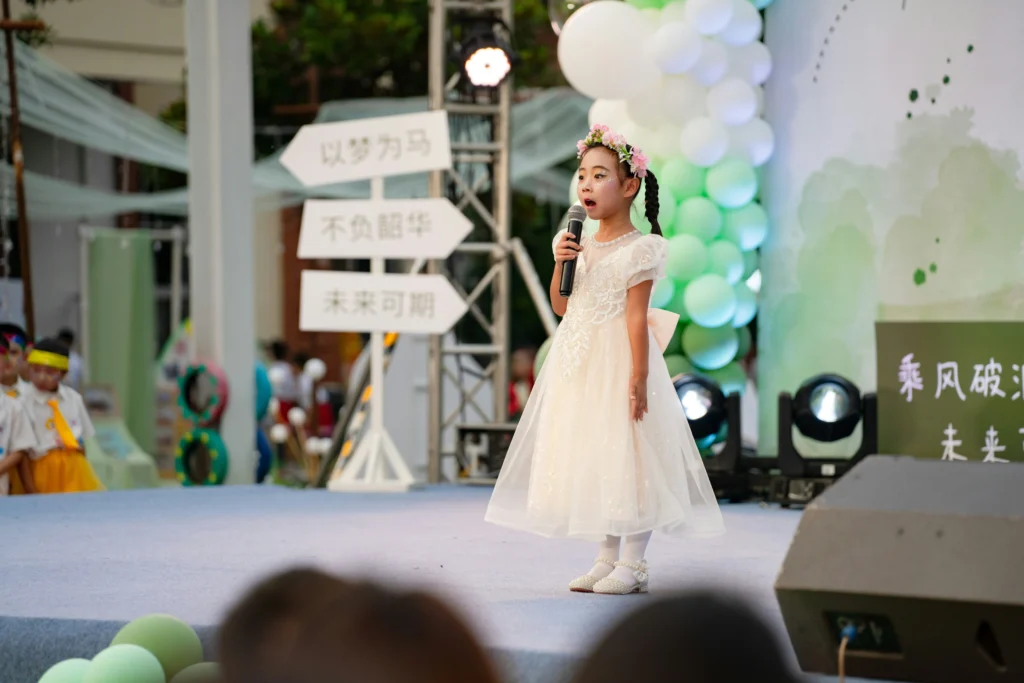
Starting the music at a slow tempo and gradually speeding up as the group masters the sequence increases the playful challenge, keeping the group focused from beginning to end.
Assigning each child or small group the responsibility for a specific character in the story encourages attentive listening, as each one must enter at the exact moment.
Read more: How to develop children's sound perception through creative games.
Incorporating clapping, finger snapping, and simple percussion instruments throughout the performance works on motor coordination and a sense of musical pulse in younger students.
Recording the sequences on felt-tip pens as the music progresses transforms sound into a graphic representation, paving the way for formal reading and writing in an intuitive manner.
Where can I find up-to-date teaching materials and resources for music teacher training?
Researching collections of popular culture and materials from renowned music educators enriches the teacher's repertoire with modern arrangements and authentic regional songs from Brazilian folklore.
Extension courses in children's music education offer theoretical and practical tools to transform traditional songs into multidisciplinary projects encompassing literature, arts, and mathematics.
Learn more: How to incorporate music therapy into children's daily routines
To find academic articles on child development and research in neuroscience applied to education, explore the repository of... Oswaldo Cruz Foundation (Fiocruz).
Recognizing the impact of Using cumulative songs in early childhood education It validates music as a rigorous and indispensable pedagogical tool for the holistic development of the human being.
Skilled teachers who intentionally use musical language transform the school routine, building positive emotional memories and a solid cognitive foundation for children throughout their lives.
Music as a cornerstone of holistic child development.
The intentional application of cumulative songs combines the charm of circle games with the technical rigor necessary to stimulate complex cognitive, linguistic, and socio-emotional skills.
Read more: How does music influence the development of children's motor coordination?
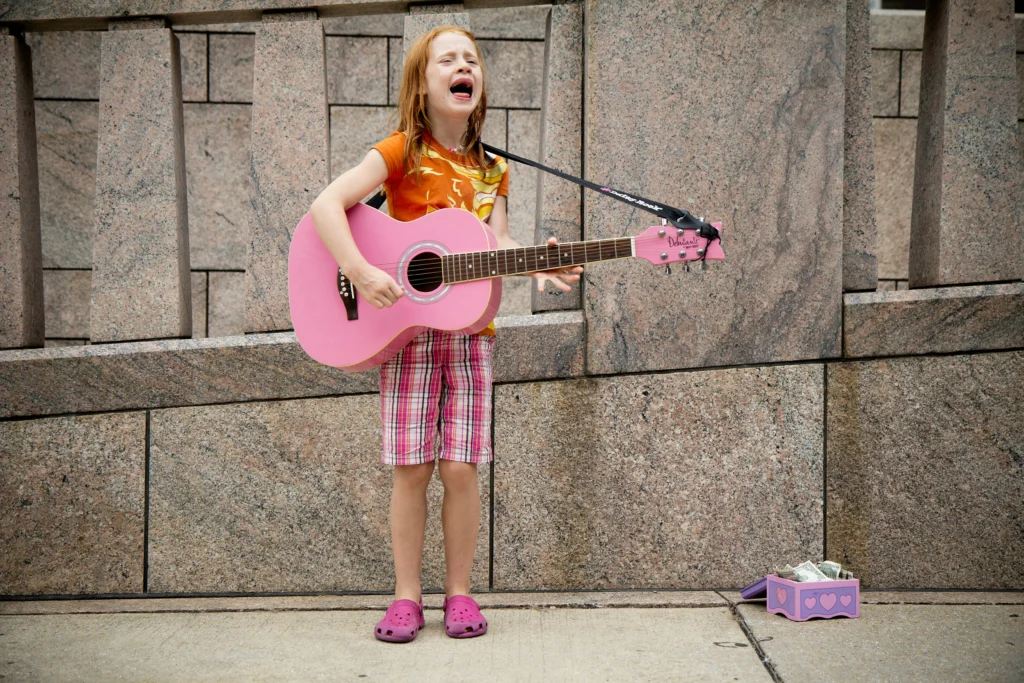
To know Using cumulative songs in early childhood education It enriches teaching practice, making learning dynamic, inclusive, and deeply meaningful for all children in the school.
Plan your music lessons, explore national folklore, and transform your class's routine with activities that sing, teach, and enchant every day.
FAQ (Frequently Asked Questions)
What is the best frequency for incorporating cumulative songs into the school routine?
Incorporating cumulative songs daily into circle time or activity transitions helps solidify the repertoire, creates predictability in the routine, and maintains the children's continuous engagement.
How can we help children who have difficulty memorizing long sequences?
Use visual aids such as cards with images in chronological order and make specific gestures for each element. This activates visual and kinesthetic memory along with auditory memory.
Can cumulative songs be used to teach math in early childhood education?
Yes. The cumulative structure works with concepts of ordinal and cardinal counting, progressive addition, logical ordering, and conservation of quantity in a practical and contextualized way.
Do you need to know how to play musical instruments to apply this methodology?
No. The main resource is the teacher's voice and body percussion. Simple everyday school objects can serve as percussion instruments to accompany the rhythm of the class.
