
Homemade sound toys: how to build them at home with children
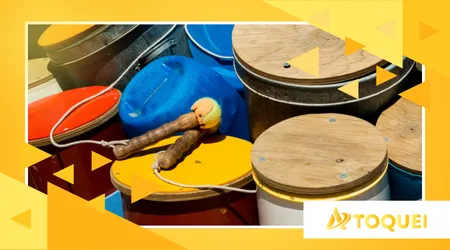
The search for activities that combine fun, learning, and sustainability has led to handmade sound toys to a new level of interest and relevance.
Advertisements
These homemade instruments are much more than just a hobby; they open a genuine portal to children's creativity and family interaction.
Building a musical toy with your child is a profoundly valuable experience, as it strengthens emotional bonds while stimulating cognition and development.
So let's explore the world of these unique objects and discover how to create fantastic instruments at home, using only simple materials and a large dose of imagination.
Ultimately, what is the true value of a shared moment?
Advertisements
The answer lies in the lasting emotional memory that is built, transforming this activity into a sonic legacy of affection and learning for the whole family.
What exactly are handcrafted sound toys?
Handmade sound toys are musical instruments or sound-generating objects that are primarily made from recycled, reused, or natural materials.
Their creation mostly takes place in the home environment, clearly distinguishing them from mass-produced industrial items.
Each piece carries a unique story, reflecting the care and inventiveness of its creator.
They can mimic the shape of known real instruments or, even more creatively, be unique objects, with the total focus residing in the exploration of diverse sonic possibilities.
It's fascinating to watch how cans, grains, cables, and cardboard gain a new life, transforming into vibrant rattles, resonant drums, or even rudimentary marimbas.
This entire practical process promotes a more conscious and engaging education.
Read more: Children's songs: cultural and educational importance
How does building instruments at home benefit child development?
Actively participating in the creation of a toy is an incredibly enriching experience for children.
Firstly, the activity improves fine motor coordination through the handling of simple materials and tools.
Children learn intuitively about musical cause and effect, sparking a genuine interest in the basic physics of sound.
The entire process involves planning, measuring, and solving problems inherent to construction. This fosters the patience and concentration necessary for completing tasks.
Furthermore, the child feels accomplished and proud of the result of their own effort, which boosts self-esteem.
There is also a direct incentive for free artistic expression, and an important sense of environmental responsibility is strengthened.
++ How does the Suzuki method work for children?
Using what would otherwise be discarded as trash transforms a child's perception of consumption and is a practical lesson in sustainability for everyone involved.
What simple materials can we use to start creating?
The great advantage lies in the fact that the ideal raw material for this activity is usually readily available, often within one's own home.
Consider using plastic containers, cardboard boxes of different sizes, and empty, clean cans. PET bottles and bottle caps, for example, are excellent for creating percussive sound effects.
Dried grains such as rice or beans are used effectively to create the sound of rattles.
Rubber bands or strong strings can be stretched to create strings for small lutes or plucked instruments.
Dry branches or sturdy sticks, in turn, can be easily transformed into drumsticks and rhythmic rods.
Old fabrics and scraps can be used for finishing, customizing, and adding artwork to the instruments.
++ Is the saxophone suitable for children? A guide for curious parents.
It is essential to gather all these items and organize them before starting the project, ensuring a safer and smoother workflow.
Always remember to ensure that the material is properly cleaned and, above all, the child's safety should be the priority.
How to build a tin drum and a wooden xylophone?
How to make a simple tin drum?
To build an efficient drum, use a large powdered milk or chocolate drink can. The lid can be replaced with party balloons, whose rubber bands should be used to cover the top opening.
++ 6 ideas for making musical instruments at home
It's crucial to stretch the balloon's rubber band well to ensure a more resonant and defined sound. Secure the edge with wide, strong adhesive tape or a thick elastic band.
For personalization, decorate the side of the can with colored paints, self-adhesive paper, or collages. For the drumsticks, use two sturdy pencils with felt balls or small pom-poms on the ends.
With this simplicity, the new drum is ready and waiting for the rhythm of the invention to be explored. This is a rhythmic instrument that is easy and quick to build.
How to make a xylophone using wooden planks?
For a more melodic and complex sound, the challenge could be creating a homemade xylophone. Gather pieces of reclaimed wood of varying lengths.
These should be fixed side by side, maintaining a uniform distance, on a solid, flat base. The variation in the size of each piece will define the different musical notes.
In addition to length, it's important that the thickness is uniform to maintain sound quality. Use strong glue or small nails to securely attach the pieces to the base.
The sound can be precisely adjusted by sanding the edges of the piece: a higher-pitched sound is obtained by decreasing the size.
To play, use lightweight drumsticks made of thin sticks or cables, and the melody of creativity will be ready to be performed.
Neuroscience has demonstrated, on numerous occasions, the multiple benefits of musical practice on brain development.
It is known that early musical exposure, even through handcrafted instruments, can significantly improve language skills.
A relevant study published in Journal of Educational Psychology This demonstrates, for example, that researchers at Columbia University have pointed to a positive and consistent correlation between musical learning and performance in mathematics, as well as improvements in spatial reasoning skills.

Build handmade sound toys It aligns perfectly with this progressive educational vision.
What are the cognitive benefits of handcrafted music education?
| Cognitive Benefit | Brief Description | Practical Example in Construction |
| Motor Coordination | Improved use of hands and fingers. | Cutting and pasting requires materials. |
| Mathematical Skill | Understanding proportions and measurements. | Determine the exact size of the rods. |
| Phonological Awareness | Distinction of timbres and rhythms. | Experiment with different grains in a rattle to obtain distinct sounds. |
| Creativity | Generating original ideas and solutions. | Decoration and personalization of the object. |
Why do handcrafted sound toys outperform mass-produced ones?
Homemade instruments possess an intrinsic value that mass production can never achieve. They are unique, carrying the identity and effort of those who built them.
The cost is extremely low or nonexistent, democratizing access to art and music.
Because the child has actively participated, they value something they helped create much more than a finished product.
Comparing them is like choosing between a mass-produced work of art and a handmade piece, crafted with dedication and affection.
The child's connection with the created object is deeper and more real.
Furthermore, they stimulate the senses in a more organic way, without the plastic perfection of expensive store items, but with the beauty of imperfection and uniqueness.
They promote conscious and environmentally friendly consumption.
You handmade sound toys They are, in essence, an act of love and responsibility.
What are the secrets to maintaining engagement and security?
For the project to develop successfully, patience is undoubtedly fundamental. It's important to let the child explore the possibilities and make mistakes during the creative process.
The adult's role should be that of a facilitator and guide, never that of an executor of the task.
The use of scissors and strong glues should be strictly supervised, and small parts should be prevented from being swallowed, prioritizing safety.
Furthermore, it is essential that the sound produced by the toy is pleasant and stimulating, not irritating to the ear. Suggest exploring different textures and materials for new sonic discoveries.
In this artisanal context, music should always be seen as a form of enjoyment, without the imposition of rigid rules about how the object should sound.
What truly matters is the creative process and the quality of family interaction. Invest in personalization, allowing the child to choose the colors and details.
The finishing touch in the decoration is the unmistakable mark of your authorship.
The future lies in the rhythm created at home with Handmade Sound Toys.
The trend of valuing handmade items (handmadeand the movement DIY (Do It Yourself) is growing globally, and the handmade sound toys They represent an intelligent and creative response to the rampant consumerism of modern society.
They encourage families to spend quality time together, engaging in activities that foster mutual creation.
Creating their own music is an empowering factor for young children, teaching them about culture, rhythm, and different sounds in a hands-on way.
This simple activity is an invaluable investment in the future, as it nurtures curious, innovative minds sensitive to the art of sound.
After all, what is life if not a harmonious symphony of unique experiences? May your home be filled with the joyful sound of family invention.
The next musical masterpiece could literally be in your hands. handmade sound toys They are waiting for you.
Transform discarded materials into art and fun. handmade sound toys They are a promise of smiles.
Build your own orchestra of handmade sound toys. The value of music begins with your active and conscious participation.
Frequently Asked Questions
Why use recycled materials to make instruments?
Using recycled materials teaches about sustainability and proper disposal, and demonstrates that the intrinsic value of an object lies not in its purchase price, but in the creativity employed and its potential for reuse, transforming what would be trash into a form of art.
Is musical knowledge necessary to build these toys?
No, the main and most immediate objective is sensory and rhythmic exploration and shared enjoyment, not erudite musical precision.
More formal musical knowledge will emerge naturally and organically through playful experimentation with the various sounds that are produced.
