
How to apply sensory music therapy at home with children.
To know Apply sensory music therapy at home with children. It goes far beyond turning on the radio or offering toys that emit repetitive electronic noises.
Advertisements
The goal is to create an environment where sound connects to touch, sight, and movement, transforming auditory perception into a complete and profound cognitive experience.
What is sensory musicalization and why is it different?
Sensory musicalization is a pedagogical approach that uses sound as a tool to explore other senses, promoting a richer neurological integration.
Unlike traditional instrumental instruction, here the focus is on free exploration and the body's response to different vibratory and rhythmic stimuli.
In this model, the child is not merely a passive listener; they become an experimenter with sound textures, relating the weight of an object to the sound it produces.
Advertisements
There is something unsettling about how modern education prioritizes screens, neglecting the tactile richness that physical sound provides to the child's brain.
Learn to Apply sensory music therapy at home with children. It requires parents to rediscover active listening, observing how young children react to silence and noise.
It is a process of mutual discovery, where error does not exist, only constant curiosity about the infinite possibilities of sound vibration.
How to create an educational music corner without spending a lot of money?
To create an efficient space, you don't need expensive pianos, but rather a smart curation of materials that offer a diversity of tones.
Use wicker baskets to organize wooden objects, metal objects, and seeds, allowing the child to freely choose what they want to explore at any given time.
The acoustics of the environment also matter, as excessive echo can cause ear fatigue and irritability in both children and adults.
Rubber or fabric mats and curtains help absorb sound, making the experience more comfortable. Apply sensory music therapy at home with children. much more enjoyable and safe.
This is often misunderstood: the sound corner shouldn't be a dumping ground for clutter, but a place where sound is treated as something precious.
To deepen your knowledge about child development, the portal of Maria Cecilia Souto Vidigal Foundation It offers valuable scientific resources about early childhood in Brazil.
What hands-on activities stimulate the senses through sound?
One fascinating activity is the "sound path," where different textures on the floor, such as bubble wrap or dry leaves, produce sounds as the child walks.
This connects auditory perception to balance and touch, reinforcing neural connections that will be fundamental for future literacy and mathematical reasoning.
Learn more: Music and child neurodevelopment: what studies say
Another effective technique involves using glass jars with different water levels, allowing one to visually perceive the relationship between quantity and height.
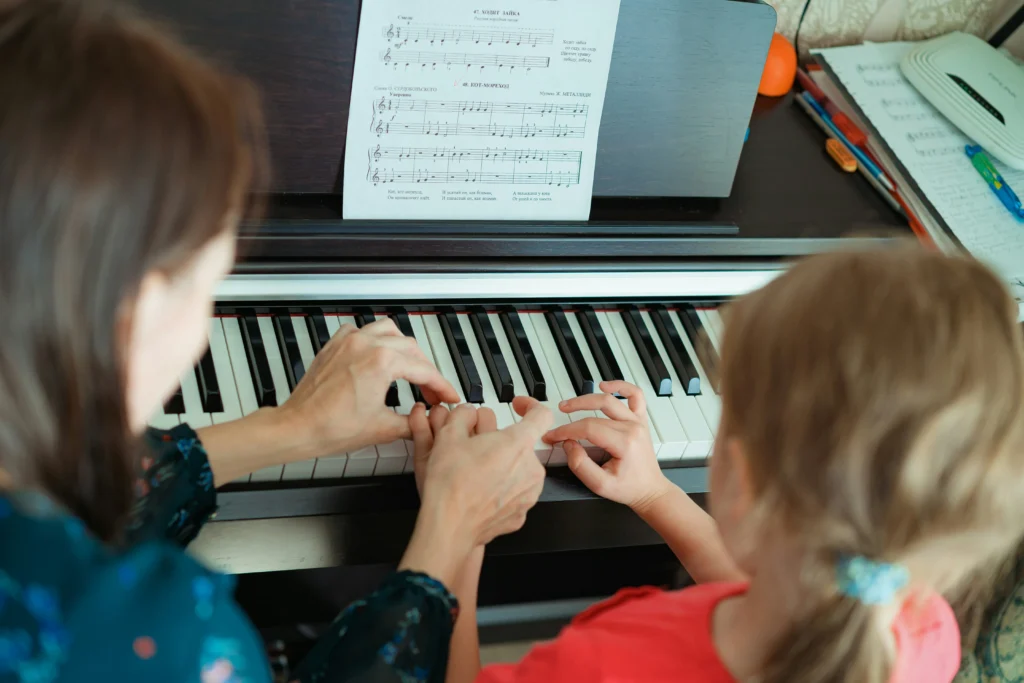
Lightly tapping with a spoon demonstrates how the physical medium alters the vibration, transforming a musical activity into a practical physics lesson.
Often, the simplicity of a rattle made with rice teaches more about rhythm and weight than expensive, automatic technological toys.
The secret of Apply sensory music therapy at home with children. The goal is to allow them to feel the vibration in their own bodies by touching surfaces that resonate.
| Material | Sensory Stimulation | Educational Objective | Suggested Age Range |
| Seeds and Grains | Auditory and Tactile | Perception of intensity and rhythm | 6 months to 3 years |
| Metal Pots | Auditory and Visual | Differentiation of timbres and brightness | 1 to 4 years |
| Lightweight Fabrics | Visual and Kinesthetic | Body language and fluidity | 0 to 5 years |
| PVC pipes | Auditory and Spatial | The concept of echo and sound projection. | 3 to 6 years |
| Water in Glasses | Auditory and Cognitive | Relationship between volume and frequency | 4 to 7 years |
Why is silence fundamental in the musical education process?
Working with silence is just as important as producing sound, because it is in the absence of noise that a child develops concentration and listening skills.
Practicing the "quiet game" teaches the child to notice subtle sounds in the environment, such as the wind, the rain, or their own calm breathing.
We often overlook this in homes where the television or background music is left on all day without a clear educational purpose.
Read more: How to identify early musical talent in young children.
Creating deliberate pauses during musical play helps the brain process what has been heard, preventing sensory stress and promoting lasting calm.
To the Apply sensory music therapy at home with children., Remember that contrast is the soul of music; the strong only exists because the weak exists.
Teaching children to value silence prepares the ground for future sounds to be appreciated with much more attention, respect, and aesthetic sensitivity.
What are the long-term benefits of this household practice?
Children exposed to organized auditory stimuli show greater ease in acquiring vocabulary, since music and speech share brain processing networks.
Rhythm helps in the segmentation of words, facilitating the understanding of phonemes and accelerating the reading and writing process in the early years.
Read more: Instruments for Autistic Children: How to Use Music in Sensory Development
Furthermore, musical education promotes emotional regulation, offering a safe outlet for the expression of feelings that the child cannot yet verbalize.
The act of playing a drum or waving a handkerchief to the sound of a soft melody reduces cortisol levels in the body.
Implementing these routines strengthens the emotional bond between parents and children, creating sensory memories that will last a lifetime and hold profound meaning.
To understand how music affects neuroscience, the website of World Health Organization (WHO) It provides guidelines on the healthy development of children and young people.
Music as a tool for genuine connection.
To believe that Apply sensory music therapy at home with children. It's a complex technical task, that's a misconception; the real barrier lies in our resistance to being playful.
By lowering the volume of the world and focusing on the vibration of a simple metallophone, we are building indestructible cognitive bridges.
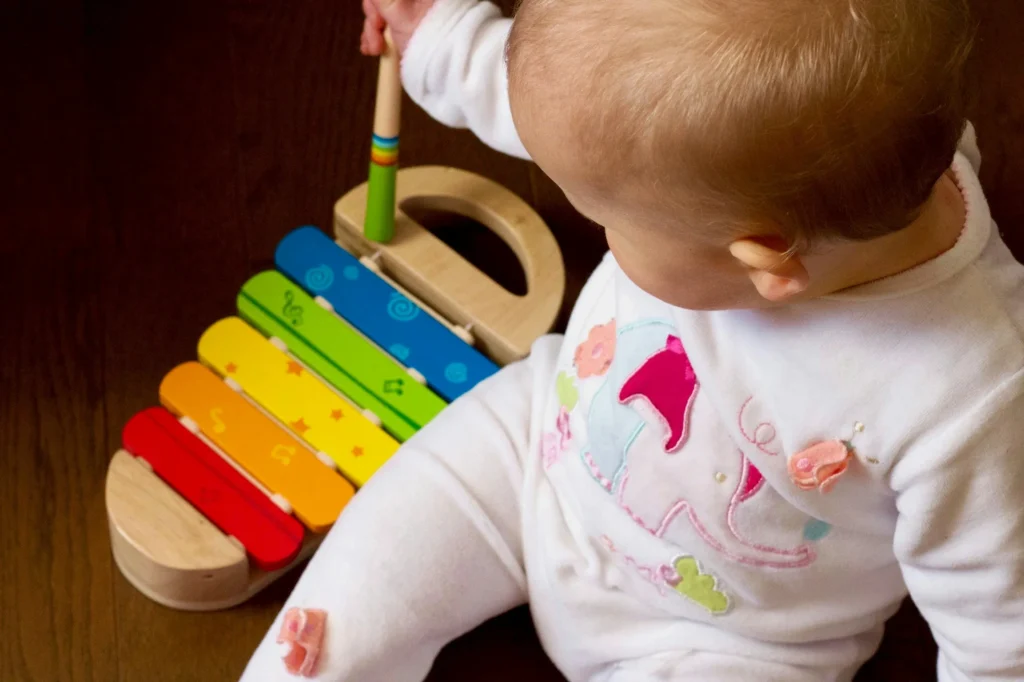
Music is not just entertainment, but the alphabet of feelings and the foundation of a curious, resilient, and profoundly human intellect.
FAQ: Questions about Sensory Music Education
Do I need to know how to play an instrument to teach my child?
Absolutely not. The focus of home-based sensory music education is the exploration of sounds and emotional interaction, not the academic technique of playing a specific instrument.
At what age can I start sensory activities?
Auditory stimulation begins in the womb, but hands-on activities involving the manipulation of sound-producing objects can be safely introduced from six months of age.
How much time per day should I dedicate to these games?
Short sessions of 15 to 20 minutes are ideal for maintaining focus and avoiding fatigue. The most important thing is consistency and the quality of the interaction.
Do electronic toys replace sensory musical education?
No, because electronics offer artificial sounds and pre-programmed responses. Sensory musicalization requires the child's active participation in creating and modifying the sound produced.
What if my child makes a lot of noise and I feel stressed?
Establish specific times for "loud" sounds and others for "soft" sounds. Teaching volume control is part of learning music and respecting shared space.
