
How to fix an air leak in a clarinet without replacing parts.
Learning to identify and solve a Air leak in the clarinet without replacing parts. This represents a valuable skill for instrumentalists seeking to maintain optimal acoustic performance.
Advertisements
The loss of internal pressure directly compromises the emission of low notes and impairs the stability of the instrument's higher frequencies.
Many musicians mistakenly believe that any sealing failure requires the immediate replacement of the felt pads or joint corks.
However, several preventative mechanical adjustments and deep cleanings can restore the airtight seal of the wood or resin body without complex additional costs.
Why does internal pressure loss occur in the instrument?
The clarinet relies on the airtight sealing of the tone holes so that the air column vibrates in a controlled and homogeneous way.
Advertisements
When a felt or leather shoe is subjected to variations in humidity, its surface tends to shrink or develop irregular grooves.
This microscopic misalignment allows a fraction of the airflow to escape, altering the natural resistance that the clarinetist feels when blowing.
In addition to the brake pads, the wear of the lubricating oil on the mechanical shafts causes the bolts to develop slight play over the months.
This millimeter-sized displacement prevents two correlated switches from closing in perfect synchrony, resulting in intermittent failures.
Understanding this physical dynamic is fundamental to applying techniques of Air leak in the clarinet without replacing parts., ensuring long-lasting mechanical stability.
How to Locate Escape Points Using the Light Test?
Finding the exact point where air is escaping requires precision, since mechanical gaps are often completely invisible to the naked eye. The most reliable method involves inserting a small flexible LED light inside the joints of the disassembled instrument body. By manually closing the switches in a dark room, any visible beam of light will indicate a critical seal failure.
Another practical test involves isolating the sections of the clarinet, sealing the lower end with the palm of your hand, and sucking air through the top. If the vacuum created dissipates in less than five seconds, there is an active pressure loss in that section. To deepen your knowledge of the rigorous acoustic and manufacturing standards of wind instruments, you can consult the official website of [website name/organization name]. Yamaha Musical, a global reference in instrument engineering.
Practical Mechanical Sealing Screening Guide
To guide your home inspection process, the table below lists the main symptoms observed during musical performance with their respective physical adjustments.
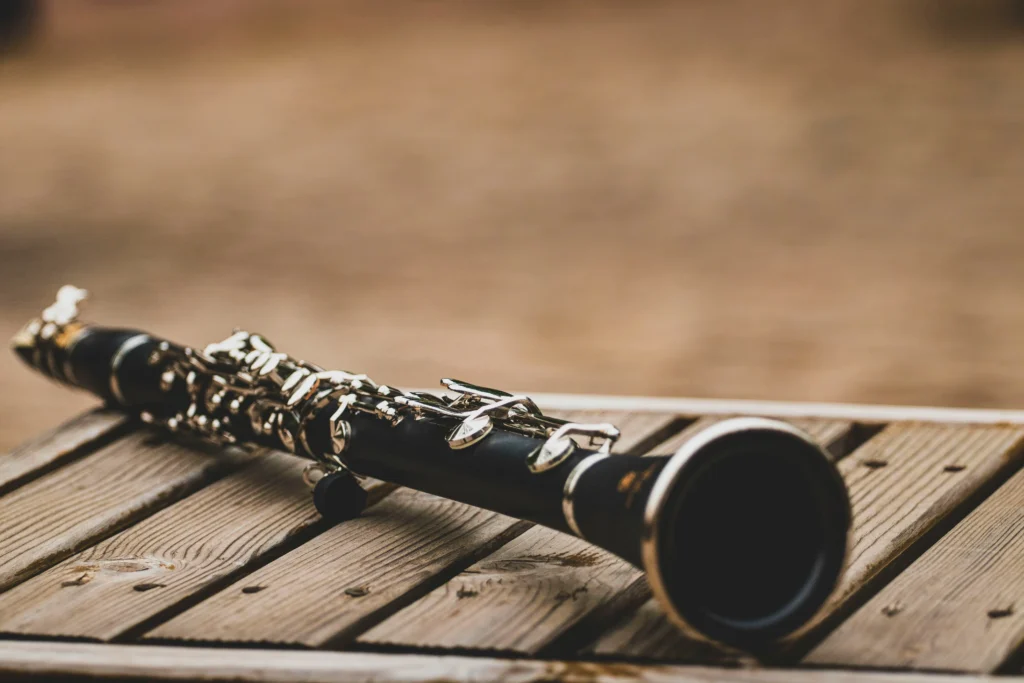
Learn more: Ergonomics in a nutshell: avoid pain when studying for hours.
| Perceived Acoustic Symptom | Probable Cause of the Problem | Recommended Corrective Adjustment | Estimated Time |
| Low notes fail or come out hoarse. | Misalignment in the Sol# connection key | Adjust the upper compensation screw. | 3 minutes |
| The clarinet register loses projection. | dried-out upper shoe | Softening with absorbent paper and heat. | 5 minutes |
| Excessive resistance when blowing | Slightly bent trigonal side key | Alignment by controlled manual pressure | 4 minutes |
| Upper gasket vacuum failure | Dry or compressed cork connection | Controlled thermal expansion with gentle heat | 6 minutes |
How to Adjust Compensation Screws Precisely?
Modern clarinets have fine-tuning screws strategically located on the upper keys to coordinate the simultaneous closing of multiple holes.
A watchmaker's screwdriver is the only tool needed to turn these screws in fractions of a millimeter.
Read more: Clarinet vs. Oboe: Understand the Differences in Sound and Techniques
Turning the screw clockwise increases the pressure on the attached wrench, correcting play that causes persistent leaks.
The definitive test should be done by inserting a thin strip of cigarette paper under the shoe while the key is being turned.
Gently pull the paper; if it slides without any resistance, the screw still needs further fine-tuning.
This meticulous calibration eliminates the need for expensive professional interventions, solving the problem. Air leak in the clarinet without replacing parts. with complete security.
What Home Remedies Can Restore Dry, Dried-Out Sneakers?
Old shoes that have been stored for long periods tend to harden due to the accumulation of saliva and environmental dust.
To restore the felt's original pliability without having to replace it, lightly dampen a strip of absorbent paper with warm, filtered water.
Place the paper under the shoe, close the key applying firm pressure, and slowly pull the strap to sanitize the surface.
Read more: How to properly clean and maintain a clarinet
Immediately after cleaning, use a hairdryer on a warm setting at a safe distance to expand the internal fibers of the felt.
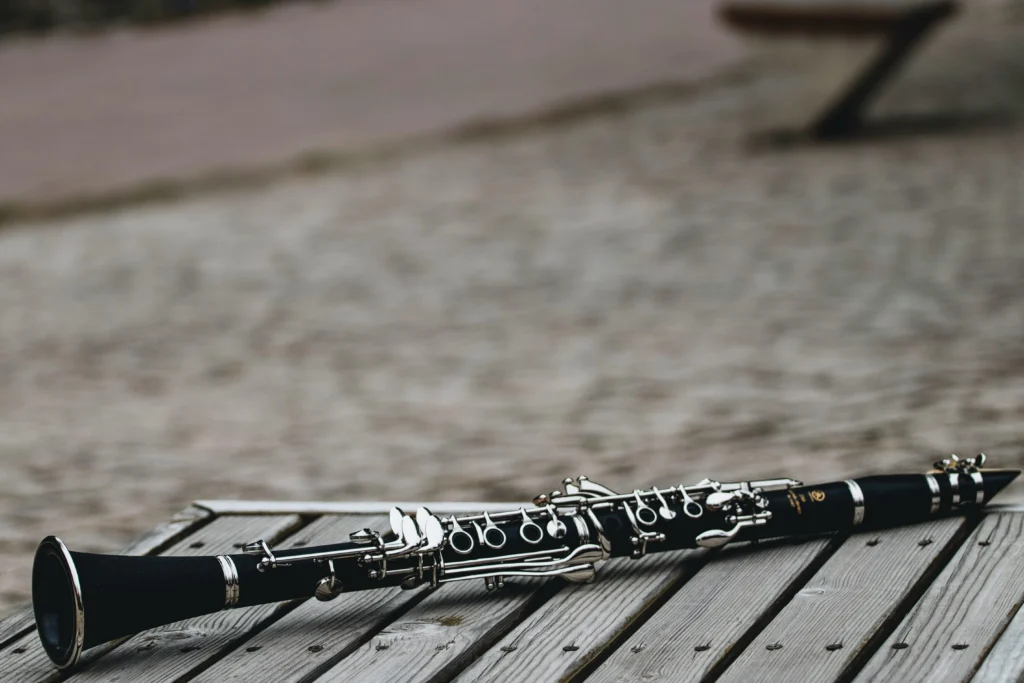
Controlled heat causes the material to regain its original volume, molding itself perfectly around the metal ring of the hole.
This simple procedure restores the flexibility of the seal, considerably extending the lifespan of the original components of your wind instrument.
Frequently Asked Questions About Clarinet Sealing
Can using cooking oil help lubricate stuck keys?
No, because vegetable oils oxidize quickly and create a sticky film that attracts dust, permanently seizing the axles.
Always use mineral oil specifically designed for wind instrument mechanisms, applying only a thin drop with the tip of a toothpick.
How can I expand cork joints that are very worn and loose?
You can apply the gentle heat of a lighter or match a few centimeters away from the dry cork for a few seconds.
The heat causes the air trapped in the cork cells to expand, regaining the thickness needed to seal the joint.
Can the height of the keys influence the overall tuning of the clarinet?
Certainly, since keys that open only slightly dampen the sound and leave the corresponding notes slightly flat (lower in pitch).
Maintaining the correct balance between mechanical opening and airtight sealing ensures tuning stability and ideal sound projection.
How can I prevent sweat from my hands from causing oxidation on metal shafts?
The most effective habit is to wipe the entire length of the keys with a clean, dry microfiber cloth after each use.
Removing residual acidity from the skin prevents shaft jamming and protects the silver or nickel plating.
Maintaining Musical Performance with Mindful Maintenance
Solving minor mechanical problems at home transforms a musician's study routine, allowing them to focus entirely on artistic expression.
Performing regular visual inspections and keeping the instrument clean prevents small gaps from developing into complex mechanical failures.
Daily cleaning and maintenance preserve the original acoustic characteristics designed by the luthiers.
If logic tests indicate that the wooden body has deep cracks, the correct course of action involves seeking a technician specializing in wood shoe replacement.
For detailed guides on the conservation of fine woods and the prevention of structural damage to musical instruments, please consult the publications of [website/source name]. Funarte, which promotes the preservation of instrumental heritage in Brazil.
Developing this technical awareness ensures that your clarinet will continue to produce a rich, expressive, and perfectly tuned sound for many years.
