
How does the Suzuki method work for children?
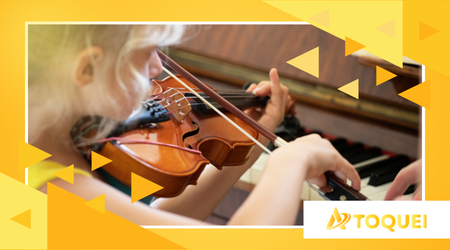
If you're looking for a revolutionary approach to introducing your children to the world of music, the Suzuki method for children It presents itself as a fascinating path.
Advertisements
Developed by the Japanese violinist and educator. Shinichi Suzuki, This system transcends the mere teaching of grades, focusing on the philosophy that... “"every child can"” Learning music is like learning your native language.
What is the Suzuki Method and what is its central philosophy?
The Suzuki method, also known as “"Mother Tongue Approach"” (Mother-Tongue Approach) is based on observing how children acquire speech.
They are immersed in a linguistic environment. The child listens, imitates, is constantly encouraged, and repeats tirelessly.
Suzuki transferred this natural dynamic to music education. Music, therefore, is seen as a language to be mastered.
Advertisements
Listen repeatedly Inspecting the pieces before even touching them is a fundamental principle.
Read more: Children's music vs. classical music: which works better in education?
How do constant listening and immersion prepare a child musically?
Auditory immersion is the first and most crucial step. Students are encouraged to listen to recordings of pieces from the repertoire daily.
This process develops auditory memory, the intonation and the sense of rhythm In an intuitive way.
This repeated listening process builds an internal "musical vocabulary," similar to what happens in speech acquisition.
The child becomes familiar with the melody and the timing before dealing with the complexities of reading music.
Why is Parental Involvement Essential to the Success of the Suzuki Method?
The active involvement of parents is a key factor that makes the method unique. Parents act as “"teachers at home"” and practice partners. They don't need to be professional musicians.
The main function of parents is to raise a supportive environment, ensure daily practice and attend classes.
THE teacher-student-father triangle It is the supporting structure of learning, reinforcing discipline and care.
++ Is the saxophone suitable for children? A guide for curious parents.
How are Early Start and Progressive Repertoire structured?
The method encourages starting in very young ages, often starting at 3 or 4 years old. Instruments adapted to the child's size are used (1/16 scale violins, for example).
The repertoire is standardized and highly progressive, starting with simple songs. This ensures a solid technical foundation and motivation throughout. immediate success.
The repertoire is carefully sequenced, introducing new challenges gradually. There is constant repetition of previously learned pieces., consolidating the technique In a natural and profound way.
++ Children's songs: cultural and educational importance
What is the role of repetition and positive reinforcement in learning?
THE constant repetition It is the key to technical mastery, and should not be seen as tedious, but as an opportunity for improvement. Each repetition seeks greater sound quality and rhythmic precision.
THE positive reinforcement And encouragement is vital for the development of self-confidence. Mistakes are treated as learning opportunities, and not as failures.
Philosophy emphasizes the character development And it's about sensitivity, not just the ability to touch. Touch is a means to shape better and kinder people.
Why do Suzuki group lessons complement individual lessons?
To the group classes They are an indispensable component of Suzuki method for children. They provide a social environment for cooperative learning.
In these classes, students practice together the repertoire they already master individually. This reinforces the ensemble discipline, the harmony and mutual motivation between peers.
Group performances are powerful experiences that they develop performance and the sense of community. Camaraderie and a sense of belonging flourish.
We can compare the Suzuki method to building a solid house. The first pieces are the foundations, firm and well established.
Each subsequent piece is a new brick, laid upon what came before, always revising the lower floor.
Musical notation (reading sheet music) is only introduced when the technical foundation is already firm, like decorating a house.
The impact of the method is undeniable on a global scale. More than 400,000 students around the world they are actively studying the Suzuki method for children, covering more than 30 countries.
This comprehensiveness demonstrates that universality ...and the adaptability of Shinichi Suzuki's approach. Music unites cultures and borders, a true pedagogical phenomenon.
THE Suzuki Association of the Americas (SAA), For example, it reports continuous growth, with thousands of certified teachers.
How is Music Reading Integrated and When Should It Begin?
One of the most debated points is the Late start in reading music. The method intentionally focuses first on the ability to play by ear and memorize.
Reading sheet music is only introduced once the child has already mastered the instrument's technique. It's like teaching reading after the child is already... fluent in speaking.
This prevents the child from using reading as a crutch, forcing the development of absolute and relative pitch. Attention is completely focused on sound quality.
What does musical development bring to other areas of a child's life?
THE Suzuki method for children It goes far beyond music. It nurtures the discipline, the concentration and the self-esteem of the child.
The persistence needed to master a piece of music. transfers to studies and other areas of life. Suzuki children demonstrate resilience and focus.
Why not invest in a method that, in addition to music, cultivates human excellence? It's a gift for holistic development.
A beginner student, 4 years old, instead of learning complex theory, simply Listen to the song "Twinkle, Twinkle, Little Star"“ (Variations) dozens of times. In class, he imitates the teacher's pitch.
The family organizes a “Musical Moment” A daily 15-minute practice session at home, where the child practices. Parents applaud the effort, not just the result. This support solidifies learning.
THE Suzuki method for children It's more than just classes; it's a lifestyle familiar musical.
Conclusion: The Legacy of Shinichi Suzuki in Child Development
Shinichi Suzuki's legacy is proof that... Talent is not innate, but cultivated.. Her method offers a loving and effective framework for musical and personal development.
By prioritizing immersion, the role of parents, and positive repetition, the Suzuki method for children Prepare the next generation.
It's a journey of continuous growth, focused on the beauty of music and the limitless potential of humanity.
Frequently Asked Questions
Which instruments can be taught using the Suzuki method?
The method began with the violin, but it expanded. Currently, it is successfully applied in cello, viola, piano, flute, guitar and other instruments.
Is it necessary to have any prior musical knowledge to begin?
No, no prior knowledge It is not required of the child or the parents. The method is structured to start from scratch.
What is the average cost of Suzuki Method lessons?
Costs vary widely depending on the region and professor. In addition to the individual lesson, the cost of... should be considered. group class and of material (CDs/sheet music).
At what age is it too late to start the Suzuki Method?
Although early initiation is encouraged, the method can be adapted. The "every child can" philosophy applies to any age, However, the format may vary for teenagers and adults.
