
Comparison of clip-on tuners for stage and practice.
You Clip-on tuners for stage and practice. They revolutionized the routine of amateur and professional musicians, offering a quick method of measurement without the need for cables.
Advertisements
Attached directly to the headstock of the instrument, these small devices capture the mechanical vibration of the wood through a built-in piezoelectric sensor.
This technology allows you to adjust the tuning of your guitar, bass, or acoustic guitar even in noisy environments, ignoring conversations or sounds from other amplifiers.
Choosing the right model optimizes your rehearsal time and ensures smooth and precise transitions during live performances.
How does the piezoelectric sensor manage to ignore external ambient noise?
Unlike mobile phone apps that rely on a built-in microphone, these devices operate exclusively through direct physical contact with the musical instrument's structure.
Advertisements
When a string vibrates, the sound wave travels along the instrument's neck to the rubberized tuner clip attached to the end.
The piezoelectric crystal inside the clip transforms this mechanical pressure into an analog electrical signal that the internal microprocessor reads and calculates.
This acoustic isolation ensures that the display shows the exact note even if there's a drum kit playing loudly right next to you.
Use the Clip-on tuners for stage and practice. It eliminates common errors caused by echo in enclosed rooms or reverberation in churches.
Reading the wood directly provides a much more stable response, speeding up the fine-tuning process before starting a song.
What are the fundamental differences between chromatic and stroboscopic tuning?
Conventional models use a chromatic virtual needle system, where the display indicates whether the note is below or above the ideal center.
This simplified visual interface perfectly meets the needs of students who require quick and direct answers during classes.
Professional musicians who demand surgical precision in octave adjustment prefer stroboscopic models, which display continuously rotating rings of light on the screen.
The visual movement ceases only when the string frequency reaches the absolute accuracy required for professional recordings.
For technical guidance on physical acoustics, to consult audio engineering reviews and access formal studies on standardized musical frequencies in the global market, visit the portal of Audio Engineering Society (AES.org) It provides specialized academic articles of high international authority.
| Tuner Model | Reading Accuracy | Integrated Display Type | Available Tuning Modes | Type of Feeding |
| Snark ST-8 Super Tight | ± 1.0$ cent | Circular Color LCD | Universal Chromatic | CR2032 battery |
| Korg Pitchclip 2 | ±1.0$ cent | Unidirectional LED | Simple Chromatic | CR2032 battery |
| TC Electronic UniTune | ± 0.02$ cents | High-Density LED | Chromatic and Stroboscopic | CR2032 battery |
| D'Addario NS Micro | ± 1.0$ cent | Compact Multicolor LCD | Chromatic with Metronome | CR2032 battery |
Why do the visibility and brightness of the display define its usefulness on stage?
Live performances expose musicians to extreme lighting conditions, ranging from dark, smoky stages to open-air events under scorching sun.
A low-quality display disappears under these conditions, forcing the instrumentalist to lean forward to be able to see the note.
Premium devices utilize organic LED displays or high-density matrices that maintain sharp contrast from any viewing angle.
This feature allows you to make subtle corrections between songs without breaking the rhythm of the show or distracting the audience.
Invest in Clip-on tuners for stage and practice. With articulated screens, it prevents you from straining the product's structure when trying to find the best angle.
The durability of the plastic joint determines how many years the accessory will withstand daily transport inside backpacks and cases.
How does the processor refresh rate influence tuning speed?
Older processors take precious seconds to identify low notes, such as the E string on a double bass or dropped tunings on seven-string guitars.
This delay creates frustration, causing the musician to play the string repeatedly and overloading the sensor with unnecessary harmonics.
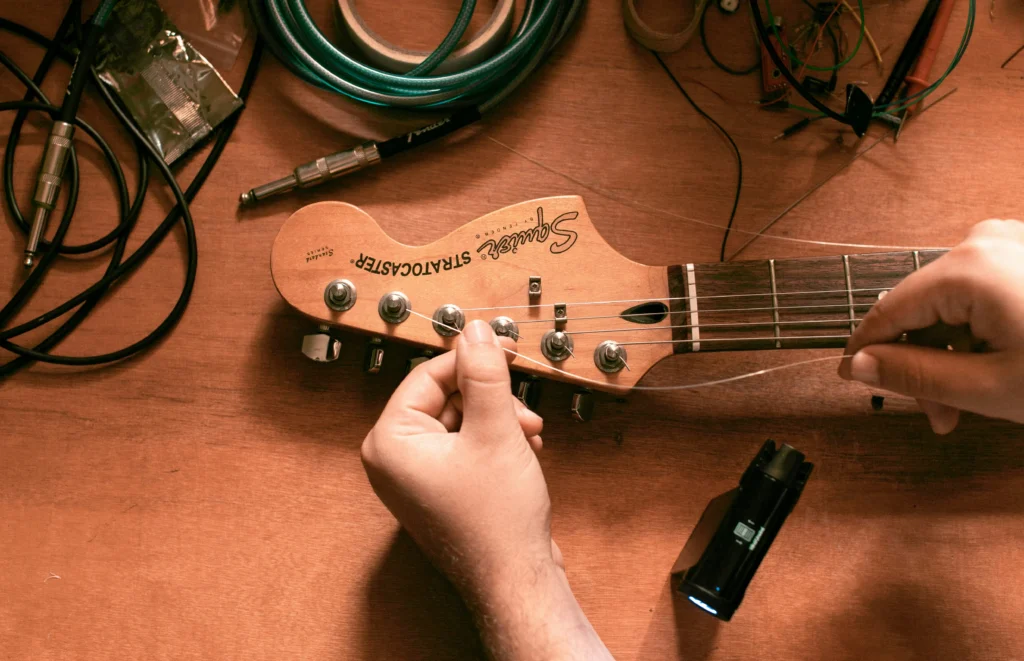
Modern circuits in 2026 process the signal in milliseconds, displaying the note variation as soon as the pick touches the metal surface.
Read more: Tuning guide for the viola de cocho in the current Pantanal region.
This speed saves wear and tear on the instrument's components and reduces the time spent standing still in silence on stage between musical blocks.
Many Clip-on tuners for stage and practice. Current models include automatic shutdown functions after two minutes of total inactivity detected by the sensor.
This intelligent programming preserves the Lithium battery charge, preventing unpleasant surprises when entering the main presentation.
When is it worth investing in a model with variable frequency calibration?
Most students use the industry standard of A at 440 Hertz, which is suitable for almost all modern popular music.
However, classical orchestras, early music groups, or rock bands often calibrate their instruments using specific alternative references.
Having an accessory that allows you to change this base frequency between 435 and 445 Hertz ensures versatility for performing in different musical formations.
Learn more: Is the Korg CA-50 Tuner Still Worth It in 2025? Our Impressions
This technical flexibility differentiates professional products from the low-cost, generic options that flood the rope accessories market.
To view metrology standards applied to instruments, access technical specifications for industrial measurement, and consult official calibration standards within the national territory, visit the website of National Institute of Metrology, Quality and Technology (Inmetro) It provides detailed official regulatory information.
Choosing the right tool for your musical development.
Keeping your instrument perfectly tuned protects your ears and accelerates the practical learning of scales, chords, and complex musical intervals.
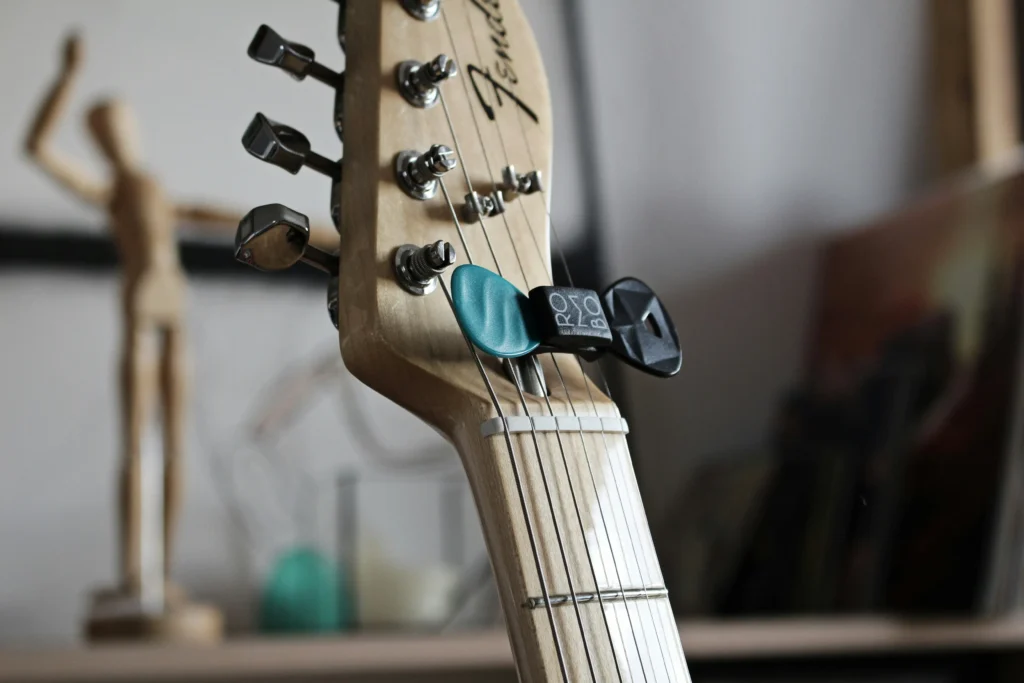
Contact measuring equipment offers the best balance of cost, portability, and efficiency for the daily routine of any musician.
Read more: Review of portable digital tuners
Analyze the precision specifications contained in the technical table, check which screen type best suits your routine, and choose the ideal model.
By mastering the use of this precision tool, you guarantee flawless performance and raise the technical level of your studies.
Frequently Asked Questions about Contact Tuners
Can the tuner clip stain or damage the headstock varnish?
Models from reputable brands utilize soft, injection-molded silicone claws that do not chemically react with modern polyurethane varnishes or older nitrocellulose finishes.
Does a clip-on tuner work well with acoustic instruments like the ukulele?
Yes, because the ukulele has a lightweight body that vibrates intensely, the piezoelectric sensor can read the notes with extreme ease and precision of response.
Is it possible to calibrate the instrument using the tuner without changing the sound from the amplifier?
Yes, since the reading is done through internal and physical vibration, you can lower the volume of your instrument completely to tune in total silence.
How long does a standard CR2032 battery usually last in these devices?
In moderate residential study use, a good quality battery provides enough power to function for between six months and a year before needing replacement.
