
Comparison: USB microphones vs. XLR microphones
In the world of content creation, streaming, podcasting In music production, choosing the right microphone is... crucial. For many, the debate boils down to a clash of titans: USB microphones vs. XLR microphones.
Advertisements
This choice will shape the final quality of your sound production. After all, the clarity of your voice is your digital business card.
What really differentiates these two connectivity standards? It's a matter of convenience. versus Pure performance?
Technology has evolved, but the basic needs of high-fidelity audio remain. Let's delve into this essential comparison.
What really differentiates USB microphones from XLR microphones?
The fundamental distinction lies in the path the audio signal travels. A microphone is, essentially, a transducer.
Advertisements
It converts sound waves into an electrical signal. The difference lies in how that signal reaches your computer.
USB microphones are complete and simplified solutions. They integrate a preamplifier and an analog-to-digital converter (ADC) into the body itself.
This means that the audio arrives at the computer in digital format. It's an operation. plug-and-play Immediate and straightforward.
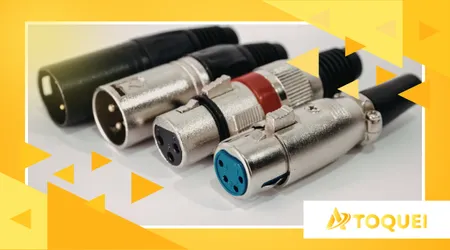
The XLR standard sends a balanced analog signal. This signal is more robust against noise and electrical interference.
However, it requires external equipment to be processed. This is the preferred method for audio professionals.
Read more: Best guitars for classic rock styles
USB Microphones vs. XLR Microphones: What's the Real Cost-Benefit Ratio for Beginners?
For beginners, USB is invariably more appealing. The initial investment is significantly lower and more straightforward.
You only need to buy the microphone and you're ready to record. There's no need for audio interfaces or mixing consoles.
The convenience of USB allows for quick installation anywhere. setup. Simply plug it in and the operating system recognizes it instantly.
This eliminates the learning curve for more complex equipment. It's the ideal solution for... gamers or podcasters soil.
On the other hand, the XLR system has a higher initial cost. It requires the purchase of a separate audio interface.
The interface's function is to pre-amplify and convert the signal. However, this modularity allows for future upgrades.
++ Review: Digital metronomes vs. metronome apps
A high-quality XLR microphone can last for years. And the interface can be replaced with a better model without discarding the microphone.
It's a long-term investment that offers flexibility. XLR audio quality is generally superior.
Why Do the Flexibility and Modularity of XLR Still Win in the Studio?
The XLR standard is the mainstay of any professional studio. This is due to its modular nature and scalability.
High-quality audio interfaces provide superior preamps. They inject the necessary "cleanliness" and "body" into the sound.
In addition, interfaces offer multiple channels for various sources. You can connect multiple microphones, instruments, and headphones.
Interconnection with external equipment, such as outboard gear, It's easy. Compressors and equalizers can be added to... setup.
A great original example is recording an acoustic drum kit. This requires multiple XLR microphones of different types for each piece.
++ Review of monitor speakers for home studios.
The USB microphone, being a standalone solution, doesn't allow for this complexity. Its use is limited to a single source at a time.
In terms of cabling, XLR is also more reliable. The balanced cable can travel greater distances without loss of quality.
USB microphones vs. XLR microphones It's the perfect analogy for a cell phone. versus The DSLR camera. The cell phone is convenient, but the DSLR is superior in performance.
The Latency Issue: How Does Signal Processing Affect Your Recording?
Latency is the small delay between speech and hearing the sound. It is a critical factor, especially in voice monitoring.
USB microphones, because they process the signal digitally internally, can introduce latency. This is noticeable when singing or playing an instrument.
++ XLR vs USB Microphones: Which is Best for You?
Many more advanced USB models already offer a headphone jack with “direct monitoring”. This circumvents the problem.
High-quality XLR interfaces are designed for very low latency. They use drivers Optimized (like ASIO) for fast processing.
This allows the artist to hear themselves perfectly in real time. The recording experience is much smoother and more natural.
A second original example is a session of podcast Live with remote interviewees. Latency needs to be minimal for a fluid conversation.
An XLR connector, coupled with a robust interface, will always offer better performance. The ability to process the signal quickly is vital.
USB Microphones vs. XLR Microphones: Why Audio Fidelity Isn't Just Marketing?
The difference in audio fidelity is often noticeable. This isn't just audiophile jargon; it's conversion technology.
In general, dedicated A/D converters in XLR interfaces are superior. They capture the nuances of the voice more accurately.
This is reflected in a wider and more detailed frequency response. The resulting audio sounds more professional and full-bodied.
A relevant statistic from 2024, from Future of Audio Survey, It points out that the 88% controllers in professional recording studios exclusively use the XLR standard.
This indicates the value that the high-performance market places on quality and reliability. USB is dominant in the sector of home studios amateurs.
How is the Creator Community Choosing Their Audio in 2025?
The rise of streaming and of podcast It boosted the USB market. Creators value ease of mobility and installation.
To streamers With limited budgets, USB remains the obvious choice. It delivers sound good enough for most platforms.
However, the trend is towards migrating to XLR as the audience grows. The professionalism of XLR sound becomes a competitive advantage.
After all, why risk the credibility of your content with inferior audio? Your audience deserves the best you can offer.
The final decision should weigh your ambition for quality against your budget. Think about where you want to be sonically in two years.
Conclusion: Which Standard Should Prevail in Your Audio Setup?
The choice between USB microphones vs. XLR microphones It's not about one being inherently "better." It's about what is best for... you.
If you're a beginner, USB offers the best starting point. It's affordable, practical, and meets basic quality requirements.
If you're an experienced producer or aspire to be a professional, XLR is essential. It guarantees maximum quality, flexibility, and scalability.
Invest in clarity; your audience will thank you. Audio quality is the final filter between your message and the listener's attention.
| Feature | USB microphones | XLR microphones |
| Integration | Plug-and-Play, all in one | Requires external interface/mixer. |
| Initial Cost | Low and affordable | High (microphone + interface) |
| Maximum Quality | Good (Limited by internal A/D) | Excellent (Determined by the interface) |
| Latency | It can happen, but it's manageable. | Minimum, ideal for monitoring. |
| Flexibility | Low (Individual use, without upgrades) | High (Modular, allows upgrades and multiple channels) |
| Cable | Standard USB | Balanced, immune to noise. |
Frequently Asked Questions
Is it possible to use an XLR microphone on a PC without an audio interface?
No. An XLR microphone requires a preamplifier to boost the signal and an A/D converter. These components are found in an interface.
Is a USB microphone a good option for recording musical instruments?
Yes, for single-channel recording (voice or one instrument). However, for stereo or multiple instruments, XLR is more suitable.
What is the main advantage of a balanced XLR cable over a USB cable?
The balanced XLR cable has three conductors, canceling out electrical noise. This allows for longer cables without degradation of the audio signal.
Can a USB microphone be used in a professional recording environment?
It can, but it's generally reserved for secondary or simplified use. The professional and most reliable standard is mostly XLR.
