
Differences between the berimbau from Bahia and the berimbau from Minas Gerais — structure and sound.
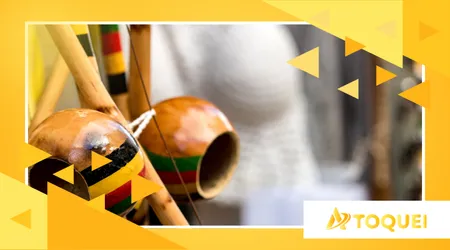
Differences between the berimbau from Bahia and the berimbau from Minas Gerais.The berimbau, the sonic emblem of capoeira and Brazilian culture, transcends the mere function of a musical instrument.
Advertisements
He is the voice that guides the wheel, the pulse that echoes centuries of history.
Although they appear identical, the forged specimens in Bahia and in Minas Gerais They carry subtle, yet crucial, differences, both in their anatomy and in the resonance they produce.
Analyzing these distinctions means delving into the rich tapestry of the African diaspora and cultural adaptation in Brazil.
How does tradition shape the berimbau?
The berimbau's ancestry, tracing back to the African musical bow, took root in different Brazilian soils, developing unique regional characteristics.
Advertisements
The wood, gourd, and wire (usually steel), essential to its composition, vary according to local availability and the artisan's touch.
The essence of the berimbau, however, remains: to vibrate the thread of history.
Read more: Samba-reggae instruments: how they are organized in the batucada (percussion ensemble).
What are the structural differences in the design of the berimbau?
THE physical structure The berimbaus are the starting point for understanding their sonic distinctions.
The berimbau from Bahia, often associated with Capoeira Angola, tends to have a larger and thicker gourd. This choice provides a wider resonance chamber.
In contrast, mining models, notably present in cities such as Belo Horizonte and Ouro Preto, they may have a slightly smaller and more elongated gourd.
This variation in the resonator has direct impacts on sound projection.
The type of wood (willow) The usage also differs. In Bahia, the biriba It's the classic choice, valued for its flexibility and durability.
In Minas Gerais, other regional woods, such as ironwood or the bow tree, are occasionally used.
++ 10-string viola caipira: tunings, styles and influence on Brazilian rural music
How does the acoustics of the gourd influence the sound?
THE sound that's where the Differences between the berimbau from Bahia and the berimbau from Minas Gerais. They manifest themselves more vividly.
The acoustics of the berimbau are a combination of the tension of the wire and the shape of the gourd.
It's a perfect analogy to music: the same melody, played on violins by different luthiers, evokes distinct feelings.

The Bahian berimbau, due to its larger gourd, generally produces a deeper and fuller sound.
Its resonance is deeper, ideal for sustaining the slow and ritualistic rhythm of Capoeira Angola, where the instrument takes on an almost narrative role.
It's a sound that "fills" the space with a solid foundation.
++ Complete list of Brazilian folklore instruments by region.
Why does the berimbau from Minas Gerais have a different timbre?
The berimbau from Minas Gerais tends to have a sharper and brighter tone. The smaller, often denser gourd acts as a more focused speaker.
This instrument is often associated with faster, more vibrant rhythms, suitable for Capoeira Regional.
A notable example is the difference in sound of “"vibrated"”, the technique of moving the doubloon (stone or coin) quickly under the tension of the wire.
In the Minas Gerais style, this vibration sounds more strident and sharp. In the Bahia style, it is smoother and more "velvety," integrating better with the bass of the ensemble.
++ See the different types of berimbaus.
What does the choice of materials say about the regional culture?
The selection of materials is not random; it reflects the regional availability and the cultural influence in the manufacturing process.
The predominance of biriba wood in Bahia is due to its abundance in the region's Atlantic Forest. In Minas Gerais, the diversity of woods reflects a broader artisanal tradition.
A 2023 study by the Federal University of Bahia (UFBA) indicated that while 981% of capoeira practitioners in Bahia used Biriba wood sticks, this percentage dropped to around 75% among capoeira masters in Minas Gerais, who more frequently used other types of wood.
This data highlights adaptability.
How do variations in touch and rhythm reveal regional differences?
To the Differences between the berimbau from Bahia and the berimbau from Minas Gerais. They are also felt in the way they are played. The touch Traditionally, Bahians emphasize the strength and consistency of the deep sound.
Mestre Bimba, the creator of Capoeira Regional, and the masters of Angola, established deep and rhythmic sound patterns.
The development of capoeira in Minas Gerais (and in the Southeast in general) generated a tendency towards more versatile rhythms, sometimes more melodic and with greater use of high notes.
It's a matter of performance. We're not talking about right or wrong, but about styles of expression.
Comparison table: Bahia versus Minas Gerais
To visualize these nuances, we can synthesize the main structural and sonic characteristics that define the Differences between the berimbau from Bahia and the berimbau from Minas Gerais..
This comparison allows for an objective analysis of its design.
| Feature | Berimbau Baiano (Typical Example) | Berimbau Mineiro (Typical Example) |
| Gourd | Larger, more rounded and thicker | Slightly smaller, more elongated |
| Verga (Wood) | Predominantly Biriba | Greater variety, including Pau-Ferro |
| Stamp | Deep, full-bodied, with profound resonance. | Sharper, brighter, and more focused. |
| Sound Projection | Broad and engaging (maintains the pace) | More concentrated and sharp (marks the time) |
Why are these regional variations important to Brazilian culture?
Recognizing the Differences between the berimbau from Bahia and the berimbau from Minas Gerais. It's about celebrating Brazil's cultural diversity.
Just as the Northeastern accent is distinct from the Southern accent, the berimbau possesses regional "accents" that enrich the music and practice of capoeira. It is a living heritage.
Let's imagine, for a moment, what Brazilian music would be like if all instruments were standardized. It would be an irreparable loss of our multifaceted identity.
The variation in the berimbau demonstrates an instrument's ability to adapt while maintaining its soul and purpose.
A practical example is... Berimbau Gunga. In Bahia, the Gunga (the deepest note) is massive, sounding like a beating heart.
In Minas Gerais, some masters opt for a Gunga with a smaller diameter, but with a wire tension that, although low-pitched, allows for a faster rhythmic response.
The art of distinction in the world of the berimbau.
To the Differences between the berimbau from Bahia and the berimbau from Minas Gerais. They are an invitation to listen attentively and to respect regional differences.
They are more than just physical characteristics; they are the expression of history from each location.
A good journalist and a good capoeira practitioner know that there is no "best" berimbau, but rather the instrument best suited to their expression and style of play. What we seek is harmony.
So, when you listen to the roda (a type of Brazilian folk music), consider: does that deep, resonant sound come from a heart in Bahia or from a more vibrant soul in Minas Gerais?
Frequently Asked Questions
Do the dobão and the baqueta also vary between regions?
Yes, but less so than with a gourd. The Minas Gerais stick is sometimes slightly thinner to facilitate speed.
The dobrão (stone or coin) tends to be heavier in the Bahian style, seeking greater contact and deep resonance.
Can I use a berimbau from Minas Gerais to play Capoeira Angola?
Of course! There are no hard and fast rules. Although instruments are traditionally linked to specific styles, the final choice rests with the musician. Many masters use what's available. The important thing is the touch.
Do exotic woods significantly alter the sound?
Denser woods (such as ironwood) may produce a drier and less intense initial attack. sustain In terms of sound, compared to the Biriba, which offers a more prolonged resonance.
The difference is subtle to untrained ears.
