
Musical improvisation games for children to stimulate creativity.
The practice of children's musical improvisation It transforms learning into a playful journey, naturally stimulating creativity, emotional expression, and cognitive autonomy in children.
Advertisements
Unlike traditional teaching focused on the rigid repetition of sheet music, spontaneous creation allows children to explore sounds, rhythms, and timbres without the constant fear of making mistakes.
Incorporating musical games into daily school and family life strengthens active listening, improves fine motor coordination, and enhances problem-solving skills at different stages of development.
Structuring interactive and fun activities provides a welcoming environment where sonic imagination flows freely, nurturing self-confidence and a genuine love for art from early childhood.
What is spontaneous creation in children's musical education?
Free sonic invention consists of the unstructured exploration of instruments, everyday objects, and voice to translate feelings, stories, and ideas into original musical arrangements.
Advertisements
This pedagogical approach prioritizes the discovery process over the final technical result, encouraging the student to experiment with variations in intensity, pitch, and duration of the sounds produced.
Renowned active methodologies, such as the Orff and Dalcroze methods, use body movement and percussion as central pillars to develop rhythmic sense in an intuitive way.
Working children's musical improvisation In the classroom, it helps to break down creative blocks, allowing each child to find their unique artistic voice with complete freedom and enthusiasm.
How do sound games help with cognitive and emotional development?
Playful activities based on music stimulate complex neural connections, enhancing essential skills such as concentration, working memory, and logical-mathematical reasoning during childhood.
The need to listen to colleagues in order to respond with a new sound develops empathy, respect for others' time, and socio-emotional intelligence in group dynamics.
Expressing intense emotions through drumming, clapping, or vocalizations offers a healthy channel for releasing tension and strengthening children's self-esteem.
Furthermore, collaborative creation teaches the value of cooperation, where different timbres and rhythms come together to build a harmonious and meaningful collective composition.
Comparison of Educational Games for Music Education
| Activity Name | Recommended Age Range | Materials Used | Main Skill Developed |
| Maestro of Silence | 3 to 5 years | Rattles and metallophones | Inhibitory control and attentive listening |
| Sound History | 4 to 8 years | Orff instruments and household objects | Symbolic association and sound narrative |
| Percussion Dialogue | 6 to 10 years | Drums and body percussion | Pulse perception and rhythmic response |
| Modified Eco | 5 to 9 years | Voice and small percussion instruments | Auditory memory and creative variation |
What are the best games to play at home or at school?
The "Sound Story" game invites children to create sound effects for a story, using simple materials to represent footsteps, wind, thunder, and the characters' feelings.
Another highly effective option is the "Percussion Dialogue," where one participant plays a short rhythm on the drum and the other responds by inventing a complementary musical phrase.
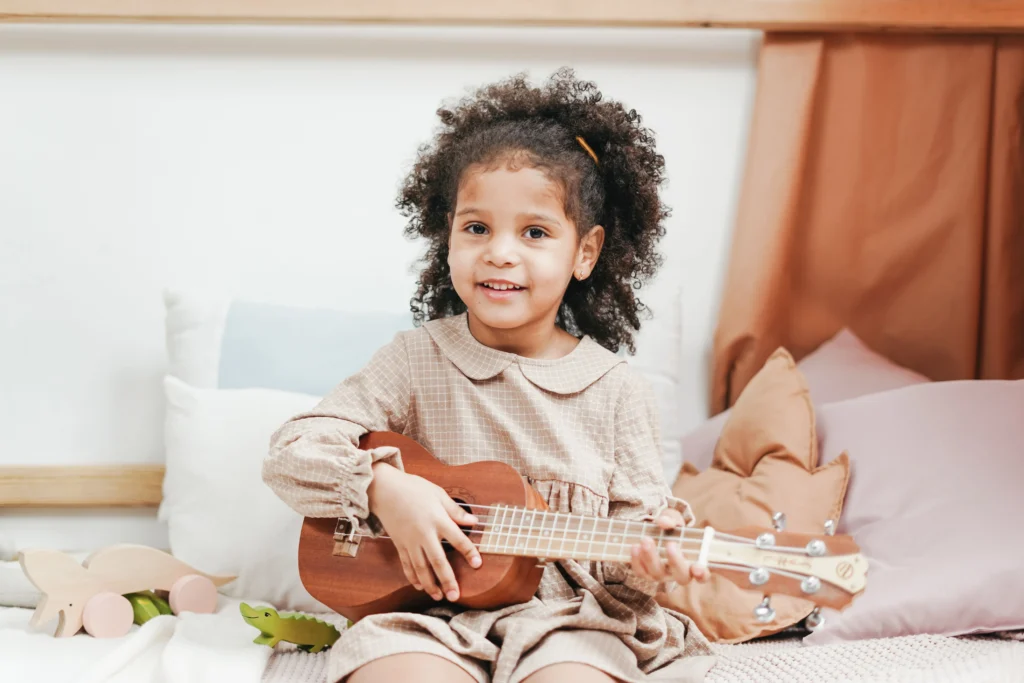
Read more: How to use cumulative songs in early childhood education
Musical statue games with variations in intensity help young children perceive the difference between loud, soft, fast, and slow sounds through body movement.
Follow the guidelines on early childhood education and development published by United Nations Children's Fund (UNICEF) to support their pedagogical practices responsibly.
When should you start introducing artistic experiences into young children's routines?
Auditory stimulation can begin in the first months of life through lullabies, gentle rattles, and peek-a-boo games with the mother's voice.
From the age of two, a child already possesses the motor skills to handle small percussion instruments and accompany simple rhythms with foot tapping and clapping.
Learn more: How does music influence the development of children's motor coordination?
As verbal language develops, games can incorporate rhymes, tongue twisters, and sing-along question-and-answer games to enrich children's vocabulary.
Encourage children's musical improvisation From an early age, it builds a solid foundation for literacy, facilitating the differentiation of phonemes and the perception of patterns in spoken language.
How can you create homemade instruments to enrich playtime?
Building maracas with plastic bottles and various grains allows children to explore different sounds, as well as raising their awareness about the importance of recycling and sustainable consumption.
Cardboard tubes can be transformed into excellent wind or percussion instruments, while plastic containers of different sizes become a versatile and fun drum kit.
Read more: How to incorporate music therapy into children's daily routines
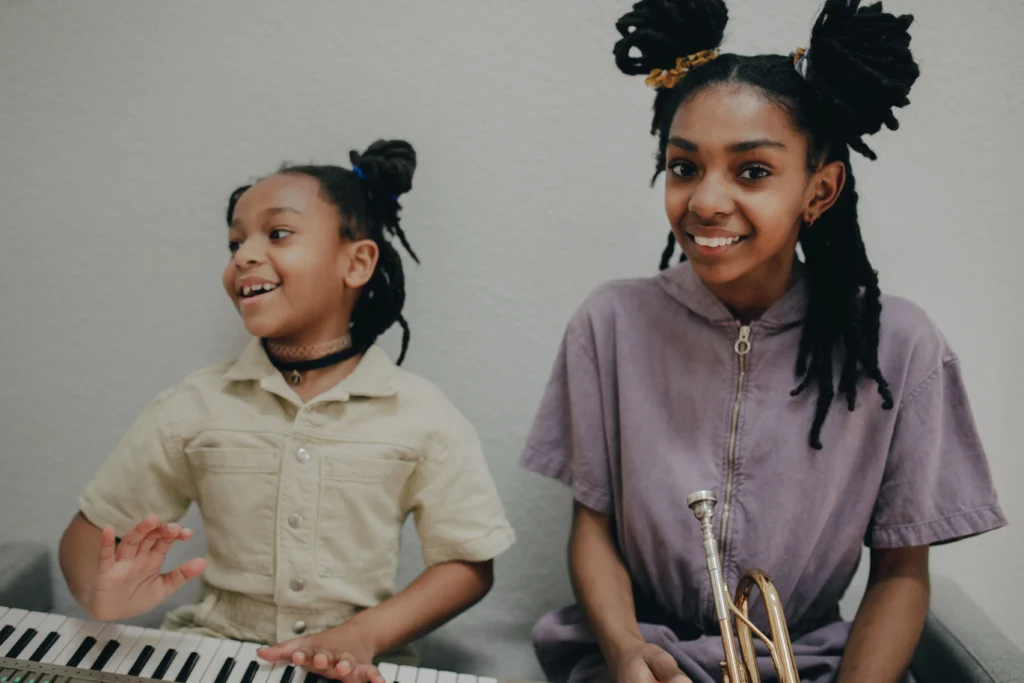
Involving young children in the crafting process encourages them to care for the materials themselves and sparks their physical curiosity about how sound is produced and propagated.
Consult the educational materials and research on cultural education available on the portal of Brazilian Association of Music Education (ABEM) to deepen their teaching methodologies.
Frequently Asked Questions (FAQ)
Do you need to know how to play an instrument to lead these games?
No, any adult can lead the games using clapping, their voice, household objects, or simple handcrafted instruments, always prioritizing fun and exploration.
Could improvisation hinder learning to read sheet music in the future?
On the contrary, prior practical and auditory experience facilitates the understanding of graphic symbols, since the child begins to read what they have already experienced sonically.
How to deal with very shy children who withdraw when it comes to creating?
Start with group activities where everyone plays together, gradually reducing individual exposure until the child feels confident enough to suggest sounds on their own.
What is the ideal length for each music game session?
Short sessions of 15 to 30 minutes are sufficient to maintain children's focus, energy, and interest without causing fatigue or distraction.
Betting on children's musical improvisation It's about opening doors to a learning experience rich in discovery, affection, and creativity. By valuing spontaneous vocal expression, parents and educators prepare children for a more sensitive, innovative, and communicative future in all areas of life.
