
How to use your own recordings to improve your music career faster
Learn How to use your own recordings to improve. On your instrument, it is undoubtedly the watershed moment between persistent amateurism and technical mastery in 2026.
Advertisements
Many musicians spend hours on mechanical repetitions without realizing that the best teacher available is in their pocket: their own smartphone.
By documenting your execution, you cease to be merely the executor and assume the role of critic, allowing for a ruthless diagnosis of vices that go unnoticed.
In this article, we will explore methods for recording your studies, auditory assessment metrics, and how audio analysis technology enhances this process.
Get ready to transform your cell phone into a high-performance laboratory, accelerating your evolution through strategic listening.
Advertisements
What is self-criticism based on one's own recordings?
Self-criticism through audio recording is the process of externalizing your performance to analyze it without the cognitive overload of performing it.
When you play, your brain processes motor coordination, reading, and expression simultaneously; this creates unavoidable blind spots regarding your rhythm and intonation.
There's something unsettling about hearing your own instrument for the first time: reality rarely matches our internal sense of control.
This is often misinterpreted as a lack of talent, when in reality it is simply the natural gap between artistic intention and physical execution.
To understand How to use your own recordings to improve. It allows you to close this feedback loop immediately.
By listening to the recording, you can tell if the articulation on wind instruments is truly clean or if there are pitch fluctuations that the effort of blowing usually masks.
How do recordings accelerate technical and rhythmic mastery?
Constant recording acts as a muscle memory accelerator because it allows you to identify the exact moment when a movement fails.
If you notice a consistent delay in a certain passage, you can isolate the problem and focus your training on that specific transition, instead of repeating the entire piece.
Using a metronome in conjunction with recording is the ultimate test for any instrumentalist seeking to sound professional.
Hearing yourself “out of sync” reveals instabilities that the brain ignores during the effort of execution, forcing a much faster and more effective conscious correction.
To deepen your knowledge about acoustics and how sound behaves in different recording environments, the portal of Audio Engineering Society (AES) It offers fundamental technical resources.
Understanding the physics of sound helps to obtain clear recordings, making it easier to identify unwanted harmonics and resonances in your daily practice.
Why doesn't passive listening replace active analysis?
Many students record their classes or workouts, but make the mistake of only listening to the audio while washing dishes or driving.
Active analysis requires pen and paper (or a tablet), deliberately identifying problematic time signatures and comparing their execution to references from renowned professionals.
When applying the method of How to use your own recordings to improve., The focus should be on isolated elements: tuning, dynamics, timbre, or tempo.
Trying to fix all the flaws at once is a strategic mistake that disperses the energy needed for solid technical development.
Treat each recording as a historical document of your progress, creating a library organized by date.
This practice not only improves technique, but also builds self-confidence based on real evidence of improvement, something essential for confidently performing on stages and in studios in the future.
Evaluation Parameters for Musical Development (2026)
| Analysis Parameter | What to watch for in the audio | Recommended Tool | Impact on Evolution |
| Rhythmic Precision | Attacks before or after the click. | Digital Metronome | Stability and Groove |
| Tuning (Intonation) | Fluctuations in long notes. | Benchtop Tuner | Clarity and Harmony |
| Dynamics and Expression | Sudden changes in volume. | Waveform Chart (DAW) | Musicality and Emotion |
| Execution Cleaning | Noises of strings or keys. | Hi-Fi Headphones | Professionalism |
| Articulation | Clarity in the attack of each note. | Audio Slow Motion | Speed and Fluidity |
Learn more: Review of portable digital tuners
What tools from 2026 facilitate this review process?
Currently, we have software that uses artificial intelligence to separate the tracks of a simple cell phone recording into isolated components.
This allows you to hear only your voice or instrument, eliminating background noise that could mask important details of your performance.
The technique of How to use your own recordings to improve. It is gaining traction with visual correction apps, where audio is superimposed onto the musical score.
These tools graphically indicate where the pace has fluctuated, offering a visual map of what needs more attention on the next study day.
You don't need to invest in expensive microphones to get started, as modern audio restoration algorithms work wonders with basic smartphone files.
Read more: How to Use a Metronome to Really Improve Your Rhythm
The focus should be on the consistency of the recording and the quality of its critical analysis, not on the sonic aesthetics of the recording.
When should you start recording your study sessions?
The short answer is: now, even if you only started playing a week ago.
Recording yourself from the start helps normalize the discomfort of listening to yourself, preventing the "recording anxiety" that often paralyzes many experienced musicians when they enter a studio.
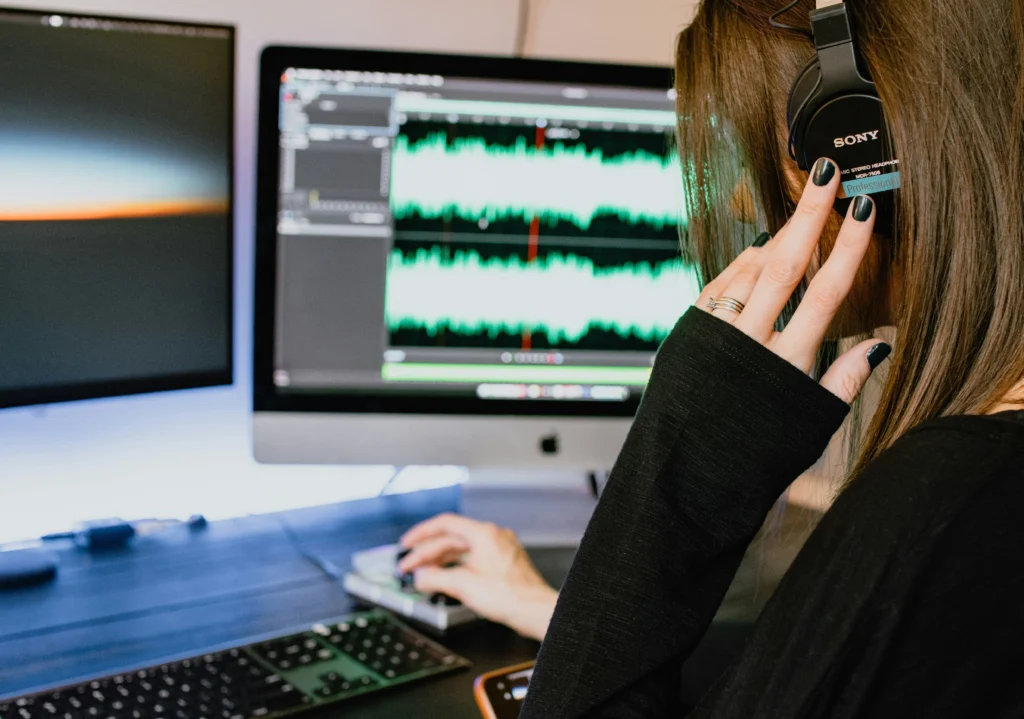
To know How to use your own recordings to improve. It is especially useful in the repertoire-building phase, where a macro vision of the music is essential.
By listening to the whole thing, you can tell if the interpretation makes narrative sense or if it's just playing isolated notes without connection.
For musicians who wish to understand the regulations for sound preservation and documentation in Brazil, the website of Brazilian Music Association (ABM) It provides interesting guidelines.
Keeping an organized record of your output is the first step towards a documented and resilient career in the contemporary music market.
The journey to musical excellence is not a straight line, but a constant cycle of action, recording, and correction.
When learning How to use your own recordings to improve., By doing so, you take ownership of your learning, becoming less dependent on occasional external feedback.
Read more: Home Recording Techniques: How to Record Guitar Without Hiss
Solid progress stems from the courage to face one's own shortcomings through headphones and the discipline to correct them day after day.
Transform your practice into a conscious process and watch how months of study become weeks of real progress.
Music is an art of listening, and that listening must necessarily begin with yourself.
FAQ: Frequently Asked Questions about Study Recordings
I feel so ashamed when I hear myself, what should I do?
This reaction is common to almost all musicians at the beginning. Keep recording and listening to short snippets every day; in a short time, your brain will start focusing on technique and ignore personal discomfort.
What's the best position for the phone during recording?
Place the device about one meter away, at ear level or near the instrument's sound output. Avoid vibrating surfaces, such as on top of amplifiers or unstable tables.
Should I record the entire workout or just the difficult parts?
Focus on short clips, from 30 seconds to 2 minutes. Recording hour-long sessions makes the review process tedious and inefficient, causing you to miss the fine details that really matter for correction.
Is recording video better than just audio?
Yes, the video allows you to analyze your posture, shoulder tension, and fingering. Many audio glitches originate from postural problems that only visual recording can reveal clearly and objectively.
How often should I review my old recordings?
Try listening to recordings from three months ago once a week. This serves as a powerful motivational boost, showing you how much you've already progressed and validating all the effort you've dedicated to your instrument.
