
How to create a music study routine with effective digital feedback.
Establish a music study routine with effective digital feedback This is a game-changer for musicians who want to break free from technical stagnation in 2026. The evolution of artificial intelligence and audio analysis tools has transformed the studio into a high-performance laboratory.
Advertisements
In the past, students relied exclusively on subjective perception or weekly lessons to identify pitch and rhythm flaws. Today, real-time signal processing allows for instant corrections, optimizing time and ensuring that every minute of practice results in real progress.
What are the pillars of a modern and connected musical practice?
Deliberate practice requires clear objectives and tangible metrics, something that the digital environment provides with mathematical precision unattainable by the average human ear.
One music study routine with effective digital feedback It starts with selecting an environment that neutralizes unwanted audio latency.
The contemporary musician uses the spectrogram to visualize the harmonic series of their instrument, identifying resonances that require greater muscular control.
Advertisements
This visual approach complements the auditory one, creating a technological synesthesia that accelerates muscle memorization and tonal perception.
There is something unsettling about seeing students dedicating hours to repetitive exercises without any monitoring of real progress.
This is often misinterpreted as discipline, when in reality it is merely aimless effort, correctable through the visualization of performance data.
How can data analysis transform the perception of error?
Software that provides immediate feedback not only points out the error, but also categorizes the failure as mechanical imprecision, fatigue, or lack of theoretical understanding.
By using visual metronomes and pitch analyzers, the musician receives a cold and objective response to their performance.
This objectivity eliminates emotional frustration, allowing the focus to shift from "why can't I do it?" to "by how many hundredths of a second am I behind?".
The technology acts as a high-definition mirror, revealing rhythmic nuances that would go unnoticed in a conventional recording.
To deeply understand digital audio standards and how sampling influences the accuracy of your feedback, visit the portal of Audio Engineering Society (AES) It offers technical resources regarding fidelity in signal capture.
Tools and Metrics for Digital Feedback (2026)
| Tool Type | Metric Analyzed | Practical Benefit in Daily Routine |
| Pitch Analyzer | Frequency in Hertz (Hz) | Absolute precision in tuning and temperament. |
| Visual Metronome | Latency in milliseconds | Rhythmic stability and microtempo control. |
| Spectrogram | Harmonic Series / Timbre | Refined sound quality and projection. |
| Dynamics Monitor | Amplitude in Decibels (dB) | Control of expressiveness and relative volume. |
| Transcription AI | Melodic Precision | Automatic error checking when reading data is entered. |
Why is video recording the most neglected form of feedback?
While audio analysis is crucial, physical posture determines career longevity and technical proficiency with the instrument.
Recording yourself from strategic angles allows you to identify unnecessary tension in your shoulders or poor finger positioning that the audio doesn't reveal.
Synchronizing the video with rhythmic analysis software creates a music study routine with effective digital feedback which addresses the musician as a whole.
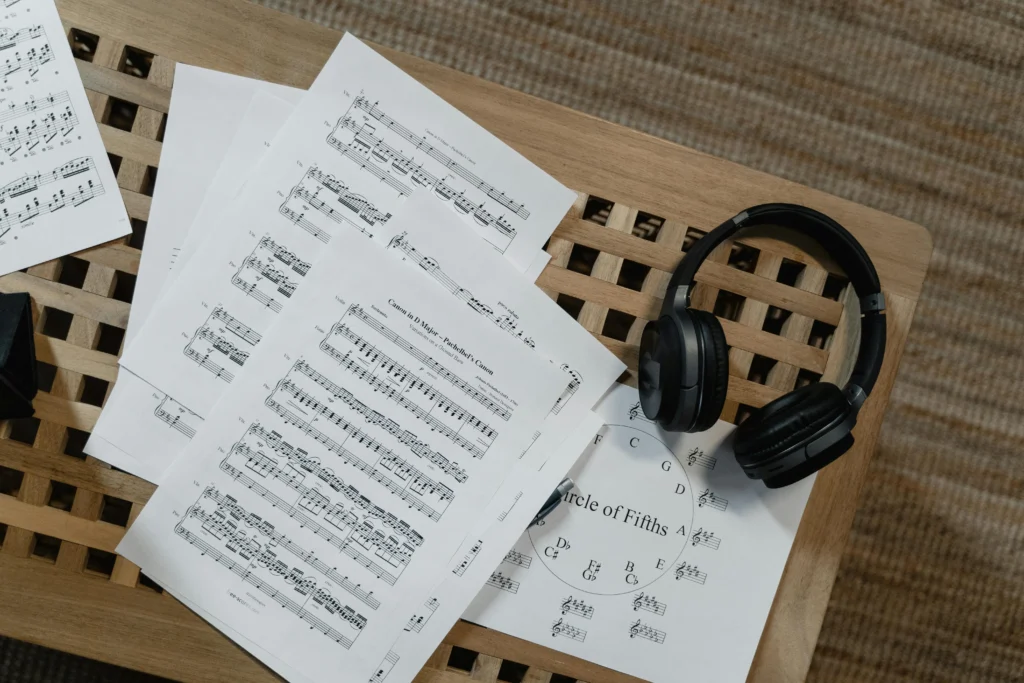
Read more: Home Recording Techniques: How to Record Guitar Without Hiss
Biomechanics applied to the instrument, when digitally monitored, prevents repetitive strain injuries and optimizes the ergonomics of its execution.
Many musicians resist being on camera due to aesthetic discomfort, but video should be seen as a diagnostic tool, not a publicity tool.
Analyzing one's own performance in slow motion reveals the exact moment when the technique collapses under pressure or speed.
Which apps are essential for daily monitoring?
By 2026, the integration between DAWs (Digital Audio Workstations) and mobile practice apps will allow study history to be stored in the cloud.
Tools that utilize the MIDI standard make it easier to correct incorrect notes on keyboards and wind instruments.
Read more: How to Create an Effective Music Practice Schedule for Your Level
Apps that offer intelligent tracking adapt the tempo of the music according to the user's performance, creating a dynamic learning environment.
This interactivity keeps engagement high, as the challenge is automatically adjusted to the student's zone of proximal development.
For guitarists and violinists seeking extreme rhythmic precision, the website Guitar Player It frequently analyzes new interfaces and study methods that combine tradition and cutting-edge technological innovation.
What are the dangers of relying excessively on technology?
Technology should be a bridge to auditory autonomy, never a crutch that replaces artistic sensitivity and emotional interpretation.
Digital feedback helps build a solid foundation, but musicality lies in what data cannot quantify.
Excessive use of pitch correctors during practice can train the ear, making it lazy for manual adjustments during a live performance.
Read more: How to Create Your Music Study Routine
It is vital to set aside time for "blind study," where devices are turned off to test learning retention.
Maintain a music study routine with effective digital feedback It requires knowing when to silence the software and listen to the silence and natural resonance of the environment.
Technology is a powerful ally, but music remains a form of human communication between souls, not machines.
FAQ: Questions about Digital Music Study
What is the best time to use digital analytics tools?
Ideally, it should be used at the beginning of the session, during technical exercises, to ensure that the warm-up is done with absolute precision. This prevents you from "warming up" bad habits in pitch or rhythm that would hinder the rest of your practice.
Can artificial intelligence replace a music teacher?
AI excels at quantitative technical diagnostics, but lacks the pedagogical sensitivity to understand the psychological barriers of the student. It acts as an assistant tutor that monitors the data while the teacher focuses on interpretation.
Is it necessary to invest in expensive equipment to get effective feedback?
No. Today, most smartphones have microphones of sufficient quality for pitch and rhythm analysis applications. The most important investment is in the knowledge to interpret the graphs and data generated by these free tools.
Perfecting your art through a music study routine with effective digital feedback It is a commitment to technical excellence and modernity.
By embracing the data, the musician doesn't lose their essence, but gains clarity about their limitations and potential.
Success in 2026 belongs not only to those who have talent, but to those who know how to use technology to polish that talent with surgical precision.
Remember that each tuning chart and each monitored millisecond represents a step towards greater artistic freedom.
Discipline aided by digital tools shortens learning paths and solidifies foundations that will last a lifetime.
Start recording, analyzing, and adjusting your practice today; your future self on stage will thank you for every bit of information you process today.
Music is an exact science that manifests itself as art, and mastering both sides is the secret of the great masters. For more information on the science of acoustics and sound perception, consult the... Acoustical Society of America.
