
The most iconic guitar solos in Brazilian guitar and how to study them.
Explore the most iconic guitar solos in Brazil It demands an immersion in a sound that blends the swagger of samba with the heaviness of rock and the baroque virtuosity of jazz.
Advertisements
In 2026, the Brazilian guitar is experiencing an era of rediscovery, where organic tones and refined technique come together to define an identity that stands apart from foreign imitations.
Understanding how these historical moments were constructed is the secret to raising your own level. Below, we analyze the fundamental pieces of our songbook from a practical and structured perspective.
Why does the Brazilian guitar have such a unique language?
The guitar in Brazil has never been a passive accompaniment instrument; it inherited the lyricism of the seven-string guitar and the metallic percussiveness of the cavaquinho.
This mixture resulted in phrasing rich in syncopation and accentuation that defies conventional time signatures.
Advertisements
Unlike traditional American blues, the Brazilian guitarist uses more open intervals and a picking style that prioritizes dynamics over pure speed.
There is something unsettling about the way Brazilian phrasing ignores the rigid rules of alternate picking in favor of a melody that seems to "breathe.".
This is often misinterpreted as imprecision, but it is, in fact, a rare rhythmic sophistication. The use of slurs and slides connecting resting notes creates a narrative that seems to sing through the pickups, humanizing the metal of the strings.
What are the most iconic guitar solos in Brazil that have defined generations?
To talk about history without mentioning Pepeu Gomes, Lanny Gordin, or Raphael Rabello's electric transition would be a grave mistake.
Each of these names brought a layer of complexity that you don't learn from American guitar manuals.
At the top of the list, the solo in "Brasileirinho," in Pepeu's version, shows how to translate choro music to steel strings.
When studying the most iconic guitar solos in Brazil, We realized that speed here serves the swing, never the other way around.
Another milestone is Sérgio Dias' psychedelic guitar playing in Os Mutantes.
His solos were not just notes, but experimental textures that challenged the technology of the seventies, using handcrafted distortions and a masterful use of the wah-wah pedal.
To understand the evolution of these instruments and the technical impact of the master luthiers of the national craft, the website Cravo Albin Dictionary of Brazilian Popular Music It offers an invaluable historical collection.
Technical Guide to Essential Parts for Study
| Music | Guitarist | Main Technique | Challenge Level |
| Little Brazilian | Pepeu Gomes | Picking / Articulation Choro | Advanced |
| Bread and Circuses | Sergio Dias | Fuzz / Chromaticisms | Intermediary |
| Beat It (Solo BR) | Andreas Kisser | Tapping / Lever | Advanced |
| Sunlight | Toninho Horta | Harmonization / Inversions | Advanced |
| Black sheep | Luis Carlini | Bends / Melodic Vibrato | Intermediary |
How do we study the phrasing and scales typical of our country?
The first step is to understand the Northeastern scale, the Mixolydian scale with an augmented fourth. This sound, present in Armandinho's work, brings the flavor of the backlands and frevo to the context of the high-gain electric guitar.
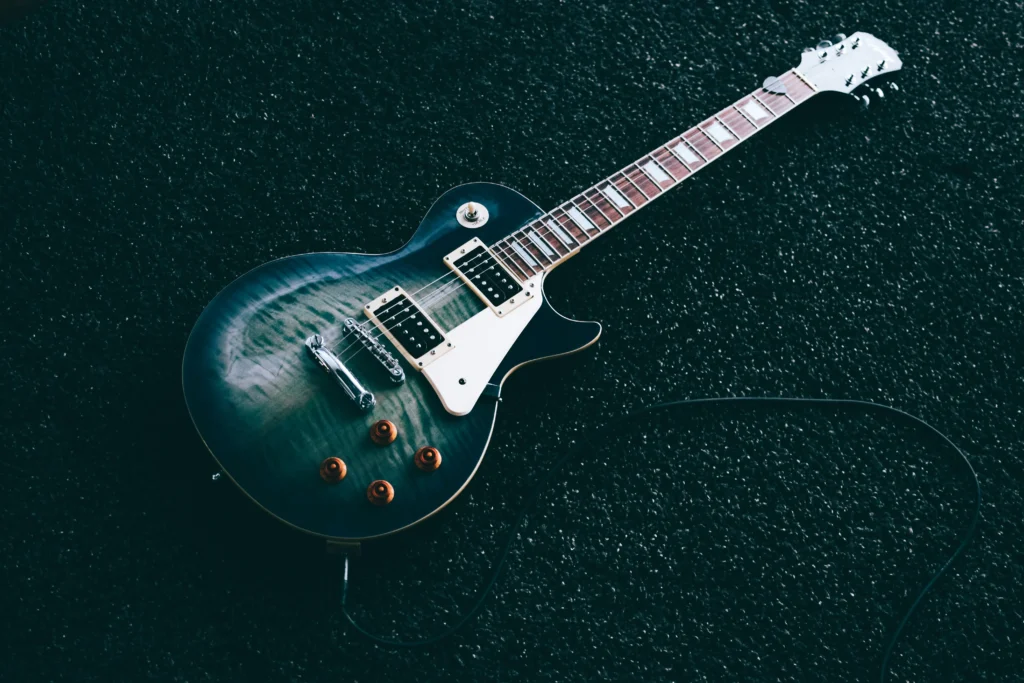
Study the most iconic guitar solos in Brazil It requires you to put the metronome aside for a moment to focus on the "swing".
Read more: Three Advanced Fingerpicking Techniques for Solo Guitar
Practicing scales with accents on the second beat of the eighth note helps to internalize that subtle delay that gives samba-rock its charm.
Don't limit yourself to the pentatonic scale; Brazilian guitar music draws from the functional harmony of Bossa Nova. Incorporating tensions like the ninth and thirteenth into your solos will give it the touch of sophistication characteristic of names like Toninho Horta or Hélio Delmiro.
What's the best strategy for learning these ear solos?
Technology in 2026 makes things much easier, but the ear remains the ultimate judge. Use software to slow down your playing, but focus on articulation: was that note a slide, a bend, or a hammer-on?
The secret lies in the details of the attack.
Learn more: How to use artificial intelligence in music to study better.
Many beginners focus on the right notes, but forget about "intention." Observing how the guitarist finishes a phrase, whether with a wide vibrato or a dry, staccato note, defines whether you are just playing or truly interpreting the style.
Record yourself and listen critically. This exercise reveals timing and dynamic flaws that go unnoticed in the heat of practice.
It is in the comparison between your audio and the original recording that real learning happens.
What equipment helps to achieve the tone of these classics?
For the sounds of the seventies, a fuzz pedal and a "clean" tube amplifier are the starting point.
The secret back then was using the guitar's volume knob to clear the dust from the pedal and gain dynamics.
Read more: We Tested 3 Types of Sax Reeds – Which One Gives the Best Tone?
For modern virtuosity, guitars with single-coil pickups offer the necessary clarity so that fast notes don't become an undefined mass of sound.
A light compression helps to sustain the notes in the more melancholic solos.
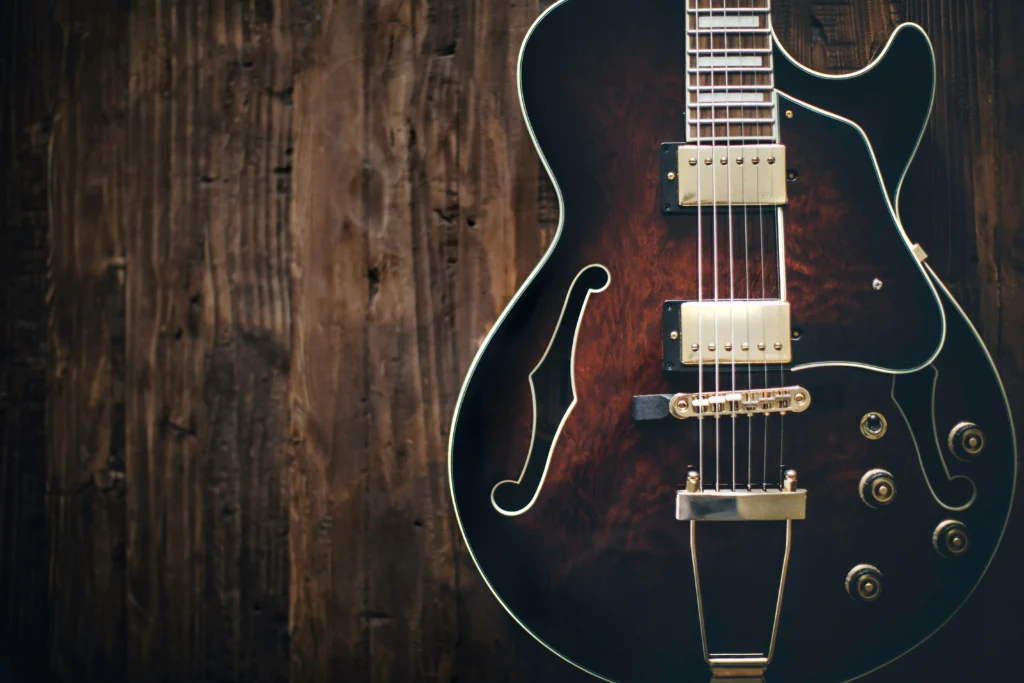
Ultimately, the tone is in the fingers. No state-of-the-art pedalboard will replace the precision of a well-tuned bend.
The Brazilian guitar is, above all, an instrument of touch and rhythmic sensitivity.
For in-depth tips on music theory and harmony analysis applied to Brazilian music, visit the portal. Musictheory.net or centers of excellence such as EMESP Tom Jobim These are fundamental academic references.
FAQ: Frequently Asked Questions about Brazilian Guitar
Do I need to know how to play the guitar to be a good Brazilian guitarist?
It's not a rule, but the guitar is the foundation of everything. Knowledge of inverted chords and walking bass lines from popular guitar is what provides the basis for national electric phrasing.
What is the most commonly used scale in Brazilian Popular Music (MPB) solos?
The Mixolydian mode is ubiquitous, but the Lydian b7 scale is the one that provides that sound that transitions between jazz and the regional rhythms of Northeast Brazil with complete ease.
How can I improve my speed without losing my swing?
Practice technical exercises using baião or samba rhythms with a metronome. Instead of straight quarter notes, try shifting the accents. This trains your brain to be a musician, not just a stringed instrument athlete.
Master the most iconic guitar solos in Brazil It's a process of attentive listening. More than replicating notes, the challenge is to capture the soul of an instrument that, in Brazil, has learned to speak and to cry. Each slide and each silence tells a story of creativity and adaptation.
By studying these masters, you not only improve your technique, but also preserve an immense cultural legacy. Pick up your guitar, adjust the tone, and let Brazilian musicality guide your fingers.
Success comes from the patience to polish every detail, transforming mechanics into pure artistic expression. The future of our music depends on those who respect the past while seeking new sonic frontiers.
