
Medieval instruments that influence music to this day.
Explore the Medieval instruments that influence music Contemporary music allows us to understand how European and Eastern sounds have shaped current genres.
Advertisements
The Middle Ages, far from being a period of cultural silence, functioned as a vibrant acoustic laboratory where the physics of sound began to be mastered.
In this article, we investigate the evolution of string, wind, and percussion instruments that have survived the test of time.
We will analyze how rudimentary lutherie-making technologies gave rise to the piano, the violin, and even modern guitars, proving that the past is the score of the present.
What are medieval instruments and what is their historical significance?
The instruments of the Middle Ages were much more than historical curiosities; they were tools of social expression, divided between sacred liturgy and the secular freedom of the troubadours.
Advertisements
They represent a rare cultural fusion, uniting European technique with the mathematical brilliance of the Arab-Islamic world.
The importance of these artifacts lies in the standardization of scales and the invention of resonance systems that we still use today.
Without the empirical experimentation of medieval artisans, modern acoustics simply would have no foundation for the development of large concert halls.
There's something unsettling about realizing that many fingering techniques used in 2026 were perfected by wandering musicians in the 12th century.
Medieval music isn't kept in museums; it has simply shed its skin to remain relevant on streaming platforms.
How did medieval plucked string instruments shape the modern guitar?
The lute and the cittern are the direct ancestors of almost everything we play today.
These instruments introduced the innovation of frets and double strings, allowing for a harmonic complexity that was previously unthinkable for traveling soloists.
When you hold a modern electric guitar, you're holding centuries of evolution: the concept of the soundbox and long neck remains almost untouched.
The lute introduced the harmonic density that now defines genres such as jazz and modern fingerstyle.
Many believe that the guitar is a child of the Renaissance, but this is often misinterpreted by enthusiasts.
The fundamental tension structure was already being exhaustively tested in medieval luthier workshops long before the first classical guitar was designed.
To understand the technical depth of organology and the classification of instruments, the portal Metropolitan Museum of Art It offers a detailed collection about the evolution of musical forms throughout the millennia.
What medieval wind instruments do we still hear in orchestras?
The recorder and the shawm are classic examples of technical survival in the field of wind instruments. While the recorder maintained its purity in pedagogical contexts, the shawm underwent a metamorphosis to become the oboe and the clarinet.
These medieval instruments introduced the use of a double reed, a mechanical innovation that delivered a more powerful and cutting sound.
Such power was vital for outdoor performances, where the music needed to overcome the noise of fairs and castles.
The use of strategically placed tone holes allowed musicians to explore semitones, opening the door to chromaticism.
Today, modern flutes have simply added polish and metal keys to what medieval wooden pipes had already pioneered.
Evolutionary Comparison: From Medieval to Contemporary
| Medieval Instrument | Modern Evolution | Core Technical Heritage |
| Lute | Acoustic Guitar / Guitar | Division by frets and long neck |
| Fiddle | Violin / Viola | Sustaining sound through the bow |
| Charamela | Oboe / Clarinet | Reed and tone hole system |
| Psaltery | Piano / Harpsichord | Strings stretched over a sound box |
| Portable Organ | Accordion / Organ | Air control via buttons and bellows. |
Why is the rebec considered the mother of the modern violin?
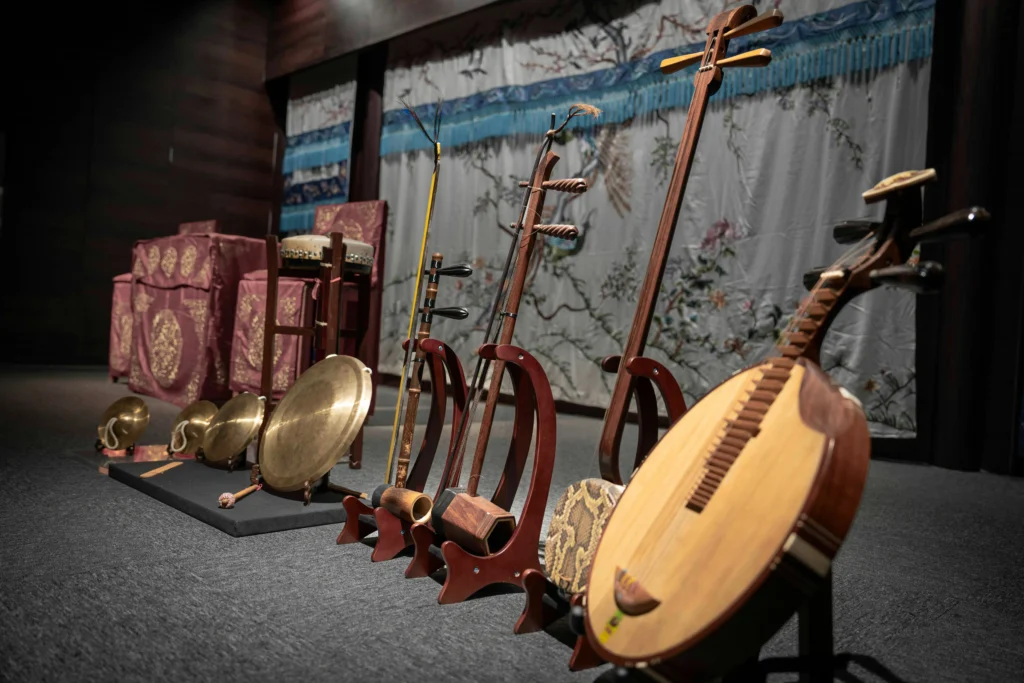
The rebec, or rabeca, introduced the use of the bow over taut strings, a technique that revolutionized musical phrasing.
Before it, the strings were only plucked, which made the sound short; the bow allowed the note to sing indefinitely.
The pear-shaped form of the rebec was gradually sculpted over time until it reached the "C" curves of the modern violin.
Read more: How to Tune Your Fiddle Without a Tuner
This change was not aesthetic, but an engineering solution to withstand higher voltages and allow for greater sound projection.
The influence of Medieval instruments that influence music This is evident in both classical music and the vibrant folk music of 2026.
The rabeca (a type of fiddle) continues to live on in Brazilian popular cultural expressions, proving that medieval design is resilient.
How did the psaltery give rise to the piano mechanism?
The psaltery consisted of strings stretched over a wooden box that could be plucked or struck with small wooden mallets.
This simple gesture of striking the string is the mechanical soul behind every piano key.
When craftsmen adapted a keyboard to operate these hammers, the psaltery evolved into the harpsichord and, finally, into the pianoforte.
Learn more: Digital piano reviews for beginners
The transition took centuries, but the idea of horizontal resonance was born in the hands of minstrels and clergymen.
It's fascinating to note that the volume dynamics we seek so much today began with the simple variation of force in the psaltery.
The modern piano is, in essence, a giant psaltery with an ultra-sophisticated interface for the performer.
What is the impact of medieval percussion on pop and rock music?
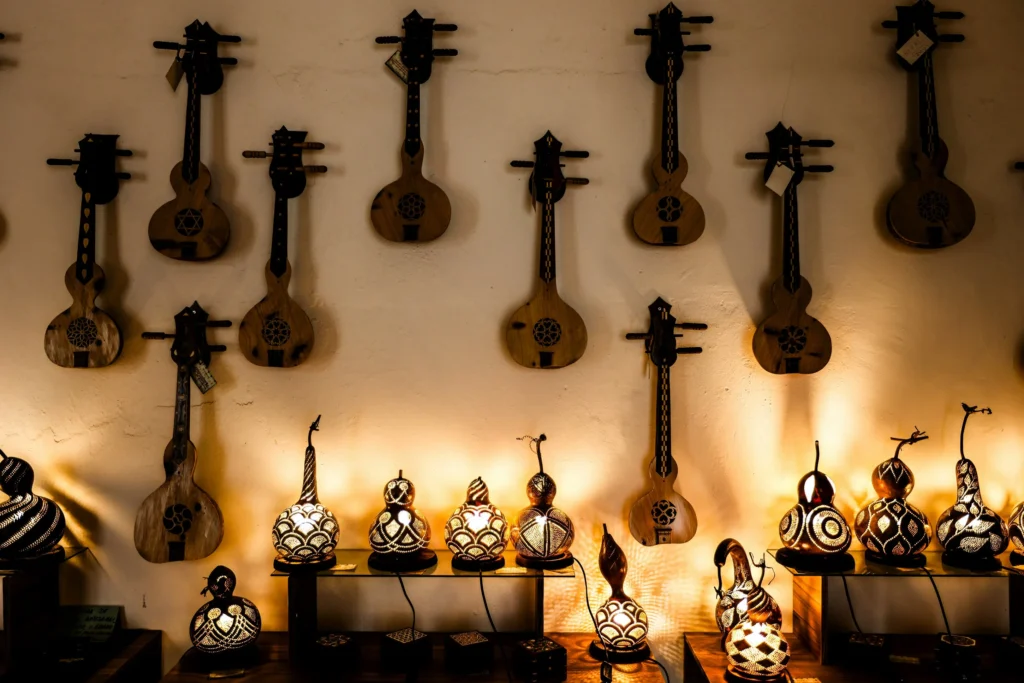
The frame drums and the naked (primitive eardrums) established the concept of binary rhythm that underpins almost all of today's Billboard music.
The Middle Ages formalized the use of stretched hides for marking time in rituals and celebrations.
In today's pop music, the bass drum and snare drum emulate frequencies that were already explored in marches and peasant dances.
Read more: Bass Drum: The Heavy Beat of Bandstand Bands and June Festival Bands
Rhythm is the most constant element of our evolution; it is the heartbeat of music.
The integration of rustic percussion in 2026 productions shows a return to the organic textures of the past. Many producers are seeking in the "dirty" and earthy sound of medieval wood an alternative to the sterile and synthetic perfection of computers.
For an academic perspective on the preservation of these sounds, the Smithsonian Institution He maintains active research on the sociocultural impact of ancient instruments on the formation of human identity.
FAQ: Frequently asked questions about medieval instruments
Is the medieval harp very different from the concert harp?
Yes, the medieval version was compact and didn't have pedals. However, the triangular structure and diatonic technique remain the backbone of any modern harp.
Why do many medieval instruments have names of Arabic origin?
The occupation of the Iberian Peninsula was one of the greatest cultural exchanges in history. The lute, for example, comes from "al-ud," which literally means "the wood" in Arabic.
Do modern musicians really use these instruments?
Absolutely. Experimental rock bands, soundtracks for major productions, and "neofolk" artists in 2026 use hurdy-gurdies and lutes to create sonic layers that synthesizers can't replicate.
You Medieval instruments that influence music Present-day examples bear witness to brilliant acoustic engineering that has withstood the test of time.
When you play a guitar or listen to the sound of a clarinet, you are actually activating an echo of the Middle Ages.
That period was not a dark age for art, but the solid foundation upon which our entire sound culture was built.
Recognizing these roots means understanding that music is a continuous line, where the new always needs the old to resonate authentically.
