
How to tune a fandango viola from the Brazilian coast.
Learn to tuning the fandango guitar In a traditional way, it is the first fundamental step for any musician who wishes to preserve the rustic sound of the Brazilian coast.
Advertisements
This unique instrument, handcrafted by Caiçara luthiers, possesses physical and acoustic characteristics that drastically differ from the viola caipira of the interior of São Paulo or Minas Gerais.
Unlike mass-produced instruments, the viola caiçara is usually carved from single blocks of native woods, such as caxeta or tamanco, using wooden tuning pegs instead of sealed tuning pins.
This traditional construction demands a keen sensitivity from the instrumentalist to adjust the string tension without compromising the stability of the neck.
What is "blind" tuning and what notes make up the pairs on the viola caiçara?
The most widespread tuning in the Caiçara communities of Paraná and São Paulo is popularly known as "blind" or "common" tuning, resembling the tuning in D major.
Advertisements
It arranges the ten metal strings in five courses of pairs, where the bass and treble sounds blend to create a continuous resonance effect.
From the fifth pair (lowest note) to the first pair (highest note), the musician must tune the instrument to the notes D, A, D, F sharp, and A.
The two highest-pitched pairs are tuned in unison, while the lower-pitched orders utilize the octave interval to flesh out the rhythmic beat.
Mastering the act of tuning the fandango guitar This configuration allows the musician to perform traditional fingerpicking techniques without needing to create overly complex chord shapes with their left hand.
The open instrument already resonates with a consonant chord, serving as a powerful harmonic foundation for singing and dancing.
How do you adjust the wooden tuning pegs without constantly detuning the instrument?
The use of solid wood tuning pegs, without the aid of mechanical gears, startles musicians accustomed to modern, factory-made guitars or violas.
The direct friction of the peg's wood against the instrument's hand wood is the only mechanism that sustains the strong tension of the steel wires.
To tune accurately, the player must turn the tuning peg while applying light, continuous pressure into the hole in the headstock.
If you simply rotate the piece without pushing it, the tension in the steel will cause it to immediately slide back, loosening the rope.
To consult detailed inventories of national folkloric manifestations, understand the guidelines for safeguarding cultural assets, and access registration documents for intangible heritage, the National Institute of Historic and Artistic Heritage (iphan.gov.br) It provides comprehensive scientific research on the traditions of the Caiçara culture.
| Name of the Caiçara Tuning | Pairs' Grades (5th to 1st) | Mechanical Stress Profile | Main Use in Fandango |
| Blind Tuning (D Major) | D (octave) – A (octave) – D (unison) – F# (unison) – A (unison) | Moderate and Flexible | General tapping and stippling marks |
| Natural Tuning (G Major) | D (octave) – G (octave) – B (unison) – D (unison) – G (unison) | High (Requires attention) | Music with a fast and high-pitched rhythm. |
| Rio Acima Tuning (E Major) | E (octave) – B (octave) – E (unison) – G# (unison) – B (unison) | Very High (Risk of breakage) | Performances in higher pitches |
Why does the choice of string gauge affect tuning stability?
Traditional fandango guitars do not have an internal metal truss rod in the neck, relying purely on the mechanical strength of the solid wood to withstand the force of the strings.
Read more: The history of the viola machete in the music of the Recôncavo Baiano region.
Using very heavy strings can irreversibly warp the instrument's structure and compromise the action of the tuning pegs.
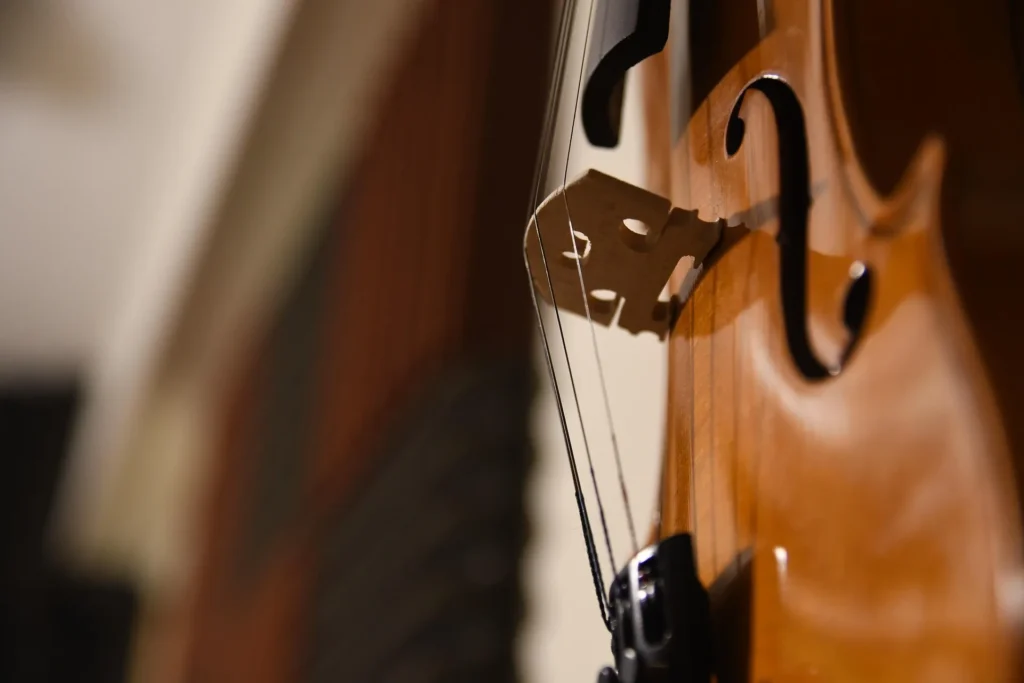
It is recommended to use extra-light gauge steel strings, known in the music industry as 0.009 or 0.010, specifically designed for traditional violas.
These thinner wires exert less structural pressure, making the task of tuning the fandango guitar without overloading the handcrafted harmonic soundboard.
The flexibility of these lighter strings also benefits the execution of the "strumming," the percussive rhythmic technique where the musician strikes the soundboard directly with their fingernails.
Very stiff strings hurt the fandango dancer's fingers and cancel out the characteristic snapping sound that guides the dancers' clogs on the stage.
What are the practical differences between blind tuning and natural tuning?
While blind tuning transforms the open strings into a D major chord, some fandango masters use natural tuning, based on the G major chord.
The choice between one and the other depends directly on the tone of voice of the singers in the festivities or the coastal region.
Learn more: Pentatonic scales on the guitar: practical applications in Brazilian Popular Music (MPB) and rock.
The natural tuning raises the tension of some notes, which gives the instrument a brighter, more strident and cutting timbre in the middle of the performance.
However, this additional pressure requires the musician to have greater skill in securing the tuning pegs so that the ambient heat does not cause the viola to go out of tune.
To explore in-depth musicological studies on the organology of traditional Brazilian instruments, access biographies of master luthiers, and analyze scores of regional rhythms, the Website of the National Arts Foundation (funarte.gov.br) It acts as the government's reference institution for promoting musical arts in the country.
Preserving the musical memory of the Caiçara people through generations.
Keeping the tradition of the fandango viola alive goes far beyond mastering its musical techniques; it is an act of cultural resistance and historical preservation.
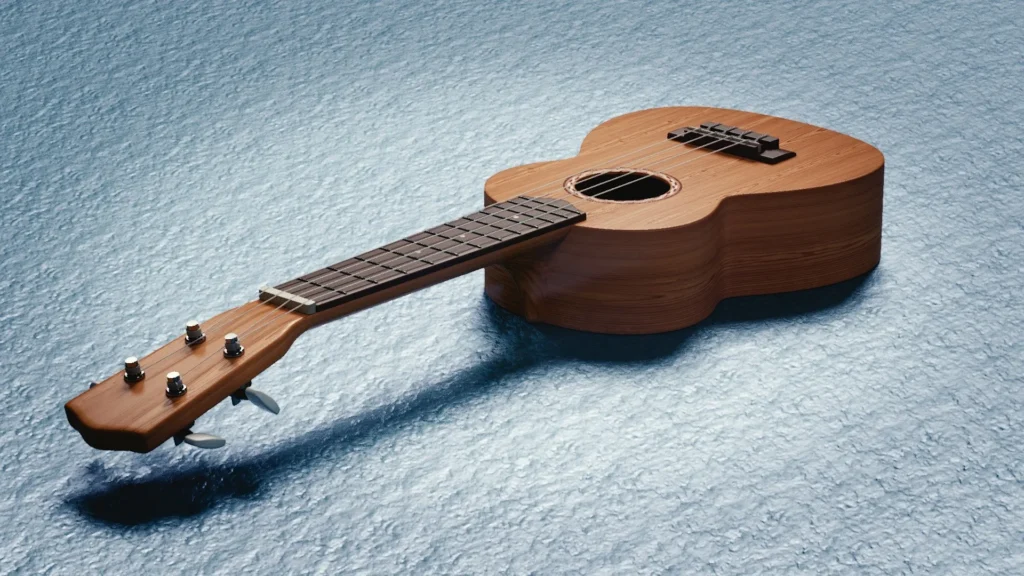
Each strum on the steel strings echoes the identity of communities that find in music the celebration of their lives and territories.
Read more: The construction of the dynamic viola used in rural Northeast Brazil.
Consult the intervals and notes organized in our tuning matrix, prepare your instrument with light strings, and adjust the tuning pegs firmly but smoothly.
By understanding the correct method for tuning the fandango guitar, Here, you connect directly with the purest roots of our Brazilian coastline.
Frequently Asked Questions about the Fandango Viola
Can I use a digital clip-on electronic tuner on a viola with wooden tuning pegs?
Yes, the digital tuner simplifies the technical process by finding the exact frequencies in hertz, making fine-tuning easier for those who are still developing their auditory perception.
What to do if the wooden tuning pegs are slipping and causing the tuning to loosen?
A traditional and effective solution is to rub a little dry chalk or rosin on the side of the tuning peg to increase friction with the wood.
What is the difference between a traditional fandango guitar and an industrially produced caipira guitar?
The fandango viola has a body carved from a single piece (a shallow box or hollow-body guitar), wooden tuning pegs, and is made using traditional Caiçara artisanal techniques.
How often should I change the steel strings on my viola caiçara?
Replacement should occur when the strings lose their tonal brightness or show signs of oxidation, which generally happens every three months of regular use.
