
Gaucho Sopapo: The History of the Black Drum of Rio Grande do Sul
THE gaucho sopapo It is the large drum that symbolizes cultural resistance and Black ancestry in the historical and musical formation of Rio Grande do Sul.
Advertisements
Created by enslaved workers in the charqueadas (meat-drying plants) of Pelotas and Rio Grande, the instrument has imposing dimensions, a deep timbre, and a completely unique percussive playing technique.
Understanding the history of this historic drum requires recognizing the leading role of the Black population of Rio Grande do Sul, often rendered invisible in traditional narratives about the regional culture of southern Brazil.
We will analyze the artisanal construction, the associated rhythms, the movements for safeguarding heritage, and the role of this percussive icon in contemporary popular music produced in the country.
How did this drum originate in the charqueadas (meat-drying plants) of Rio Grande do Sul?
The instrument's origins date back to the 19th century, when enslaved men used large wooden blocks and horse or cow hides to build deep-resonating drums.
Advertisements
The grueling routine of processing dried beef did not prevent the creation of spiritual and musical expressions, turning the workplace into a refuge for the preservation of African identities brought to the state.
The elongated conical shape and low tuning allowed the beat to reverberate over long distances, communicating religious gatherings and rhythms between slave quarters and quilombos (maroon settlements) in the southern region.
The development of gaucho sopapo It reflects the technical inventiveness of master percussionists who transformed rustic work materials into an artistic tool that strongly affirms cultural identity.
What are the constructive and sonic characteristics of the instrument?
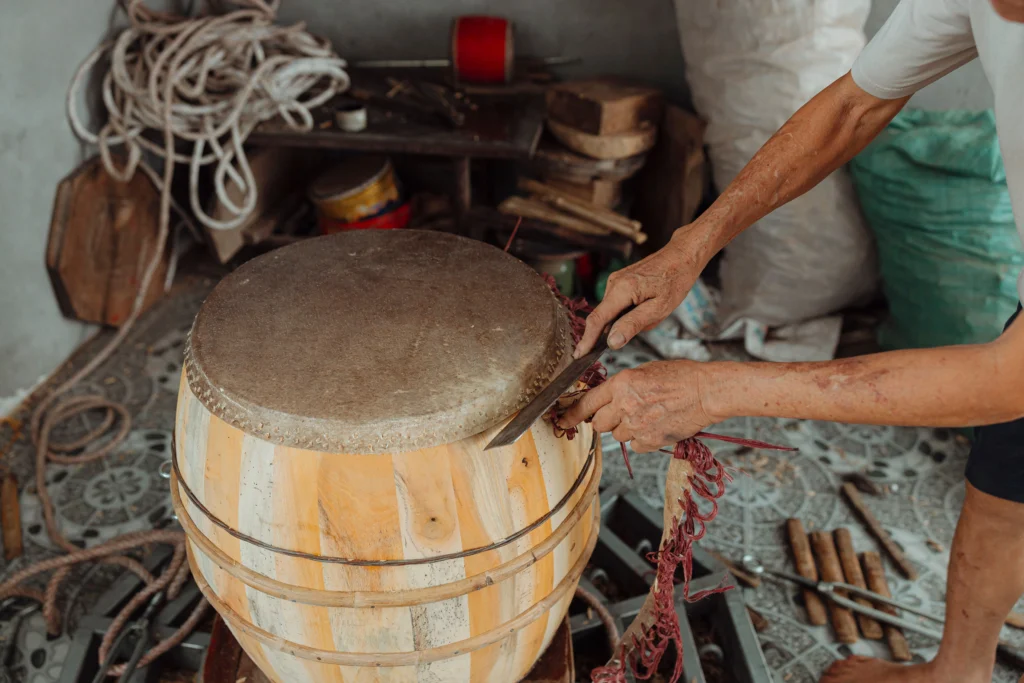
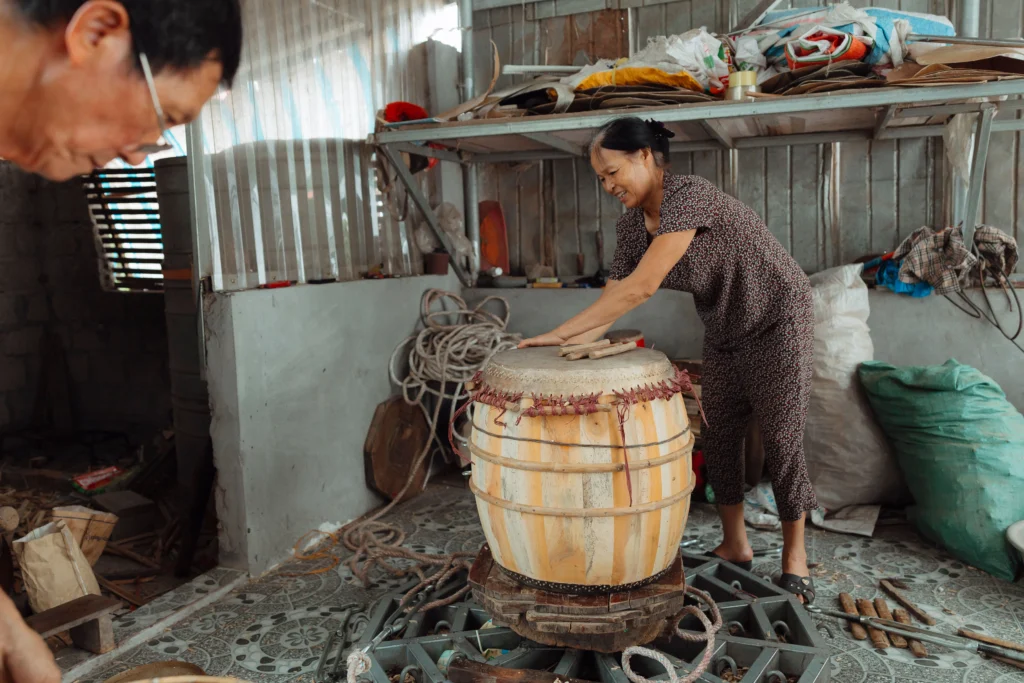
Traditionally constructed from strips of fine wood arranged in a barrel shape, the drum can exceed one meter in height and half a meter in diameter at the top.
The horsehair stuffed with straw imparts a deep, full-bodied, and velvety tone, requiring the percussionist to use open palms to extract the characteristic sonic volume.
Unlike other Afro-Brazilian ritual drums, its execution requires considerable physical effort, combining direct impact, manual muffling technique, and characteristic swing in the rhythmic movement.
Tuning depends on preheating the skin over a fire or on the mechanical adjustment of turnstiles and strings spread along the wooden body of the instrument.
Technical Specifications and Dimensions of the Ancestral Drum
| Construction Parameter | Traditional Historical Pattern | Contemporary Adaptation | Impact on Performance |
| Raw Material of the Body | Wood from barrel staves | Marine plywood and solid wood strips | It guarantees projection and acoustic support. |
| Membrane Type | Unshaved horsehide | Treated bovine or synthetic leather | It generates deep bass with a dry attack. |
| Average Height | 90 cm to 120 cm | 80 cm to 100 cm | Define the instrumentalist's body posture. |
| Beating Technique | Palms open and wrists | Open hands and soft drumsticks | It provides a richness of harmonics and volume. |
What is the role of the instrument in Carnival and in the music of Rio Grande do Sul?
During the 20th century, samba schools and carnival groups in Pelotas and Porto Alegre adopted the drum as a central element of their rhythmic percussion sections.
Read more: Maintenance guide for Brazilian percussion instruments.
Composer Mestre Baptista and other master percussionists led preservation movements, preventing the disappearance of artisanal instrument-making techniques in the face of industrial modernization.
In the state's popular music, artists have integrated this distinctive percussion into arrangements of MPB (Brazilian Popular Music), milongas, candombes, and jazz fusions of high harmonic complexity and captivating rhythm.
To consult cultural inventories and guidelines on Brazilian intangible heritage, access the portal of National Institute of Historic and Artistic Heritage (IPHAN).
How do safeguarding initiatives and garment-making workshops take place?
The Cabobu project, conceived by musician José Baptista in the late 1990s, marked the historic workshop for the collective reconstruction of dozens of original drums in Pelotas.
This mobilization brought together artisans, researchers, and griot masters to catalog oral history, transmit secrets of impalement, and distribute new instruments to peripheral cultural groups.
Learn more: Fandango tambourine: what changes in relation to the Brazilian pandeiro?
Community colleges and Black cultural centers frequently host hands-on workshops, ensuring that young musicians learn how to handle the tools and assembly techniques.
The appreciation of gaucho sopapo It promotes public policies to combat historical erasure, consolidating the drum as an intangible cultural heritage of the people of Rio Grande do Sul and Brazil.
Why does preserving the drum strengthen Afro-Gaucho identity?
Recognizing the significant presence of this drum demystifies the idea of a Gaucho culture that is exclusively Eurocentric, highlighting the decisive contribution of the Black population to the development of the state.
Each beat on the drumhead recalls the struggle of ancestors who kept their rhythmic traditions alive in the face of severe historical and social adversities in southern Brazil.
The instrument acts as a pedagogical bridge in public schools, allowing the history of Africa and Afro-Brazilian culture to be explored through music and practical art.
Read more: A guide to Brazilian luthiery: how handcrafted guitars are made.
To research collections about the memory of Black culture and traditional manifestations, visit the page of Palmares Cultural Foundation.
FAQ – Frequently Asked Questions
What is the difference between the sopapo and the traditional atabaque?
The sopapo has a larger diameter, is played with the palms of the hands flat, and produces a deeper and more sustained bass sound than the atabaque.
How is this large drum tuned?
Traditional tuning uses the heat of a fire to stretch the horsehide, although modern models feature hardware and mechanical tuning screws.
Where can I see and hear the instrument being played?
The drum is present in carnival parades in Pelotas and Porto Alegre, in performances by candombe groups, in MPB shows, and in workshops on gaucho percussion.
The story of gaucho sopapo This highlights the transformative power of ancestral percussion in Rio Grande do Sul. Preserving this drum is to honor the memory and living contribution of Black culture.
