
Discover Balkan gusle and its sung stories.
The ancestral tradition of Balkan gusle It preserves centuries of history, mythology, and epic poetry through a legendary bowed string instrument that continues to resonate throughout southeastern Europe.
Advertisements
Handcrafted from a single block of wood, this ancient musical artifact transcends mere entertainment, acting as a true sonic archive of the region's community memories.
Understanding the role played by this unique instrument allows us to explore the richness of the oral narratives that have shaped the cultural identity of the peoples who inhabit the Balkan Mountains.
Discovering how this artifact remains alive in the contemporary landscape attracts students of ethnomusicology, historians, and enthusiasts of traditional music who value the preservation of intangible heritage.
What is this instrument and how does its sound mechanism work?
This acoustic relic features a single braided horsehair string stretched over a hollowed-out resonant body covered in precisely tensioned, dried animal hide.
Advertisements
The musician, called a guslar, holds the curved wooden bow and rubs the string while pressing laterally with his fingers, producing a guttural and dramatic fretless sound.
| Structural Element | Manufacturing Material | Acoustic Function and Ritual | Impact on Performance |
| Resonant Body (Karlica) | Maple, walnut or ash wood | It amplifies the vibration generated by the friction of the arc. | It produces a deep, nasal, and rustic timbre. |
| Harmonic Panel | Goat, sheep or snake skin | It transmits sound waves to the inside of the box. | Define the projection and resonance of the instrument. |
| Single String and Bow | Braided mane of a male horse | It generates vibration through continuous friction. | It allows for variations in intensity and ornamentation. |
| Sculpted Male (Glava) | Carved wood (eagle or goat head) | Symbolic decoration and support for the oak. | It represents the lineage and pride of the artisan. |
Academic records and documentation on the safeguarding of humanity's intangible cultural heritage are available on the official website of UNESCO, a global authority on cultural preservation.
Touch the Balkan gusle It demands perfect synchronicity between the spoken song and the hypnotic melodic line that accompanies each stanza of the long epic poems transmitted orally.
The absence of a conventional tempered scale allows the artist to explore expressive microtones, adjusting the pitch of the note according to the emotional charge of the recited poem.
The practice of carving mystical figures on the top of the instrument's neck reflects the deep artistic devotion of the craftsmen who dedicate months to finishing each piece.
How do sung stories preserve the memory and identity of the Balkans?
The epic songs sung by bards recount historical battles, the deeds of popular heroes, and folklore legends that have been passed down through generations without relying on traditional printed writing.
During centuries of foreign domination, oral poetry accompanied by this instrument served as the primary vehicle for preserving language, customs, and community pride.
Read more: What makes the Latvian kokle unique among European zithers?
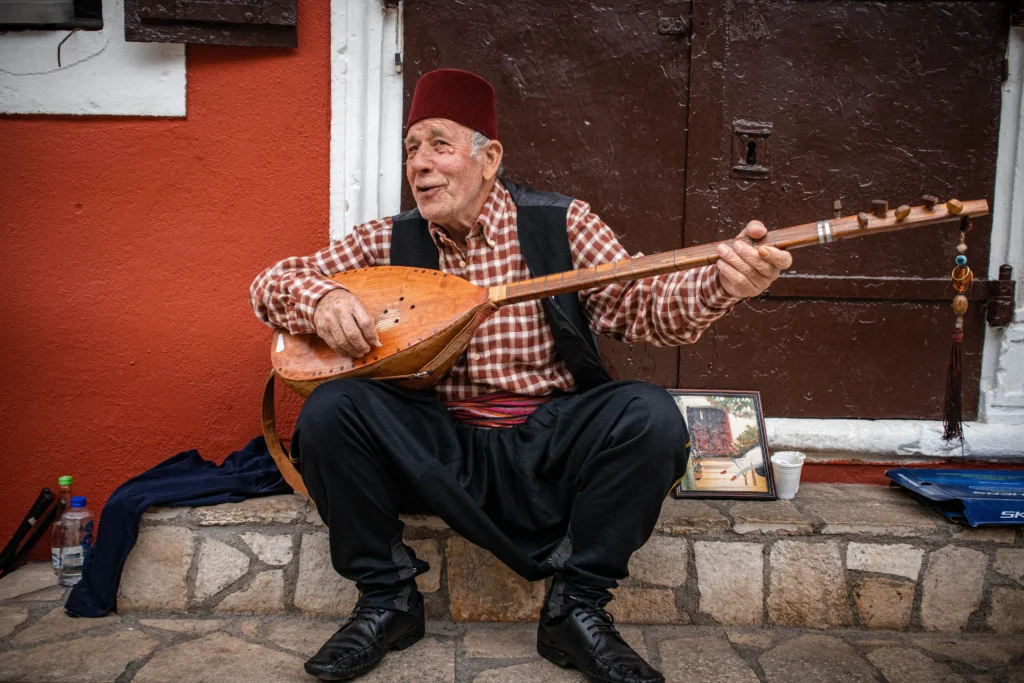
The decasyllabic metrical structure of the verses facilitates the memorization of immense poems, allowing narrators to recite thousands of poetic lines without losing the sequence of events.
The audience listens to the performances with profound ritualistic respect, recognizing in the metaphors and hymns the living continuity of their own ancestors and community values.
Which regions keep alive the practice of accompanied epic poetry?
In Serbia, singing accompanied by this instrument has been formally inscribed on the list of Intangible Cultural Heritage, consolidating permanent government programs for teaching and conservation.
The mountain communities of Montenegro hold annual festivals where young people compete in performing epic classics and contemporary poetic compositions on social themes.
In Bosnia and Herzegovina and in regions of Croatia, cultural associations organize regular meetings to encourage the artisanal production and technical study of this sonic heritage.
Learn more: What is the psaltery and why has it returned to modern folk music?
Albania preserves a similar variation known as lahuta, demonstrating how the tradition of epic declamation unites different peoples through a shared musical aesthetic.
How has the tradition of the epic bard adapted to the twenty-first century?
The inclusion of digital content on streaming platforms has allowed historical recordings and modern performances to reach listeners anywhere on the planet instantly.
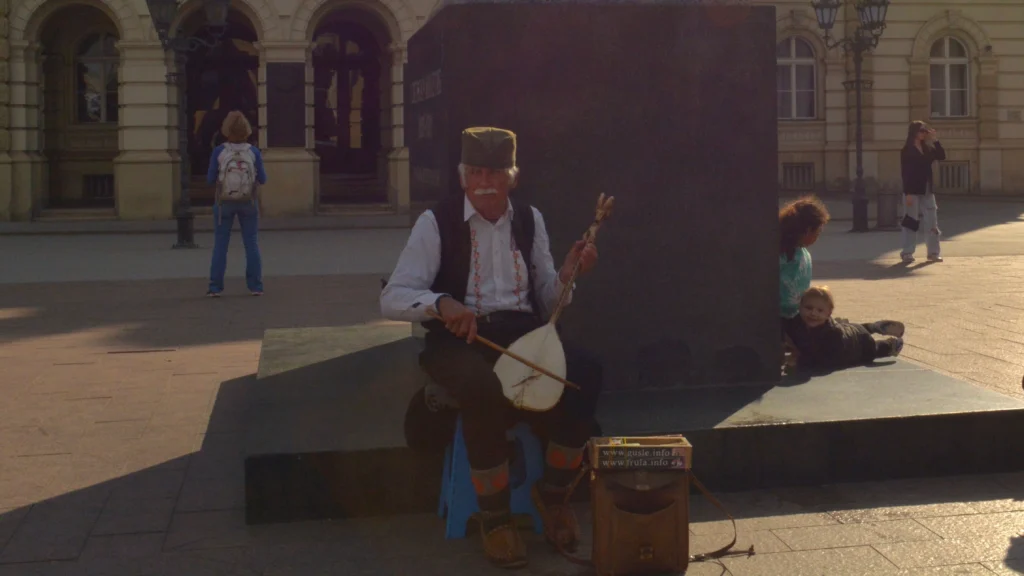
European music conservatories and universities have integrated the study of this instrument into their ethnomusicology curricula, ensuring rigorous academic analyses of its acoustics and metrics.
Young musicians blend the rustic sound of horsehair strings with chamber music arrangements and contemporary folk projects, renewing the interest of new generations.
Read more: Discover the Arabic rebab that influenced the European violin.
Modern luthier workshops utilize precision tools to improve the durability of tuning pegs, maintaining stable tuning without compromising traditional artisanal construction methods.
In-depth studies on the history of southeastern Europe and regional folklore can be found on the platform of Serbian Academy of Sciences and Arts, a leading scientific institution.
Enjoy the Balkan gusle It provides a fascinating journey through the roots of oral poetry and epic music that have bravely withstood the test of time.
Preserving and disseminating this artistic expression ensures that the richness of the stories told through song continues to inspire musicians, historians, and culture lovers around the world.
What are the steps involved in the handcrafted production of this acoustic relic?
Selecting the right wood is the first critical step, prioritizing maple or ash trees that have been naturally dried for years to prevent future cracking.
The craftsman manually excavates the central block using chisels and rasps, shaping the resonant shell with millimeter-precise thicknesses to optimize acoustic projection.
The treatment of animal hides involves traditional tanning processes and securing them with wooden tacks around the entire edge of the soundbox.
The final assembly includes making the tuning peg and adjusting the wooden bridge that supports the single string on the soundboard.
Conclusion
The musical ecosystem of the Balkans holds within its unique stringed instrument the essence of oral storytelling and the spirit of resistance of its people.
The harmonious blend of spoken poetry, horsehair resonance, and handcrafted carvings transforms each performance into a thrilling and memorable cultural experience.
Supporting the conservation and study of these ancestral practices ensures that the collective memory and art of traditional instrument making continue to live on for the future.
Frequently Asked Questions (FAQ)
How many strings does the instrument have in its traditional configuration?
The vast majority of traditional models have only a single horsehair rope, although there are rare regional variations equipped with two parallel ropes.
Is it difficult to learn to play and sing at the same time?
Yes, practice requires years of training to master the coordination between bow friction, microtonal pressure, and deliberate poetic recitation.
Where can I find this instrument to buy or learn more about?
Authentic instruments are acquired directly from specialized luthiers in the Balkans or admired in ethnological museums in Serbia, Montenegro, and Bosnia.
