
Five-string cavaquinho: how this variation changed contemporary samba.
The emergence of five-string cavaquinho In the Brazilian music scene, it represents one of the most significant transitions to the harmony of samba and pagode in recent decades.
Advertisements
Unlike the traditional model, this variation adds a lower-pitched string, usually tuned to G or A, which dramatically expands the possibilities for bass lines and inversions.
In 2026, the instrument consolidated its presence on stage, allowing musicians to explore textures that previously required the constant presence of a seven-string guitar.
This article details the technical evolution, the impact on the sound of contemporary bands, and why so many professionals have decided to abandon the four-string guitar.
Let's understand how this extra string redefines the role of the cavaquinho player, transforming them into a much more robust and versatile harmonic pillar within the arrangement.
Advertisements
What is the five-string cavaquinho And what's your tuning?
The instrument retains the soul of the traditional cavaquinho, but introduces an additional bass string that changes everything.
The most common tuning preserves the four treble strings (D, G, B, D) and adds a low G or A in the fifth position.
It's not just about "having one more note," but about changing the instrument's center of gravity.
This configuration allows the musician to perform walking bass lines, the famous "bass lines," without abandoning the percussive rhythm of the strumming.
The result is a full-bodied sound that resolves that void in the mid-to-low frequencies, something that has always been a challenge for the four-string cavaquinho.
Many musicians migrated to the five-string cavaquinho Seeking autonomy in solo or trio performances, the harmonic fill becomes much denser.
On the other hand, the construction requires extra care; the neck needs internal reinforcements to prevent it from buckling under the extra tension of the metal strings.
How has the instrument changed the arrangements of samba and pagode?
In the past, the cavaquinho player was restricted to a rhythmic function and high-pitched brilliance, leaving the bass notes to the guitar.
With the extra string, the musician begins to interact on equal terms with the surdo and the tantã, creating a much more interesting rhythmic connection. It's as if the instrument gains a new level.
There's something unsettling about how musical purism initially resisted this innovation, but the sonic practicality of the five-string model eventually overcame that prejudice.
It facilitates complex chord inversions, allowing for harmonic passages that would otherwise sound "thin" or incomplete.
For those who wish to understand this change in depth, it is worth observing how modern arrangements are constructed.
The website of Order of Musicians of Brazil It offers guidelines and records that help to understand the growing professionalization of this instrumental class in the country.
Why has the bass string become essential in 2026?
The evolution of monitoring systems and the pursuit of flawless audio in streaming demand more balanced tools.
THE five-string cavaquinho It responds to this demand by delivering a flatter frequency response, preventing the sound from becoming that "machine gun of high frequencies" that tires the ear.
By 2026, pickup technology has reached a point where the fifth string sounds with absolute clarity, without muddling the sound.

This is vital for arrangers seeking a modern aesthetic, fusing the tradition of samba circles with the harmonic sophistication of jazz or bossa nova.
Read more: Brazil and Its Strings: A Journey Through Fiddles and Violas
Adapting requires a new posture. The arm is slightly wider, which may be unsettling for those with small hands.
However, the improvement in chords with sevenths, ninths, and thirteenths makes the motor retraining effort worthwhile for every minute of study.
Technical Comparison of Cavaquinho Models
| Feature | 4-String Model | 5-String Model | Sound Impact |
| Standard Tuning | D – G – B – D | (G) – D – G – B – D | Greater bass range |
| Eyebrow Width | 28mm to 30mm | 32mm to 35mm | Requires greater finger reach. |
| Arm Tension | Low / Medium | High (requires tensioner) | Firmer and more sustained sound |
| Main Function | Percussive / Solo | Harmonica / Bass | Full band coverage |
| Versatility | High (Traditional) | High-end (Modern) | Ideal for complex arrangements. |
What are the difficulties in transitioning between the models?
The biggest barrier for those who have already mastered the traditional method is muscle memory.
The middle strings shift slightly from a tactile perspective, and the musician needs to learn to mute the fifth string so that it doesn't resonate freely during the samba.
This is often misinterpreted as a lack of technique, but it's simply a matter of grip adjustment.
The choice of string type is also a critical point.
It's not enough to just put on any old guitar string; the tension balance must be perfect so that the fifth string doesn't drown out the brightness of the high notes.
Learn more: How to remove squeaking from old guitar strings
Brazilian luthiers have been developing specific metal alloys for the five-string cavaquinho, focusing on durability.
Picking requires more control.
The movement needs to be precise to catch the low string only when the arrangement calls for it, without losing the "swing" of the right hand.
It's a refinement that separates those who merely play from those who truly master the dynamics of the instrument.
The role of Brazilian luthiers in this innovation.
Brazil has become the world laboratory for this evolution. Artisanal workshops are creating models that are true acoustic gems, using fine woods such as rosewood and ebony to ensure that the bass doesn't sound "loose" or undefined.
Foreign instrumentalists are now turning to our masters to commission custom-made five-string models.
Learn more: Brazilian cavaquinho vs. Portuguese cavaquinho: sound differences
This appreciation for "made in Brazil" removes the cavaquinho from the status of a "lesser instrument" and places it on par with the great global stringed instruments, featuring cutting-edge technology in pickups and craftsmanship.
Invest in a five-string cavaquinho Becoming a luthier is not just a luxury, it's a career choice for anyone working in contemporary samba.
The tuning stability and sound projection of these handcrafted models leave mass-produced, factory-made instruments far behind.
The use of the five-string cavaquinho in the studio and live.
In the studio, the harmonic clarity of the instrument saves hours of mixing. The sound arrives ready, with a sustain that naturally fills out the arrangement.
Live, the musician gains a much greater stage presence, managing to hold the band's own even during more stripped-down moments.
The trend in 2026 is that music schools and conservatories will officially adopt the five-string model in their curricula.
The instrument has gone from being an eccentricity of a few soloists to becoming a standard work tool for those who make a living from music.
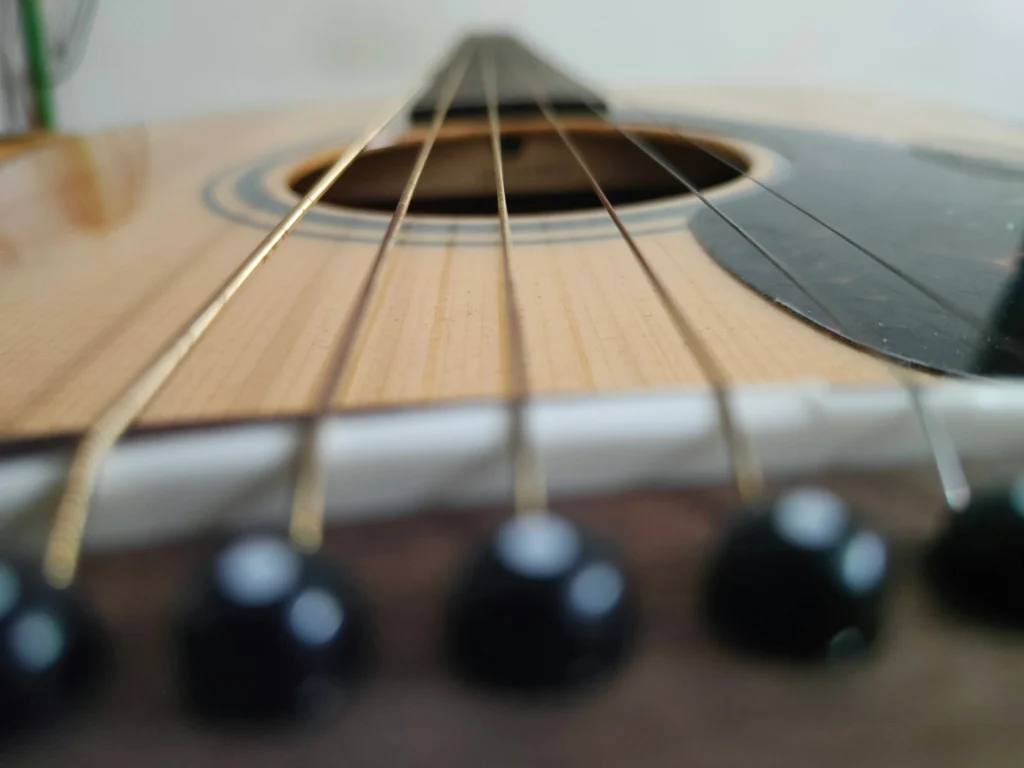
Mastering the techniques of bass lines and simultaneous playing is what defines an avant-garde musician. To follow the technical discussions on the subject, visit the portal of Brazilian Music Association It offers valuable content about the evolution of our instruments.
Samba never stops transforming, and those who ignore the fifth string risk becoming stagnant in a sound that no longer meets the demands of modern stages.
In the end, the music is grateful for that extra string that brought more ground and more sky to our cavaquinho.
FAQ: Frequently Asked Questions
Can any 4-string cavaquinho be adapted to have 5 strings?
Don't do that. The physical structure of a standard cavaquinho (a small Brazilian stringed instrument) cannot withstand the tension of a fifth string. The risk of warping the neck or tearing off the bridge is extremely high.
Is the fifth string always tuned to low G?
The standard key is G, but many musicians use A to facilitate certain passages in the keys of D or E. It all depends on your bass playing style.
Is learning much more difficult?
It's another step forward. If you already play, the challenge is purely motor-based. If you're just starting out, learning directly on the five-string guitar might even be easier, as your harmonic vision is already more developed from the start.
What are the best woods for this instrument?
Rosewood is a classic choice for the body, as it projects bass frequencies well. Cedar for the neck usually requires a steel truss rod to ensure nothing shifts.
Where can I find strings for a 5-string guitar?
Today, in 2026, major national brands sell specific sets of strings. Avoid improvising with loose strings from other instruments to avoid compromising the tone.
