
How to choose maracatu costumes for study and performance.
For the percussionist who wants to delve into the culture of Pernambuco, knowing choose maracatu costume It's the first step to avoid ending up with a heavy, soundless "job" on your hands.
Advertisements
This drum, with its imposing body and deep sound, is the heart of the baque virado rhythm, demanding a keen eye for details that go far beyond aesthetics: we are talking about carpentry, physics, and ancestry.
In this guide, we will dissect the technical specifics that separate a study instrument from a high-performance piece.
Let's explore the world of drumheads, strings, and weight, ensuring that your choice is a real investment in your sound and in preserving a legacy that rejects generic tones.
What is a maracatu drum and how is it constructed?
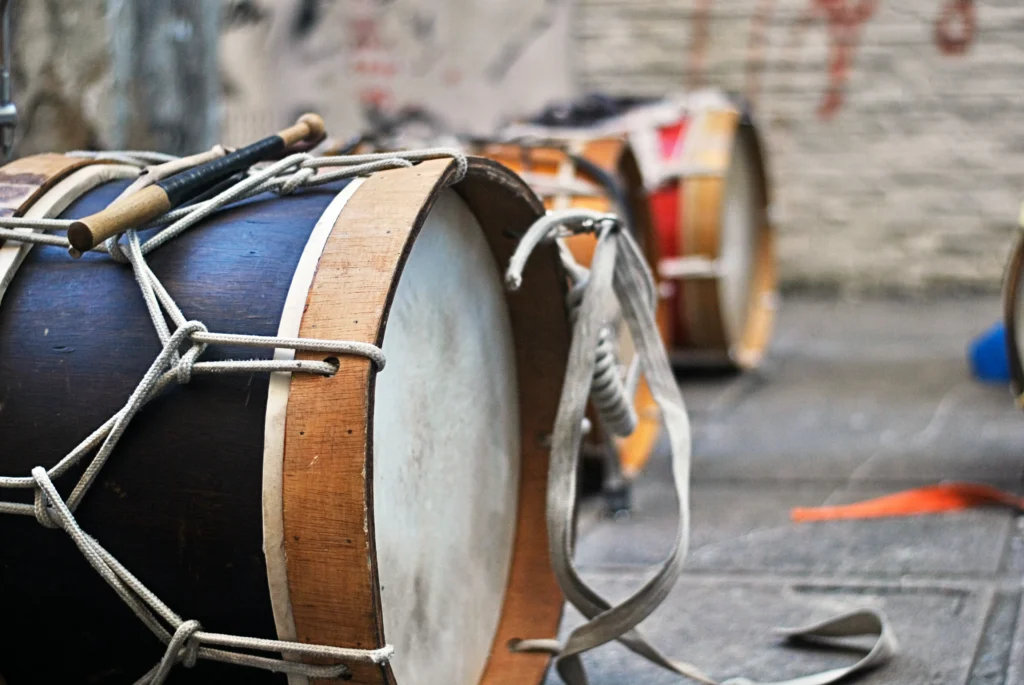
The alfaia is a generously sized cylindrical drum, traditionally constructed from macaíba wood or marine plywood, and its essence lies in its string tuning.
Advertisements
What defines his identity is that deep, dry, and in-your-face sound, achieved by using animal skins on both ends of his hair.
Currently, master craftsmen are searching for the Holy Grail of percussion: lightness without loss of resonance. The body, or shaft, receives wooden hoops that hold the skins, while sisal or polyester strings ensure tension.
There's something ritualistic about this process; if the string is bad or the wood gives way, the sound dies.
To know choose maracatu costume It requires understanding that the instrument is a living organism. A poorly assembled drum can have warped hoops or cracks in the shell, which ruins the sustain of the note, especially in cities with large variations in humidity.
What are the differences between academic gowns and presentation gowns?
Instruments designed for study often focus on the "bumps" of daily use. They are often somewhat more robust and heavy tools, made with thick plywood.
They are ideal for withstanding the rigors of percussion workshops and for transport without much luxury or padded cases.
Once on stage, the priority shifts drastically to projection and ergonomics. A professional percussionist doesn't want to carry seven kilos during a two-hour procession.
The goal is a powerful bass sound, but with thin, durable shells. If you want to understand the historical significance of these groups, visit the website of... IPHAN It offers fundamental records about Maracatu de Baque Virado.
The choice of drumhead also comes into play. While thick drumheads last forever in the studio, on stage the musician wants a cleaner harmonic response, without metallic overtones.
It's a matter of hearing sensitivity and physical comfort.
Why does the drumhead material alter the drum's timbre so much?
Goat skin is the golden rule: it offers a quick response and a sheen that cuts through the sound mass effectively. Cowhide, on the other hand, being much denser, is the secret to the "markings," those enormous instruments that make the ground tremble.
The sound is absurdly deep, almost like controlled thunder.
This variation requires distinct tuning methods. Skins that are too thin will burst if you try to reach the pitch of the higher-pitched nations, while poorly stretched cowhides sound like a lifeless "puff.".
It's a common beginner mistake to think that any drumhead will work for any size drum.
To the choose maracatu costume, Examine the skin against the light. It should be smooth, without deep marks from animal scars or holes.
A well-fitted drumhead ensures that the vibration spreads across the diameter of the drum without creating those sonic "knots" that irritate any trained ear.
Alfaias Models in 2026
| Feature | Study Tools (Standard) | Professional Stage Equipment |
| Body Material | Virola Plywood | Marine plywood or Macaíba |
| Common Diameter | 14″ to 18″ inches | 18″ to 22″ inches |
| Used Skin | Bode (Medium thickness) | Goat or Ox (Treated) |
| Rope Type | Polypropylene or Sisal | Cotton or Nautical Polyester |
| Average Weight | 5kg to 7kg | 3.5kg to 5.5kg |
| Ideal Use | Workshops and daily practice | Shows, Recordings and Parades |
How to choose the ideal tailoring size for your body?
Ergonomics is often neglected until the first back pain appears. Since the instrument is played over the shoulder, suspended by a strap, the size of the body should be proportional to your height.
An ill-fitting instrument limits arm agility and ruins your posture in ten minutes of drumming.
Learn more: Alfaia: The Heavy Drum of Maracatu Pernambucano
For children or beginners of short stature, 14 or 16-inch models are the perfect entry point. Those who will take on the responsibility of playing the bass notes will need 20 or 22-inch models.
It's a matter of air displacement: the larger the diameter, the more the bass "embraces" the listener.
To know choose maracatu costume It involves testing the balance. The drum should not lean forward. The depth of the shell also matters: very wide drums are great for resonance, but can be a nightmare for those who need mobility on stage.
When should you invest in instruments with modern or traditional tuning?
String tuning is what gives maracatu its "face" and organic sound. However, it requires you to learn the knot technique and have the arm strength to apply tension.
Many musicians prefer this system because of its ancestral connection; there's a conversation between the string, the hoop, and the wood that metal hooks simply ignore.
Metal hook systems make life easier in studios, but they change the weight and often kill some of the hull's natural vibration.
Read more: The secret to the sound of the alfaia drum: how tuning completely changes the maracatu.
For those seeking absolute fidelity to the Pernambuco tradition, the strings are not merely aesthetic; they are an integral part of the instrument's sonic compression.
To the choose maracatu costume, Feel the material of the strings. If they stretch too much with heat, you'll spend more time tuning than playing.
Opt for ropes made of nautical polyester or high-strength cotton, which hold their "tightness" even under strong sun or the humidity of a seaside concert.
What precautions will ensure the longevity of your instrument?
Skin and wood react to the weather in an almost dramatic way. On humid days, the skin loosens and the sound becomes weak; in dry heat, it stretches so much that it can crack the rim if it is too tight.
The secret is to give the strings a "rest" after use, relieving some of the pressure.
Applying natural waxes to the trunk helps prevent the wood from drying out and cracking. Furthermore, a padded cover is not a luxury accessory, it's a must-have.
Learn more: Essential Care for Wooden Instruments
The rims are the most vulnerable parts, and any impact against door corners or careless handling can render the drum unusable.
Finally, to choose maracatu costume, Appreciate the artisan who offers assistance. Handmade instruments have personality and sometimes need adjustments after the "settling in" period.
To learn more about safeguarding these practices, visit the website of National Center for Folklore and Popular Culture It is an extremely rich source.
Frequently Asked Questions (FAQ)
What is the best type of wood for a professional tool?
Macaíba wood is a classic choice for its lightness, but good marine plywood is unbeatable in weather resistance for those who travel a lot on tour.
Do synthetic leathers work on tailoring?
They work, but the sound loses its character. The dry "kick" and harmonic depth that animal skin delivers are the signature of the genre.
How do I know if the tuning is correct?
The alfaia is not tuned to precise notes like a piano. The focus is on timbre: a short, powerful bass without that persistent metallic "echo".
Does the drumstick change the sound?
Very much so. Heavy, padded tips enhance the bass; raw wood drumsticks with thin tips bring a more aggressive and shrill attack.
Choosing the right instrument is an act of respect for the music you intend to make. By prioritizing honest materials and ergonomics that don't punish you, the sound of maracatu flows naturally.
The alfaia (a type of drum) is an extension of your body and your cultural voice. Take care of it, and the beat will return all the energy that the Pernambuco tradition has carried for centuries.
