
How is the large Slovak fujara played?
Understanding how the Slovak fujara The handling reveals a fascinating acoustic wind technique associated with the physics of natural harmonics in large, physically proportioned wooden instruments.
Advertisements
Originating from the mountainous regions of central Slovakia, this wind instrument stands out for its extraordinary length, which can easily exceed one meter and eighty centimeters in total height.
Playing a flute with such large dimensions requires an upright body posture, rigorous diaphragmatic control, and absolute mastery of the secondary air tube that carries the airflow to the whistle.
Unlike conventional transverse or recorder flutes, the instrument's technical execution is based on alternating between three-hole fingering and controlled overblown breath.
Learning to manipulate this deep air column allows one to produce rich melody, alternating between resonant bass and brilliant treble, full of cultural expressiveness and traditional folk identity.
Advertisements
What is the fujara and how does its physical structure influence its execution?
The instrument's architecture consists of two parallel carved wooden tubes, connected by a leather or wooden joint through which the musician's air circulates.
The main tube houses the finger holes, while the smaller tube serves solely as an air conduit, allowing the player to reach the mouthpiece while maintaining an upright posture.
| Structural Element | Dimension or Technical Characteristic | Function in Musical Performance | Impact on the Musician's Practice |
| Main Tube | 160 cm to 200 cm in length | Projection of the resonant air column | Determines the fundamental tuning in G, F, or A. |
| Secondary Tube (Blow) | 40 cm to 80 cm in length | Air conduction to the high mouthpiece. | Allows for an upright posture without excessively stretching the arms. |
| Typing Holes | Only 3 front holes | Change in the length of the resonant tube | Creates basic notes for exploring the harmonic series. |
| Harmonic Series | 10 to 15 accessible harmonics | Generating scales through overblowing | It requires millimeter-precise control of breath pressure. |
Documents preserving intangible cultural heritage, safeguarding traditional instruments, and global ethnomusicological collections are maintained and cataloged by UNESCO Culture.
Execute the Slovak fujara It takes patience to understand how air pressure alters the notes without the need for multiple holes along the long body.
The three holes located at the bottom of the wooden column are covered by the index, middle, and ring fingers of one of the experienced instrumentalist's hands.
While the lower hand controls the holes, the upper hand supports the weight of the instrument's body, keeping the tube slightly tilted to facilitate sound projection.
The distance between the holes is significantly greater than in small flutes, requiring good muscle relaxation in the hands to avoid pain during prolonged performances.
How does the blowing technique produce different notes with only three holes?
The acoustic magic of the instrument lies in its ability to achieve higher harmonic series by varying only the speed and intensity of the airflow.
By applying a gentle breath, the musician emits the lowest fundamental note, characterized by a velvety and deep timbre that echoes with strong natural resonance.
By gradually increasing the air pressure without altering the fingering, the air column splits, jumping to higher octaves and fifths within the natural acoustic scale.
This technique, known as overblowing, allows a skilled instrumentalist to perform complex melodies using precise combinations of breath pressure and hole coverage.
Alternating rapidly between strong and soft breaths creates typical ornamentations, producing the bubbling and rhythmic effect characteristic of traditional Slovak mountain pastoral music.
What is the correct body posture for playing such a long instrument?
Keeping the body relaxed and aligned is essential to ensure adequate breath control without straining the shoulders, neck, or arms during instrumental performance.
The musician should stand with their feet shoulder-width apart, distributing their body weight evenly between both legs.
The head remains upright while the lips wrap around the end of the smaller blowpipe, preventing the neck from tilting forward improperly.
Holding the main tube firmly without squeezing the wood allows acoustic vibrations to resonate freely through the player's hands and chest.
Breathing using the diaphragm ensures a constant airflow, a vital element for maintaining the stability of the high notes in the instrument's harmonic series.
How are traditional ornaments made in fujara?
The traditional performance almost always begins with the "rozfuk," an improvised introduction where the musician tests the resonance of the instrument through rapid breaths.
This initial burst of air causes the flute to rapidly traverse several high harmonics, creating a brilliant sonic effect before settling on the main melody.
Historical records, sound archives, and detailed organological studies on the evolution of European wind instruments are preserved by Slovak Music Museum.
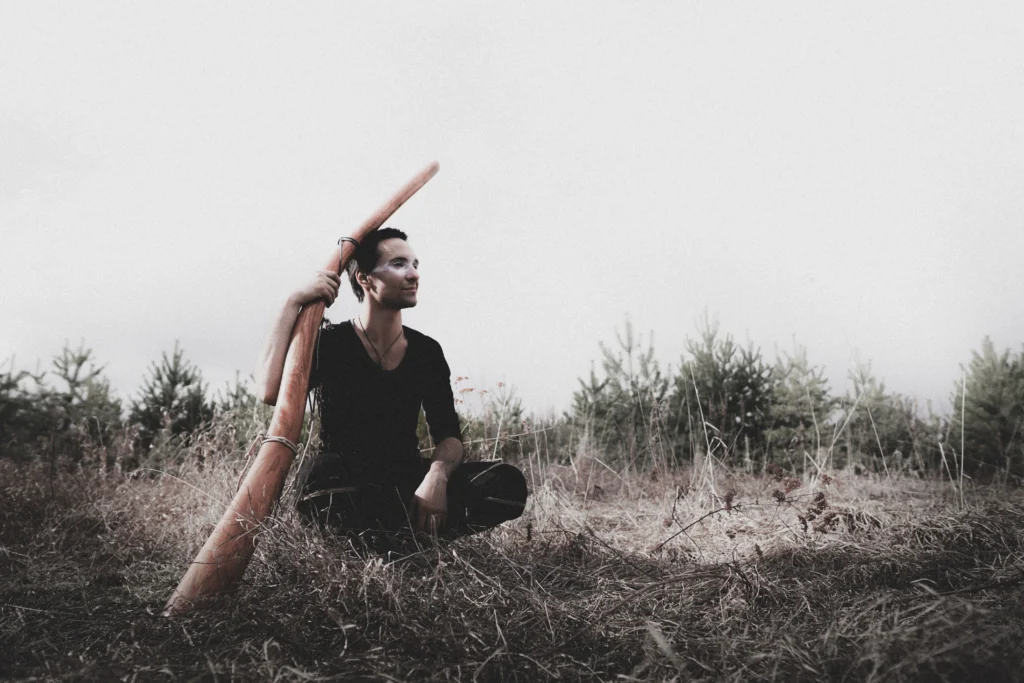
Master the Slovak fujara It requires incorporating quick trills made with light finger movements over the three front holes in the carved wood.
Read more: Discover Kyrgyz komuz and its ancient nomadic tradition.
Subtle variations in lip pressure produce delicate vibratos, adding warmth and emotional depth to the song's slow, melancholic musical phrases.
The combination of the noisy introduction, digital ornaments, and octave leaps defines the unique and unmistakable language of this gem of folk music.
What maintenance practices ensure the sound quality of wood?
Because it is handcrafted from elder, maple, or acacia wood, the instrument requires rigorous protection against sudden changes in humidity and ambient temperature.
Drying the inside of the secondary tube after each practice session prevents the buildup of condensation that can obstruct airflow to the mouthpiece.
Applying natural vegetable oils to the interior of the air column periodically preserves the elasticity of the wood, protecting the structure against cracking and structural deformation.
Storing the flute upright or in padded cases prevents lateral mechanical pressure that could warp the main tube over the years.
Learn more: What makes the Latvian kokle unique among European zithers?
Caring for the instrument's integrity ensures that perfect tuning and deep tone are preserved for generations of musicians passionate about tradition.
Conclusion
Playing this giant flute represents a rich musical experience that combines refined breath technique, the acoustic physics of harmonics, and a deep connection to history.

Mastering the instrument requires dedication to breath control, an upright posture, and sensitivity to extract unique timbres from just three holes.
Read more: Discover Balkan gusle and its sung stories.
Preserving this artisanal and interpretive practice ensures the continuity of one of the most fascinating and impressive sound heritages of European folklore.
Frequently Asked Questions (FAQ)
Can anyone learn to play this large flute?
Yes, although it may seem intimidating due to its size, the secondary blowpipe makes it easier to reach, making learning accessible to anyone dedicated to training.
Do you need very strong lungs to produce sound on the instrument?
Excessive force is not necessary, but rather control and a constant flow of air, since the physics of the tube responds better to precision than to violence.
Why does the instrument only have three finger holes?
The physics of the long air column allows one to extract almost the entire musical scale by alternating breath pressure through the natural series of higher harmonics.
