
What is the wheel lyre and why has it returned to the folk scene?
Discover the wheel lyre It's about immersing yourself in a fascinating medieval acoustic engineering that has been reborn with full force in the folk scene, neofolk metal, and contemporary soundtracks.
Advertisements
Also known internationally as Hurdy-gurdy, This stringed instrument, played with a wooden wheel, produces a continuous, rhythmic, and mesmerizing sound that captivates arrangers and listeners worldwide.
What is a wheel lyre and what is its historical origin?
THE Hurdy-gurdy It is a mechanical bowed string instrument whose origins date back to 10th-century medieval Europe, derived from the ancient organistrum used in monasteries and cathedrals.
Unlike the violin or lute, the musician turns a crank connected to a resin-coated wheel that rubs melodic and bass strings simultaneously, creating a continuous harmonic foundation.
Pressing wooden keys alters the vibrating length of the melodic strings, while movable bridges called "dogs" produce a characteristic rhythmic click when the manual crank is turned faster.
Advertisements
Understanding wheel lyre It involves recognizing its historical transition, ceasing to be a sacred and noble instrument and becoming the sonic tool of itinerant musicians and blind performers.
Its unique architecture combines the rich versatility of strings with the continuous harmonic pedal typical of bagpipes, resulting in an unmistakable auditory identity for the modern listener.
How does the inner workings of this fascinating instrument work?
Turning the crank causes the resin-coated wooden wheel to strike the strings, acting exactly like an endless violin bow over a complex set of strings.
The sound box houses three categories of strings: melodic (chanterelles), deep bass lines and the famous buzzing string (trumpet), responsible for the distinctive percussive rhythm of the musical performance.
The table below compares the fundamental mechanical elements of the instrument with their actual acoustic functions and the direct impacts on sound production during live performances:
| Mechanical Component | Main Acoustic Function | Impact on Sound and Performance |
| Resinated Wooden Wheel | Friction the strings continuously | Guarantees infinite sustain without bow pauses. |
| Keyboard with Tangents | It shortens the melodic string when pressed. | It defines the pitch and pitch of the notes. |
| "Dog" Bridge (Mouche) | It vibrates against the lid when the rotation accelerates. | Produces a percussive and rhythmic snapping effect. |
| Bass Strings | They emit continuous low notes in the background. | They create the harmonious drone texture (continuous base). |
Adjusting the correct amount of cotton and rosin on the strings requires technical precision, as small variations drastically alter the clarity of the tone and the keyboard's response.
Why has the instrument experienced a resurgence in folk culture and pop culture?
The renewed interest in ancestral sounds in popular music has led neofolk, medieval rock, and folk metal bands to incorporate the instrument into their compositions and global tours.
The popularization of television series, fantasy video games, and epic soundtracks has projected the instrument's hypnotic timbre to millions of new listeners and enthusiasts of the genre.
To research the history of traditional instrumentation, phonographic collections, and cultural expressions of popular music, visit the Moreira Salles Institute (IMS).
Rediscovering wheel lyre The presence of luthiers at international festivals has boosted the demand for new luthiers specializing in the handcrafted production of these complex instruments made from fine woods.
Contemporary music producers blend the acoustic notes of the instrument with modern effects pedals and synthesizers, creating innovative arrangements that connect the Middle Ages to the future of music.
What are the regional variations and most well-known models?
France developed refined lute-shaped models during the 18th century, while Central European countries retained traditional rectangular drums with more rustic and powerful tones.
Modern luthiers produce electro-acoustic models with individual pickups per string and MIDI outputs, allowing musicians to control digital synthesizers directly through the mechanical wooden keyboard.
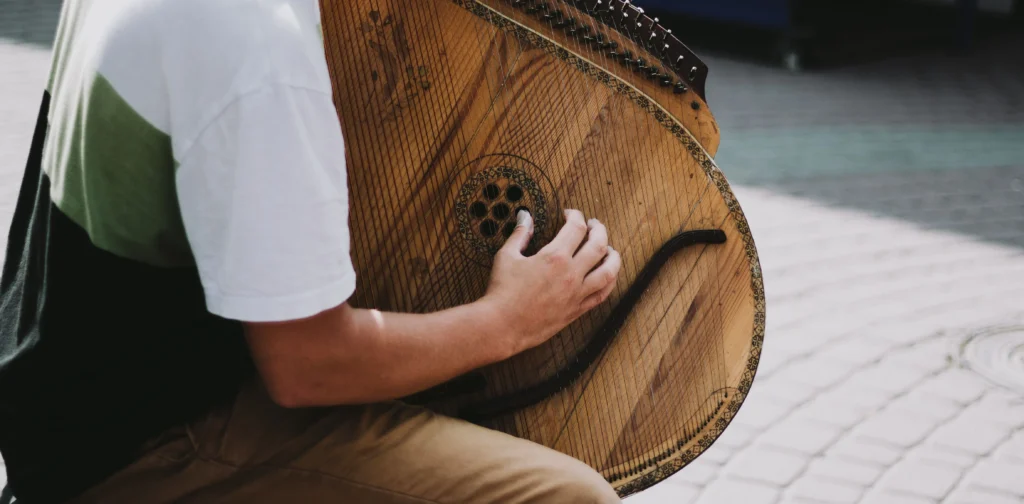
Read more: Discover the Viking tagelharpa and its unique, ancient sound.
Recent projects utilize laser cutting and 3D printing to create affordable kits, allowing students to assemble their own instrument at significantly reduced costs.
Experimenting with different configurations of gut, nylon, or steel strings allows you to adapt the sound for both intimate acoustic performances and large, amplified festival stages.
Analyzing the instrument's rich constructive diversity reveals how a medieval invention continues to adapt to the technological and aesthetic demands of twenty-sixth-century musicians and arrangers.
Where can I listen to amazing performances and learn to play?
Video platforms and social networks host active communities of instrumentalists who share tutorials, techniques for maintaining the instrument, and arrangements of popular songs adapted for the instrument.
International gatherings and festivals dedicated to traditional instruments bring together luthiers and virtuosos in hands-on workshops focused on improving crank technique and percussive rhythm.
Learn more: Difference between classical, folk and jumbo guitar: which one to choose?
To explore research on intangible heritage, folklore, and the preservation of musical traditions, visit the portal of... National Center for Folklore and Popular Culture (CNFCP).
To dedicate oneself to the study of wheel lyre It requires independent motor coordination between the rhythmic rotation of the right arm and the agility of the fingers of the left hand on the keyboard.
Mastering this age-old art connects the musician to a living tradition of sonic innovation that has spanned centuries and continues to enchant audiences on stages around the world.
The enduring legacy of an unforgettable instrument in 2026.
The trajectory of Hurdy-gurdy This proves that the search for authentic and engaging sounds transcends fleeting trends in the recording industry, preserving the essence of human artistic expression.
Read more: Discover the Viking tagelharpa and its unique, ancient sound.
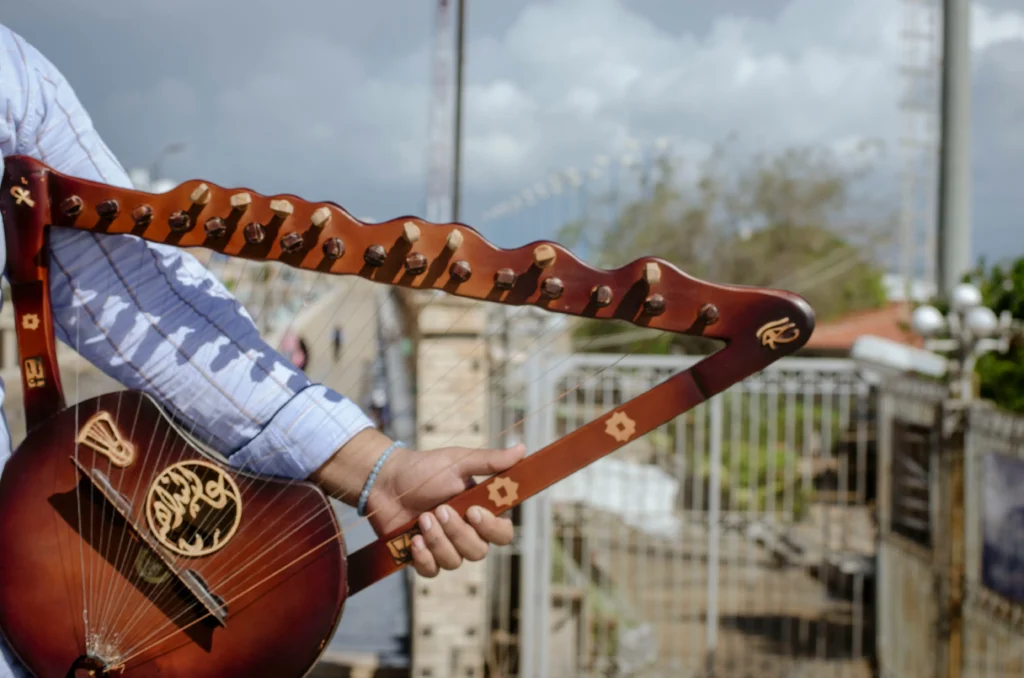
Integrate the wheel lyre In contemporary music, it combines the artisanal ingenuity of the past with the creativity of modern arrangers passionate about organic timbres full of personality.
Explore neofolk albums, attend live performances, support handcrafted lutherie, and be enchanted by the timeless magic of this extraordinary instrument on your musical journey.
FAQ (Frequently Asked Questions)
What is the difference between a lyre and a violin?
Although both use bowed strings, the lyre uses a wooden wheel turned by a crank instead of a bow, and also has keys to change notes and continuous pedal strings.
Is it very difficult to learn to play this instrument?
The main challenge lies in motor coordination: the right hand needs to maintain a constant and rhythmic speed on the crank, while the left hand executes the notes precisely on the keys.
How much does a good quality handcrafted instrument cost on average?
Because it is a highly complex handcrafted instrument with many moving parts, professional models built by renowned luthiers typically cost between two thousand and six thousand euros.
How does the rhythmic clicking sound produced by the crank work?
The buzzing string passes over a movable bridge called a "dog". When the musician sharply accelerates the rotation of the crank, the bridge vibrates against the soundboard, producing a percussive effect.
