
Caiçara Fiddle and Northeastern Fiddle: What Changes in Construction and Sound?
The comparison between Caiçara fiddle and Northeastern fiddle It reveals profound divergences in Brazilian artisanal lutherie, reflecting regional adaptations, choice of woods, and very unique acoustic timbres.
Advertisements
Developed from the legacy of bowed string instruments brought by Portuguese colonizers, these two popular chordophones evolved in entirely distinct cultural and geographical ecosystems.
While the coastal regions of Southeast and South preserved curved lines and a smooth sound, the tradition of the interior and arid Northeast shaped an incisive and strident instrument.
Understanding the differences in construction, tuning, dimensions, and acoustic response between both types helps musicians, researchers, and luthiers choose the ideal instrument for each project.
Analyzing traditional methods of artisanal manufacturing demonstrates the richness of intangible culture and the sophistication of oral tradition music spread throughout our country.
Advertisements
What are the differences in the instrument making of the Caiçara and Northeastern Brazilian fiddles?
The manufacture of the coastal model traditionally uses carving from a single block of softwood, extracted from species such as caxeta, guanandi or cedar, hollowing out the entire body.
In contrast, master fiddlers from the Northeast use freijó, imbuia, mulungu, or even flandres wood, applying flat pine tops and curved sides over wooden forms.
| Construction Feature | Caiçara Fiddle (Coastal SP/PR/RJ) | Northeastern Fiddle (Sertão and Agreste regions) | Impact on the Instrument's Sound |
| Sculpting Technique | Monoblock excavated in a single piece. | Assembling slices with folded strips | Defines the usable volume of the speaker enclosure. |
| Wood Species | Caxeta, caxeta-amarela, cedro rosa | Mulungu, freijó, caixeta, umburana | It alters the density and speed of sound. |
| Predominant Tuning | Sol-Re-La-Mi or low fifth | Tuesdays and Wednesdays open (D-A-D-G) | Determine the tension in the steel ropes. |
| Timbre Projection | Smooth, velvety, rich in medium notes. | Nasal, shrill, sharp, brilliant | Select the accompaniment style. |
To further the study of intangible cultural heritage and the preservation of Brazilian musical traditions, the IPHAN It offers detailed official archives and records.
Understanding the dynamics between Caiçara fiddle and Northeastern fiddle It requires observing how the humidity of the coast and the dryness of the interior influenced collage techniques.
The soundboard of the beach version usually has a slightly more generous thickness, absorbing resonance to produce sweet notes, ideal for local fandangos and folias de reis (traditional Christmas celebrations).
The "sertanejo" model, on the other hand, adopts taller stands and thinner soundboards, projecting the sound with enough aggressiveness to stand out among bass drums, accordions, and tambourines at parties.
The way the tuning pegs are attached and the shape of the f-holes also varies, reflecting the aesthetic vision and style of the craftsman who builds each instrument by hand.
How does the body shape influence the acoustics of each instrument?
The carved soundbox of the Caiçara model has sloping shoulders and a rounded back, reminiscent of the ancient silhouette of the arched alleyways of medieval Europe.
This rounded internal geometry attenuates harsh high notes, providing a full-bodied, warm, and comfortable sound for prolonged vocal accompaniment in fandango dances.
The Northeastern model adopts more pronounced curves or angular shapes, reminiscent of the classical violin or pear-shaped boxes that amplify the vibration when the bow is struck.
The quick response of this resonator box favors the execution of rapid flourishes, rhythmic arpeggios, and ornamentations typical of Bahian dances, horseback riding, and traditional forró music.
Varying the volume of the soundbox alters the fundamental frequency of the instrument, allowing the creation of bass, mid-range, or treble patterns depending on the group.
How do bows and strings affect playability?
The Caiçara bows utilize handcrafted sticks of ipê or tucum wood with horsehair or synthetic ribbon, maintaining a traditional, quite pronounced and rigid convex curvature.
This fixed bow tension facilitates a smooth attack and quick passage between double strings without requiring excessive pressure from the right hand during playing.
In the Northeast of Brazil, bows range from rustic models made with flexible branches to bows adapted from professional violins with dense rosin and tightly stretched horsehair.
The choice of strings reflects regional availability, ranging from steel violin strings to nylon fishing line or braided steel wire.
The height of the nut and bridge determines how easy it is to hold the violin, requiring calluses on the fingers to press the fingerboard without leaving marked frets.
What musical styles does each of the fiddles use?
The beach variant is the star of the Caiçara fandango, an ancestral rhythm from the coast of Paraná and São Paulo that combines strong footwork with verses improvised by master fiddlers.
Its sweet timbre blends perfectly with the communal guitars, tambourines, and wooden clogs that mark the percussive rhythm at community festivals.
The Northeastern version shines in the fife bands, the Reisado festivals, the Cavalo-Marinho festivities, and the traditional forró trios of the Agreste and Sertão regions.
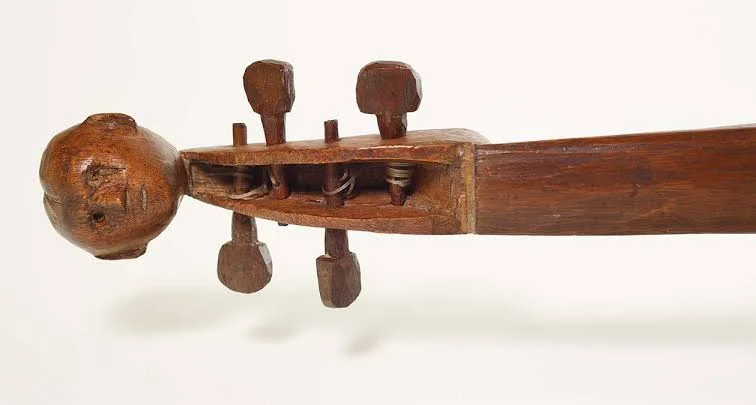
Renowned musicians in the contemporary instrumental scene use the instrument to create fusions between traditional music and modern jazz and Brazilian popular music (MPB) arrangements.
Academic documentation on ethnomusicology, organology, and collections of Brazilian folk instruments is preserved by Joaquim Nabuco Foundation, a center of reference in national culture.
Compare to Caiçara fiddle and Northeastern fiddle It highlights the versatility of a chordophone that has adapted to the natural resources and the soul of each region.
read more: Fandango tambourine: what changes in relation to the Brazilian pandeiro?
The perpetuation of these techniques depends on the master craftsmen who pass on the knowledge of cutting, carving, and tuning to new generations of luthiers.
Valuing this sonic heritage ensures the preservation of unique regional identities that enrich the diversity of popular music throughout Brazil.
When should you choose between a coastal style and a northeastern style?
Choose the Caiçara model if you're looking for a smoother, deeper, and more intimate sound, perfect for playing in enclosed spaces or small acoustic groups.
Opt for the Northeastern Brazilian version if you need sound projection, a fast attack, brightness in the high notes, and a striking presence to cut through the sonic mass of percussive rhythms.
Learn more: How to tune a fandango viola from the Brazilian coast.
Experimenting with both instruments allows the musician to expand their timbral palette, discovering new dynamics for original arrangements, studio recordings, and live performances.
Consulting expert luthiers before purchasing ensures the selection of properly treated woods, preventing warping of the neck and cracking of the soundbox over the years.
Conclusion
The aesthetic and sonic richness of Brazilian folk instrument making reflects the cultural adaptability and creativity of artisans spread across different ecosystems of the country.
Read more: Brazil and Its Strings: A Journey Through Fiddles and Violas
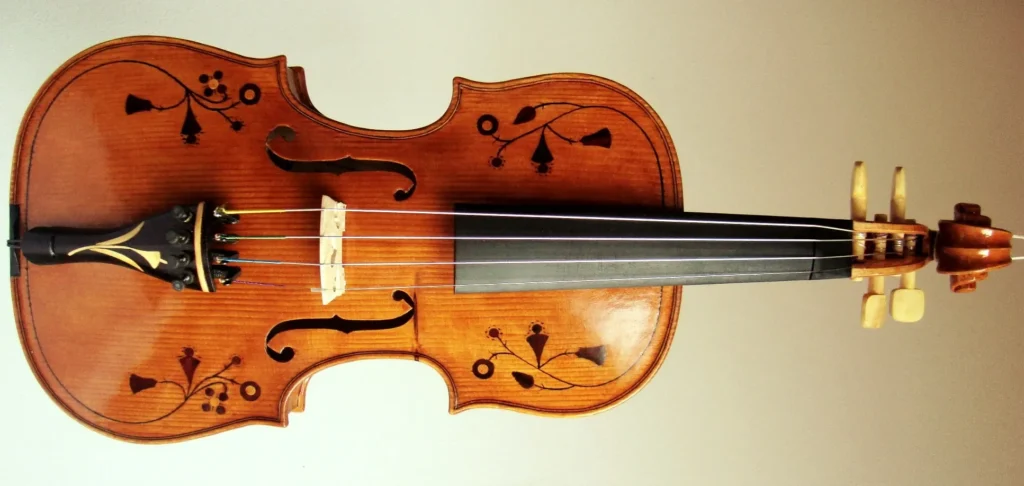
Whether in the coastal Fandango or the Cavalo-Marinho of the hinterland, the rabeca remains a living symbol of national memory, rhythm, and poetry.
Appreciating the constructive nuances of this instrument strengthens authentic Brazilian music, connecting the modern listener to the deepest roots of our instrumental tradition.
Frequently Asked Questions (FAQ)
Can any violin be transformed into a traditional fiddle?
Although the violin can be tuned to open tunings and played with lighter strings, it lacks the rustic tone, flat top, and handcrafted carving of the rebec.
What is the most suitable wood for making the soundboard of a fiddle?
Caxeta and Paraná pine are widely used because they have low density, excellent resonance, and are easy to cut in handcrafted sculpture work.
How does tuning work on the rabeca (a type of Brazilian fiddle) compared to a classical violin?
The violin uses a fixed tuning in fifths (G-D-A-E), while the rabeca accepts tunings in fourths, thirds, or fifths, adapted to the player's voice.
