
The cuíca's roar: how the rubbing of the leather produces one of the most Brazilian sounds in the world.
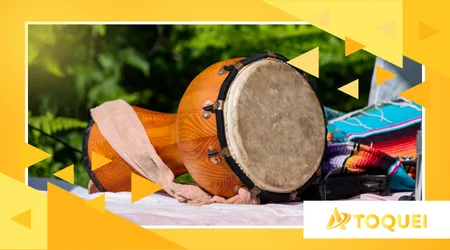
THE cuica's roar It represents the soul of samba, being a unique friction instrument that has defined the rhythmic identity of Brazilian samba schools for decades.
Advertisements
Summary
- What defines the sound of the cuíca?
- How does the instrument's mechanics work?
- What is the historical origin of this sound?
- Why is the cuíca vital in samba?
- What types of materials are used?
- How to master the friction technique?
- Comparative table of models.
- Frequently Asked Questions (FAQ).
What is the cuíca's ronca sound and its rhythmic function?
THE cuica's roar It is the sound effect produced by a friction drum that has a bamboo rod, called a gambit, fixed in the center of the inner membrane.
Unlike other drums, the sound does not come from the impact of drumsticks, but from the friction of a damp cloth against this wooden rod attached to the animal hide.
This instrument plays a melodic role within percussion, simulating the human voice through variations in pressure exerted by the fingers on the outer part of the stretched skin.
The sonic versatility allows the cuica player to dictate emotional nuances, alternating between high and low sounds that fill the rhythmic gaps between the bass drum and the tambourine.
Advertisements
How the rubbing of the leather produces the characteristic sound.
The physics behind cuica's roar It involves the longitudinal vibration of the gambit, which is transmitted directly to the leather membrane, functioning as a natural amplifier.
When the musician rubs the rod internally, the mechanical energy causes the skin to vibrate at specific frequencies, creating a continuous sound reminiscent of a lament or laughter.
To change the note, the instrumentalist presses their thumb on the outer surface of the skin, near the center, increasing the tension of the membrane and raising the pitch of the note.
It is a precise coordination between the movement of the inner hand, which generates volume, and the pressure of the outer hand, which defines the melody and musical phrasing.
Why the cuíca became the symbol of modern samba.
The presence of cuica's roar It transformed the sound of Rio de Janeiro's samba schools from the 20th century onwards, bringing a layer of expressiveness that no other percussion instrument can achieve.
Read more: Tambor-onça: the Brazilian "cousin" of the cuíca and its role in bumba meu boi.
Masters like Marçal and Ovídio Brito elevated the instrument's status, proving that it could solo and interact with the lead singer during the parades at the Sapucaí.
The sound is so iconic that it has transcended Carnival, being incorporated into jazz, funk, and MPB (Brazilian Popular Music), giving it an instantly recognizable auditory signature that is purely Brazilian.
Its ability to "speak" makes samba more organic, filling the spectrum of mid and high frequencies with a swing that is impossible to replicate with synthesizers.
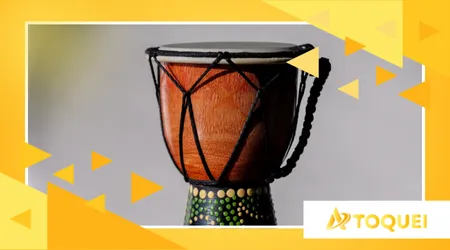
Which materials guarantee the best sound quality?
Construction directly influences cuica's roar, with the body being able to be made of metal (steel or aluminum), fine wood, or even modern synthetic materials.
Animal hides, such as goatskin, are preferred by professionals due to their superior harmonic response and the malleability necessary for pressure variations during performance.
The gambit should be made of treated bamboo, as its flexibility and resistance to friction ensure that the sound does not suffer abrupt interruptions due to lack of grip from the cloth.
To learn more about the acoustics of percussion instruments, you can consult the technical collection of... USP – Acoustics Laboratory, which details the physics of membranes.
When did the use of the cuíca emerge in Brazil?
The trajectory of cuica's roar It dates back to the traditions of Central Africa, where similar friction drums, such as the Puita, were used in religious rituals and festivities.
Upon arriving in Brazil, the instrument was adapted and integrated into string and percussion ensembles, acquiring its current form with a metallic body that we know from contemporary parades.
Its technical evolution allowed it to go from being a mere rhythmic accompaniment to becoming the protagonist in various arrangements, especially during the golden age of Brazilian radio.
Today, the instrument is studied in conservatories around the world, being one of the greatest examples of how the African diaspora shaped the musical culture of the Americas.
Technical specifications of cuica models
| Attribute | Metal (Aluminum) Cuíca | Wooden cuica | Stainless Steel Cuica |
| Stamp | Brilliant and sharp | Full-bodied and warm. | Long and sharp sustain |
| Weight | Lightweight (ideal for parades) | Heavy | Moderate |
| Projection | High | Average | Extremely high |
| Maintenance | Low resistance to oxidation. | Requires care regarding humidity. | High durability |
| Common Use | Samba Schools | Studio recordings | Live shows |
How to care for and maintain the instrument
Maintaining the quality of cuica's roar It requires special attention to skin hydration, preventing the leather from drying out and losing the elasticity necessary for the high notes.
++ Professional Pife Player: What is the breathing technique used in the Northeastern Brazilian Pife?
The cloth used for rubbing should always be clean and slightly damp, as the accumulation of dirt or grease on the gamma can generate unwanted noise and sound malfunctions.
After use, it is essential to loosen the tuning braces to relieve tension on the leather and body of the instrument, prolonging the lifespan of all components.
Storing the cuíca in padded cases protects it against sudden temperature changes, which are the main causes of cracks in the bamboo or deformations in the metal ring.
Conclusion
Mastering the technique that generates the cuica's roar It is a rite of passage for percussionists who wish to understand the true essence of Brazilian music and syncopated rhythm.
++ The secret to the sound of the alfaia drum: how tuning completely changes the maracatu.
This instrument not only marks time, but tells stories and evokes emotions through a simple yet sophisticated mechanism that has survived the test of time and technology.
Whether amidst a furious drumbeat or an intimate samba circle, its sound remains the strongest link between our ancestral roots and the future.
To explore sheet music and teaching methods for Brazilian percussion, visit the portal of... Funarte, which preserves the memory of our great masters.
Frequently Asked Questions (FAQ)
What's the best cloth for playing the cuíca?
Ideally, use a piece of cotton or knit fabric that retains moisture well without shedding lint that could get caught in the gambit during friction.
How to prevent the cuica gambit from breaking?
Avoid applying excessive lateral force; the movement should be strictly longitudinal. Also check that the central lacing is firm and centered on the leather before touching it.
Do I need to put rosin on the gambit?
Some musicians use a small amount of rosin to increase friction, but the traditional and most common method in professional samba uses only a damp cloth.
Is it possible to play the cuíca with a synthetic skin?
Yes, synthetic furs exist, but they offer less sensitivity and tonal variation compared to animal furs, making them more suitable for beginners or use in extreme climates.
What is the standard size of a samba cuíca?
Parade cuicas typically have a diameter between 8 and 10 inches, balancing sound volume and comfort for the musician who needs to carry the instrument.
