
Glass organ: how rotating glasses create crystalline notes
To know glass organ reveals how crystal bowls aligned on a rotating axis transform the simple friction of moistened fingers into ethereal notes.
Advertisements
Unlike traditional keyboard instruments that strike strings or blow tubes, this acoustic rarity produces continuous, pure sound waves through direct resonance.
Invented by Benjamin Franklin in 1761 under the name glass harmonica, the instrument won over classical composers such as Mozart, Beethoven, Donizetti, and Richard Strauss.
Its ingenious design replaced the old method of filling dozens of glasses with water to tune each note individually before any musical performance.
By nesting concentric bowls of graduated sizes on a rotating horizontal spindle, the musician gains the agility to execute simultaneous chords and complex polyphonic passages.
Advertisements
Understanding the mechanical workings, the handcrafted construction, and the playing technique explains why this instrument continues to fascinate contemporary luthiers and concert performers.
What is the glass organ and how did it originate historically?
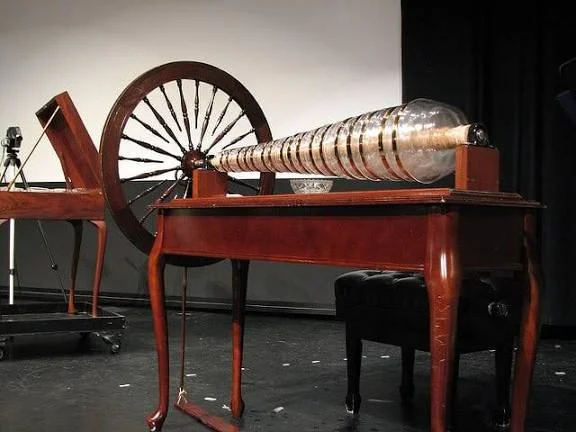
Also historically called a glass harmonica, this friction idiophone consists of between thirty-seven and forty-four crystal glasses tuned chromatically.
Benjamin Franklin created the original design after attending a glass concert in London and realizing that a rotating axis would multiply the polyphonic possibilities.
Instead of moving their hand around the rim of each cup, the performer keeps their fingers steady while the entire cylinder rotates continuously.
This mechanical inversion allowed up to ten notes to be played simultaneously, bringing the instrument's expressive fluidity closer to pianistic technique and the sustained timbre of an organ.
Quickly the glass organ It became a sensation in eighteenth-century European salons, inspiring solo pieces and operatic accompaniments of great timbral delicacy.
How do rotating bowls produce sound through friction?
Physically, the acoustic phenomenon occurs through the sliding and adhesion mechanism between the musician's moist skin and the polished rim of each bowl.
| Component / Parameter | Actual Technical Specification | Acoustic and Mechanical Function |
|---|---|---|
| Material of the cups | Quartz crystal or lead glass | Guarantee pure vibration and long-lasting sustain. |
| Tuning the notes | Edge diameter and thickness | Determine the exact fundamental frequency. |
| Horizontal axis | Metal rod with insulating cork. | Avoid cushioning between adjacent glasses. |
| Rotary drive | Mechanical pedal or silent electric motor | Maintain a constant speed without fatigue. |
| Finger lubrication | Clean distilled water without soap | Create ideal friction without greasing the crystal. |
When a moistened finger gently touches the rotating edge, static friction pulls microscopic portions of the crystal until elasticity releases the movement.
This continuous cycle of micro-adhesion and release causes the entire wall of the glass to vibrate radially, radiating a fundamental frequency almost devoid of high-pitched harmonics.
Because it emits very clean sinusoidal waves between one and four kilohertz, the human ear has difficulty spatially locating the exact origin of the sound.
Why does handcrafted manufacturing require millimeter precision?
Building each set requires master glassmakers capable of blowing dozens of hemispherical bowls with uniform thicknesses and rigorously staggered diameters to cover three octaves.
After controlled cooling, skilled luthiers carefully sand the edges with diamond abrasives to adjust the precise tuning of each note without altering the diameter.
As documented in the collection of Metropolitan Museum of Art, Each cup fits onto cork rings without touching adjacent pieces.
If two adjacent bowls touch during rotation, the free vibration ceases immediately, generating unwanted metallic noises that compromise the entire musical performance.
Today, specialized workshops in the United States and Germany use high-purity fused quartz to achieve greater mechanical strength and thermal stability.
What techniques does the musician use to extract crystal-clear notes?
Before beginning any recital, the instrumentalist carefully washes their hands to remove any trace of natural oils that would prevent them from adhering to the glass.
Dipping your fingertips in pure water and controlling the pressure applied to the edges defines the soft or intense attack of each note.
Excessive pressure interrupts the vibration and causes shrill squeaks, while a light and steady touch sustains expressive crescendos comparable to those of bowed instruments.
To facilitate visual reading during fast passages, the cups corresponding to the black keys on the piano have gold rims or discreet markings on the edge.
Master the glass organ It demands impeccable ergonomic posture, as the musician needs to reach low notes on the left and high notes on the right without straining their wrists.
Read more: How does the caracaxá participate in the cocos and maracatus of Pernambuco?
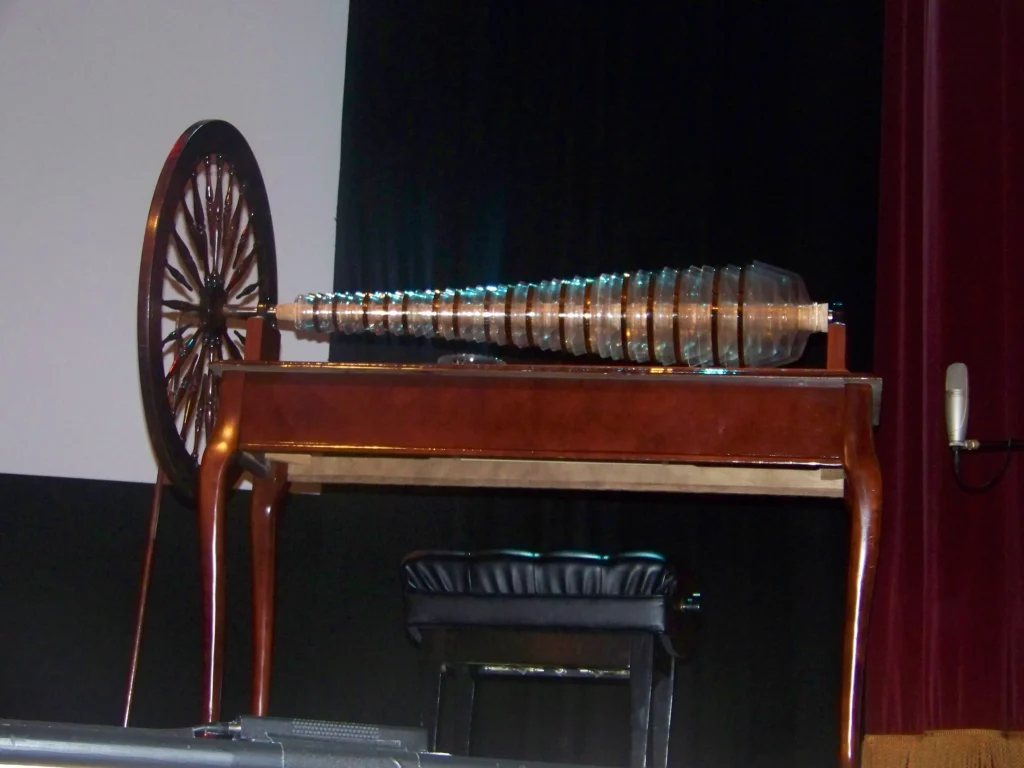
Modern models incorporate silent electric motors with variable speed control, replacing the old pedal that was continuously operated by the interpreter's left foot.
When did this instrument gain prominence in concert music?
Between 1762 and 1830, great virtuosos such as Marianne Kirchgessner toured the main European capitals presenting exclusive concerts dedicated to this unique timbre.
Wolfgang Amadeus Mozart composed the celebrated Adagio and Rondo K. 617 specifically for this ensemble in 1791, demonstrating its refined chamber music potential.
In the nineteenth century, Gaetano Donizetti originally wrote the madness scene from the opera Lucia di Lammermoor to accompany the soprano's voice with crystal.
During the twentieth and twenty-first centuries, contemporary composers and film soundtracks rediscovered the instrument to create dreamlike and ethereal atmospheres.
Learn more: How to Record Guitar on Your Cell Phone Without Losing String Details
This trajectory spans more than two centuries, proving that Benjamin Franklin's mechanical innovation remains musically relevant on stages today.
Conclusion
Study the glass organ It allows us to understand how simple engineering and acoustic sensitivity transformed fragile materials into sources of extraordinary musical expression.
Each rotating bowl functions as an independent resonator that responds instantly to humidity, rotation speed, and the performer's precise touch.
Read more: Comparison: Handmade vs. Industrial Berimbau – Which Sounds Better?
Although it requires delicate maintenance and very patient technical skill, few acoustic instruments achieve such timbral purity and capacity for natural harmonic sustain.
Preserving this artisanal tradition keeps alive a fascinating bridge between the physics of friction, specialized lutherie, and the world's classical repertoire.
Whether in concert halls or modern recordings, his crystalline notes continue to enchant listeners seeking authentic sounds outside conventional standards.
Frequently Asked Questions (FAQ)
What is the difference between a glass harp and a glass organ?
In a glass harp, the glasses remain stationary vertically on a table, while in a rotating instrument, the glasses rotate horizontally on a continuous axis.
Does the glass organ really cause neurological problems in musicians?
No, modern historical and acoustic research has refuted this old myth, attributing any discomfort experienced in the eighteenth century to lead-based paints or habits of the time.
What type of water should be used to stir the rotating bowls?
Musicians exclusively use distilled or filtered water without excess minerals, avoiding limescale residue that impairs friction and dulls the crystal.
Are there still manufacturers producing this instrument today?
Yes, specialized luthiers like the American workshop Finkenbeiner manufacture professional fused quartz models to order for international soloists and orchestras today.
Where can I listen to historical recordings and explore archives about the instrument?
You can explore technical data sheets, photographs of original specimens, and records on the portal of Encyclopaedia Britannica about glass organ.
