
Discover the Welsh crwth and its medieval execution technique.
Discover the Welsh crwth It reveals one of the most fascinating and unique bowed string instruments of the Middle Ages, combining Gaelic tradition, archaic acoustic engineering, and a striking, hypnotic sound.
Advertisements
Modern musicians, historians, and luthiers study this rare chordophone to understand how Celtic music resonated in noble halls, Welsh courts, and community festivities throughout the past centuries.
What is the instrument and what is its historical origin?
This is an ancient bowed string instrument, closely related to the lyre and the medieval rebec, which played a central role in the folk and poetic music of Wales during the Middle Ages.
Historical documents and Welsh manuscripts from the 12th century already mentioned their presence at bard festivals (eisteddfodau), where he accompanied the recitation of epic poems and traditional songs with rather peculiar tunings.
THE Welsh crwth It has a rectangular soundbox carved from a single block of wood, with a central arm pierced by two lateral openings that allow the instrumentalist to firmly position their fingers.
Advertisements
The unique anatomical structure provides a rich harmonic resonance, connecting ancestral European acoustic tradition to contemporary practices of reconstructing ancient repertoires with historical accuracy and technical rigor.
How do the acoustic mechanics and bridge of the instrument work?
The most ingenious element of its construction is the asymmetrical bridge, whose left leg passes through one of the openings of the soundbox to rest directly on the back of the instrument.
This configuration causes the left leg to act as an integrated core, transmitting vibrations directly to the back panel while the right leg resonates with the upper front panel of the stringed instrument.
The following table presents actual technical data on the anatomy, classical stringing, and operational characteristics of the instrument, based on historical examples preserved in European museums:
| Technical Component | Historical Specification | Function in Musical Performance |
| Asymmetrical Easel | Left foot planted on the ground. | Direct vibration transmission and structural support |
| Stringing | 6 gut strings (4 on the fingerboard, 2 bass strings) | Performance of a melody accompanied by a fixed drone string. |
| Tessitura / Tuning | $G_{3}/G_{4} – C_{4}/C_{3} – D_{4}/D_{3}$ | Playability in parallel octaves and fifths |
| Bow Technique | Short, curved bow | Rhythmic articulation and simultaneous friction |
Understanding the role of the external drone reveals how medieval musicians sustained low pedal notes, filling the acoustic space with a continuous hum reminiscent of the sound of bagpipes.
What was the medieval technique for playing strings and bows?
Playing this stringed instrument requires an upright posture, resting the base of the soundbox against the musician's chest or collarbone, keeping the instrument slightly tilted to facilitate friction.
The left hand performs a dual function: while the thumb plucks the bass string that is outside the fingerboard, the other four fingers press down on the main strings to produce the melody.
To search collections of antique instruments, phonographic recordings, and folklore archives held in international archives, consult the digital library of... British Library.
Learning to play the Welsh crwth It requires mastering the simultaneous friction of the bow on the flat bridge, allowing two or three strings to be played at the same time to create dense harmonies.
The short, slightly arched medieval bow favors quick attacks and striking rhythmic punctuations, precisely following the poetic metrics and rhythms of traditional Welsh dances.
Why did the instrument decline and how was it reborn?
The popularization of the violin in the 18th century and changes in urban musical preferences eclipsed the use of the traditional stringed instrument, leading to its near extinction in the early 19th century.
Only four original specimens have survived the test of time, and they are kept under strict custody in museums in the United Kingdom, serving as a basis for advanced organological studies and exact modern replicas.
Read more: The history of the viola machete in the music of the Recôncavo Baiano region.
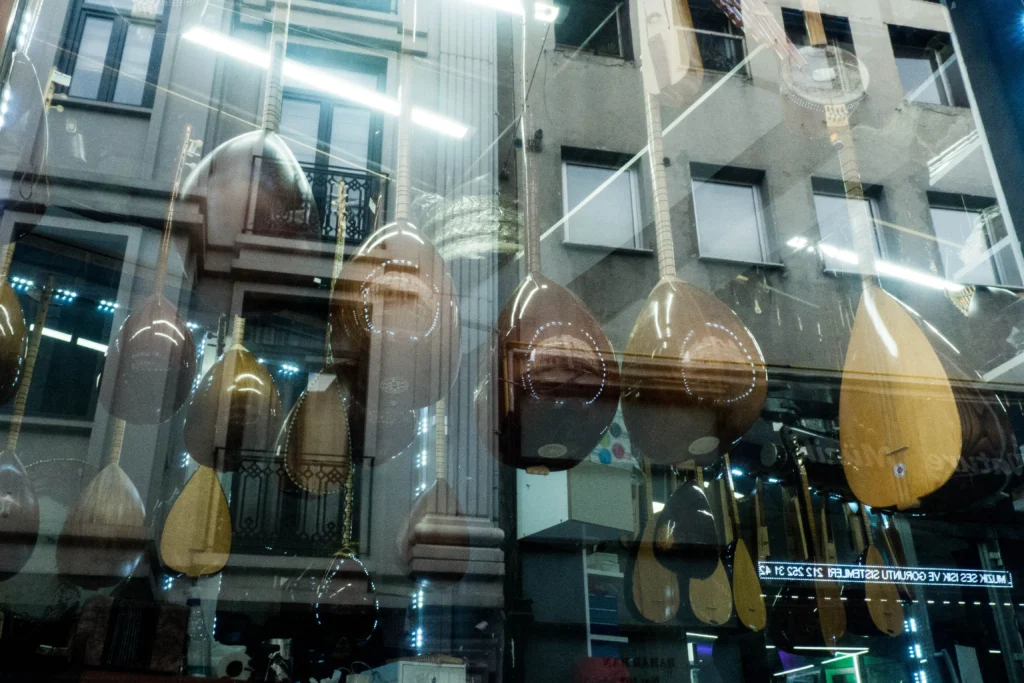
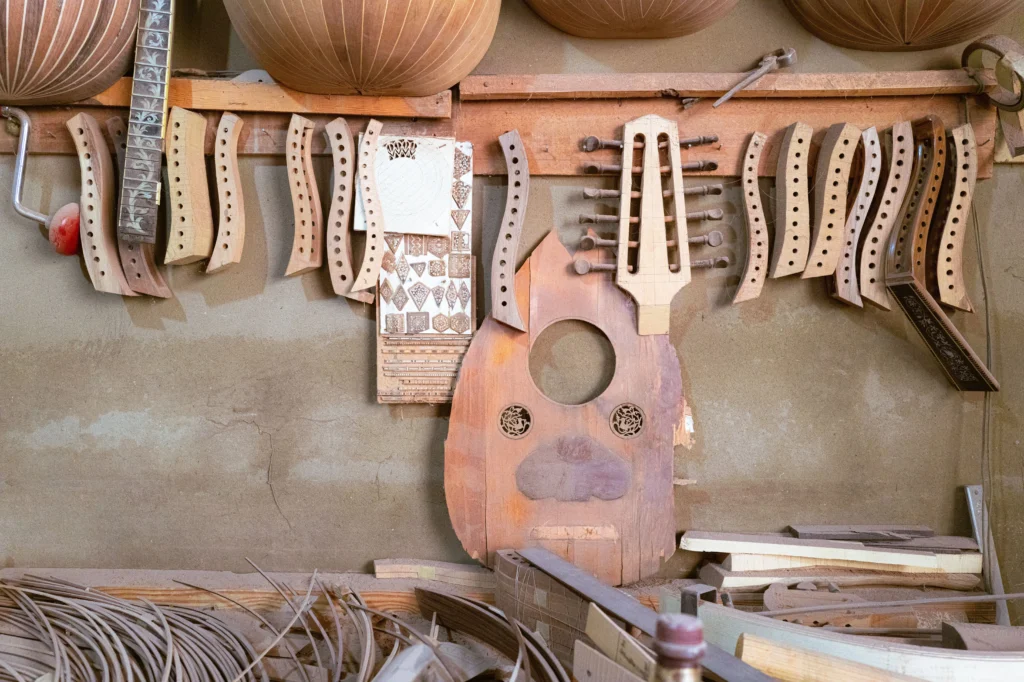
Contemporary luthiers and early music researchers have reconstructed the instrument using specimens of historical wood, such as sycamore and bulrush, giving the public the opportunity to hear its authentic sound again.
Celtic music festivals and groups dedicated to medieval repertoire have reintroduced these pieces in live performances, proving the enduring value of this cultural heritage and promoting new compositions dedicated to the instrument.
Where can I find recordings and studies about Welsh music?
Cultural institutions in Wales and music archives maintain public collections dedicated to preserving Gaelic sound identity, making available digitized manuscripts, transcriptions of old scores, and detailed acoustic analyses.
Learn more: Discover Lao khene and its hypnotic sound
Consulting the collections of national museums allows one to understand the sociocultural context in which the stringed instrument was constructed, from the choice of woods to the handcrafted finishing with natural varnishes.
Study the Welsh crwth It expands our understanding of the evolution of bowed instruments in Europe, connecting the artisanal wisdom of the past to the stages and studios of today's music.
To explore collections of historical artifacts, medieval manuscripts, and relics of Welsh culture, visit the official website of... Museum Wales.
Valuing these historical discoveries enriches our knowledge of human artistic diversity, ensuring that ancestral knowledge remains alive and accessible to future generations of researchers.
The ongoing revival of medieval Celtic sounds.
Exploring the history of this rare chordophone demonstrates the power of cultural preservation, showing how the passion of researchers and luthiers can revive musical traditions that seemed forgotten forever.
Read more: Atabaque: The Sacred Drum of Afro-Brazilian Religions
Mastering the fascinating history of Welsh crwth It provides a unique window into the sonic aesthetics of the Middle Ages, inspiring new arrangements and enriching the appreciation of early music.
Listen to historical recordings, follow the work of expert luthiers, and discover the acoustic richness of the instruments that helped shape the cultural identity of Western Europe.
FAQ (Frequently Asked Questions)
Is the Welsh crwth a direct ancestor of the modern violin?
No. Although both are bowed string instruments, they belong to distinct organological families, with the Welsh instrument being a hybrid between the lyre and the medieval rebec.
How many strings does the instrument have and how are they arranged?
It has six strings: four are positioned over the wooden fingerboard for playing the melody, and two bass strings run outside for fingerpicking or continuous resonance.
What material is used in the making of historical ropes?
Authentic strings were made from twisted and dried sheep gut, ensuring the proper tension and the velvety, organic tone characteristic of medieval sounds.
Are there still artisans who build this instrument today?
Yes. Luthiers specializing in early music and medieval organology produce exact replicas based on detailed measurements of the four original instruments preserved in Welsh museums.
