
African instruments that inspired Brazilian music.
The profound legacy of African instruments that inspired the music National rhythm forms the backbone of our rhythmic identity, shaping immortal genres such as samba, maracatu, and choro.
Advertisements
Throughout this informative article, we will trace the family tree of percussion and string instruments that crossed the Atlantic on slave ships.
We will analyze its original technical operation, the structural transformations it underwent on Brazilian soil, and the lasting impact of this merger on contemporary culture.
What organological matrices formed the basis of national rhythm?
Traditional organology classifies musical instruments according to the material that produces the primary sound, mainly dividing them into membranophones and idiophones.
In Sub-Saharan Africa, especially in the regions of Angola, Congo, and Nigeria, these sacred objects played complex communicative and ritual roles.
Advertisements
Upon disembarking in colonial Brazil, enslaved communities recreated these artifacts using native tropical woods, hides of local animals, and repurposed metals.
This engineering of cultural survival allowed ceremonial drums from diverse religious lineages to maintain their unmistakable acoustic signature even under strict government prohibitions.
The fusion of African polyrhythms with European harmonies generated a rhythmic syncopation unique on the planet, which became the basis of all Brazilian popular music.
Without this ancestral knowledge of lutherie and craftsmanship, the aesthetic richness that defines our songbook simply would not exist.
How has the berimbau transformed body and sound expression in Brazil?
The musical bow known as m'bula or long In the central regions of the African continent, he found in Bahia the ideal setting for his definitive consecration.
This simple stringed instrument uses a taut string attached to a flexible wooden rod, with a dried gourd serving as a natural sound box.
The introduction of steel wire salvaged from old tires replaced the old plant fibers, giving the Brazilian berimbau greater sound projection and mechanical durability.
The player uses a stone or coin to change the tuning of the string while striking it with a wooden mallet.
Today, the African instruments that inspired the music popular movements are closely linked to safeguarding demonstrations registered by National Institute of Historic and Artistic Heritage (IPHAN), like the capoeira circle itself.
The berimbau sets the rhythm and dictates the style of play for the capoeira practitioners in the center of the roda (circle).
Which African drums gave rise to the pillars of modern samba?
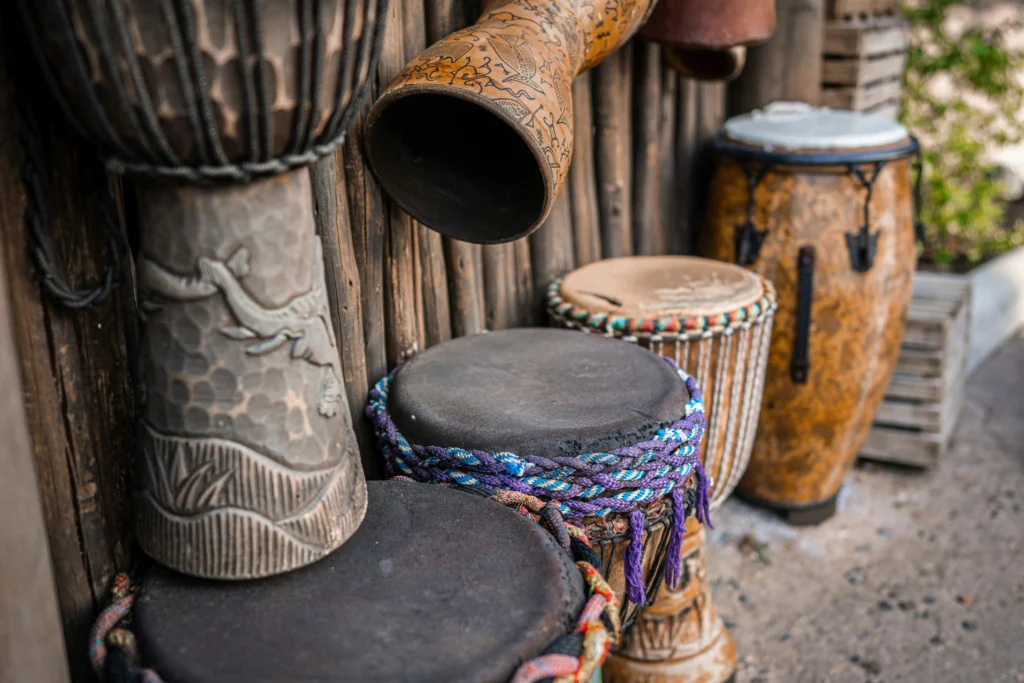
The atabaque, the friction drum known as puita And slit drums are the direct ancestors of indispensable rhythmic instruments such as the surdo and the cuíca.
The Brazilian cuíca, for example, is directly descended from drums used in hunting rituals and religious ceremonies in Central Africa.
The insertion of an internal bamboo rod attached to the animal hide allows the friction of a damp cloth to produce that characteristic growling sound.
This percussive lament has become the most distinctive element of timbral identity within the samba schools of Rio de Janeiro and São Paulo.
Below, we present a precise organological analysis that connects traditional African artifacts to their direct counterparts that today dictate the rhythm of artistic expressions in Brazilian territory:
| Ancient African Instrument | Predominant Region of Origin | Direct Descendant in Brazil | Brazilian Musical Genre Benefited |
| Puita / Kingwita | Angola and Congo | Cuica | Samba school parade and Choro |
| Gong / Claves | West Africa | Agogo | Maracatu and Afoxé |
| Ilú / Yoruba Drums | Nigeria and Benin | Atabaque | Candomblé and Samba de Roda |
| Kalimba / Sanza | Congo River Basin | Glass marimba | Folk and instrumental music |
Why does the agogô remain indispensable in sacred and secular celebrations?
the term agogo It derives directly from the Yoruba word for bell, being a metal idiophone originally composed of one or more welded conical bells.
This instrument serves the function of guiding the tempo of the entire percussion ensemble, establishing the fundamental rhythmic timeline.
Discover: What is balafon, the “African xylophone”?
In the ritual structures of Candomblé, the agogô breaks the silence to dictate the specific rhythm for each deity honored in the ceremonies.
Its physical stamina and acoustic brilliance in high frequencies ensured its rapid transition from sacred spaces to street carnival parades.
The ability to cut through dense sonic masses from dozens of bass drums has made the agogô the natural metronome of contemporary drum kits.
It represents the persistence of an ancestral mathematical language that organizes the sonic chaos of large urban public celebrations.
When did the marimba and stringed instruments gain prominence in scholarship?
The history of African instruments that inspired the music The Americas also encompasses complex systems of lamellophones and xylophones made of fine wood.
The marimba, consisting of wooden keys struck with mallets and gourd resonators, migrated from colonial festivities to classical concert halls.
Brazilian composers of the twentieth century incorporated these percussive textures into their symphonic pieces to evoke the colors and feelings of our mixed-race heritage.
This movement legitimized the technical complexity of instruments that the Eurocentric elite marginalized due to pure racial prejudice.
Read more: Marimba from Pará: how the instrument became a symbol of Amazonian music
Currently, the study of these acoustic matrices is integrated into advanced percussion curricula at leading music universities in Brazil and around the world.
Academic recognition crowns centuries of resistance by folk masters who have kept this sonic engineering alive through strictly oral tradition.
Percussion as a language of historical connection
Preserving the memory of instruments originating from the African continent is an act of responsibility towards the historical truth of our artistic development.
These technological tools made of wood, leather, and metal shaped the national aesthetic landscape, transforming Brazil into a globally recognized rhythmic powerhouse.
Read more: Review of Brazilian percussion instruments for beginners
Understanding this musical family tree allows new generations of artists to create innovative projects without losing touch with their deep ancestry.
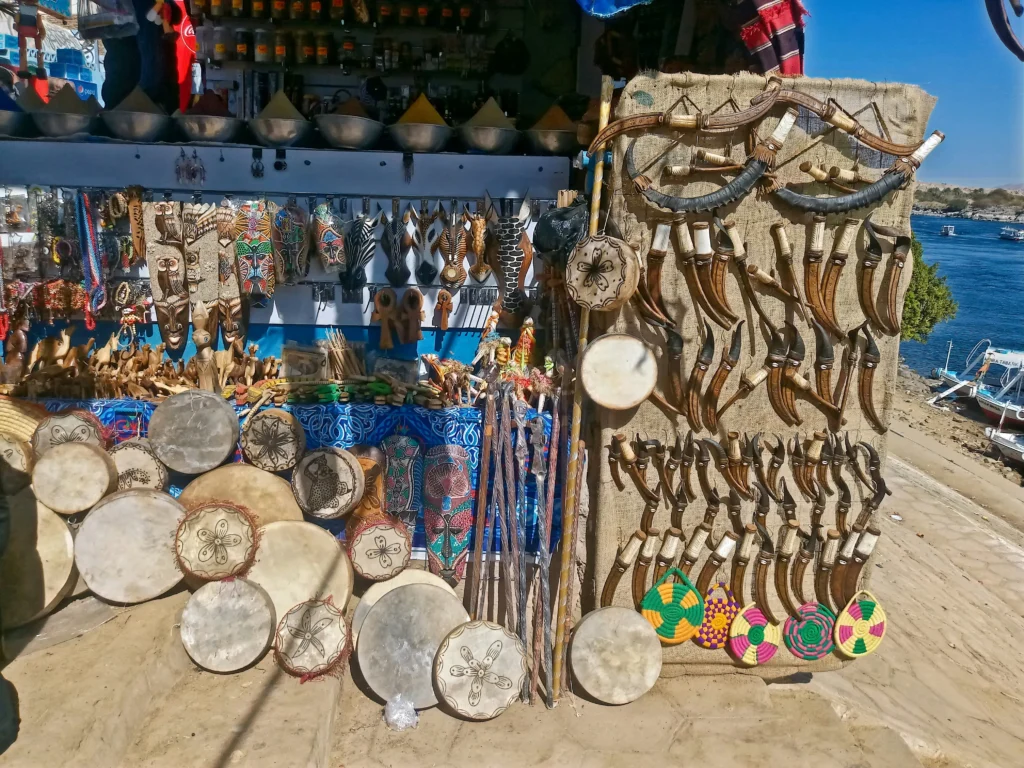
The pulse that echoes through the streets during popular festivals is living proof that the African past continues to reshape the future of our art.
To deepen your knowledge about cultural mapping and the preservation of these intangible traditions in the country, consult the specialized collections of... Palmares Cultural Foundation.
Frequently Asked Questions (FAQ)
What is the technical difference between the atabaque and regular drums?
The atabaque drum has a conical shape, is assembled with wedges or rope straps, and uses thick animal hides that are manually tensioned. This specific rustic construction prioritizes the resonance of mid and low frequencies, which are fundamental for conducting traditional religious rituals.
Was the berimbau used as a weapon in early capoeira?
No, the berimbau always acted as a tactical signaling and rhythmic conductor during the capoeira circles of enslaved people. It served to dictate the speed of movements and warn participants about the approach of overseers or police forces.
How does the cuíca manage to produce high and low sounds simultaneously?
The musician presses the outer skin of the drum with the fingers of one hand while rubbing the inner rod with the other. This variation in pressure alters the tension of the skin, allowing for the modulation of notes that mimic the human voice.
Was the agogô always originally made of metal?
In ancient Africa, the earliest models were made from dried coconuts or pieces of hollow wood tied together before the mastery of metallurgy. The evolution to iron and brass ensured greater sound volume and mechanical resistance for outdoor use.
