
The role of the Paulista tambu in current jongo circles.
Understanding The role of the Paulista tambu The Jongo and Batuque de Umbigada dances reveal the strength of Bantu ancestry in maintaining the cultural identity of southeastern Brazil in 2026.
Advertisements
This sacred instrument, carved from solid tree trunks, acts as the rhythmic and spiritual foundation of traditional communities, linking the colonial past to contemporary struggles for heritage recognition.
What is Paulista tambu and what is its origin?
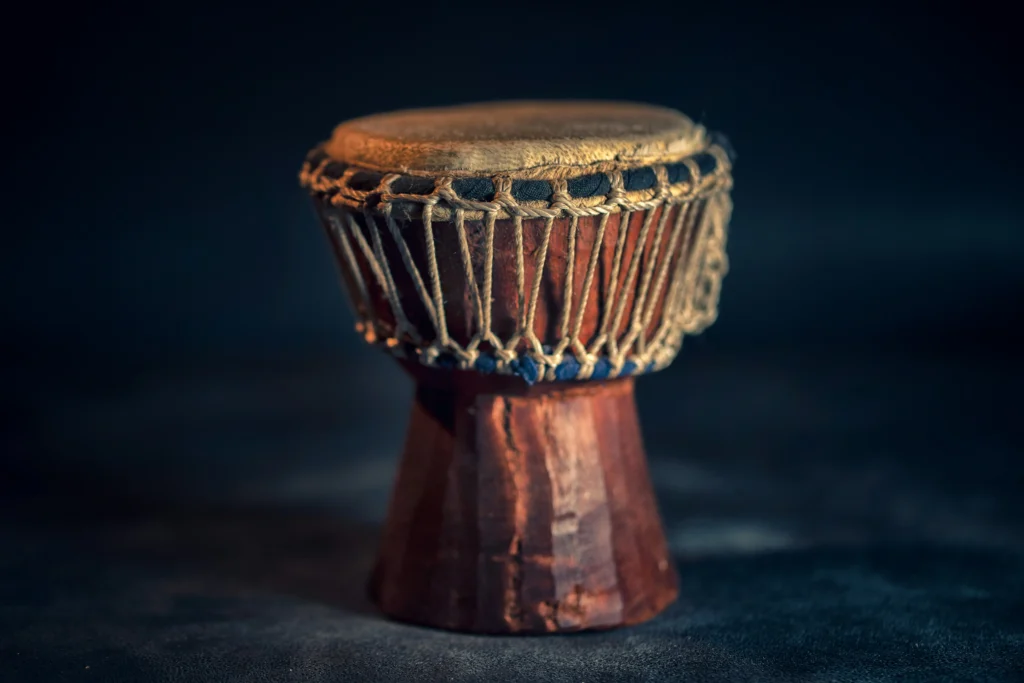
The instrument in question is a large drum, traditionally made from tree trunks that have been cut and hollowed out by hand, with an animal skin stretched across one end.
Their heritage dates directly back to the enslaved peoples of Bantu origin, who brought with them from regions such as Angola and Congo the knowledge of musical communication through low and resonant frequencies.
In the state of São Paulo, especially in the regions of Vale do Paraíba, Campinas, and Piracicaba, the artifact acquired very specific aesthetic features and fire-tuning techniques.
Advertisements
The longevity of the object stems from the religious respect with which the master healers and drummers treat the wood, considered a living being that harbors deities and ancestral collective memories.
How does the drum dictate the dynamics of the jongo circles?
The execution of a jongo circle depends entirely on the non-verbal communication established between the players of the large instrument, the singers, and the dancers positioned in the center.
The lead drummer dictates the tempo of the steps and responds directly to the points (sung metaphors) uttered by the older jongueiros, creating complex musical conversations in real time.
By means of firm beats in the center of the leather and sharp blows on the side wood (called guaiá or puíta), the musician alters the intensity of the sacred umbigada dance.
Thus, the The role of the Paulista tambu It establishes itself as the invisible guiding conductor of the celebration, whose deep and continuous pulse induces the communal trance and dictates the exact moments to greet the old black spirits.
Why is the preservation of this instrument part of heritage policies?
Safeguarding Afro-Brazilian cultural expressions has gained institutional urgency in the face of the risk of disappearance of the master artisans who possess the secrets of cutting and drying native woods.
The jongo of the Southeast, registered as national intangible heritage by National Institute of Historic and Artistic Heritage (IPHAN), encompasses the technical knowledge of crafting these ritual drums.
This federal legal endorsement strengthens community cultural centers, allowing young people from urban peripheries to access rhythmic teachings traditionally passed down orally by their elders.
What are the technical characteristics of the Paulista tambu?
Unlike the modern drums used in Afro-Brazilian religious practices, this regional drum has robust dimensions and a rustic tuning based on the direct heat of bonfires lit in the ritual circles.
The instrument's considerable weight requires the player to remain seated on the body of the instrument or lay it on the floor, using their hands and sometimes their heels to dampen the sound.
To structure and present the actual organology and cultural cataloging data mapped by the state culture departments, we have organized the physical and practical aspects in the descriptive table below:
| Technical Aspect | Traditional Configuration | Practical Function on the Wheel |
| Body Material | Tree trunks such as aroeira or timbaúva | Ensures characteristic low-frequency acoustic resonance. |
| Tuning System | Direct exposure of leather to the heat of a fire. | It stretches the animal skin to achieve the correct note. |
| Complementary Instrument | Candongueiro (smaller, higher-pitched drum) | It plays the rhythmic counterpoint and the marking intervals. |
| Average Size | Between 80 and 110 centimeters in length | It determines the depth of sound waves in space. |
This data demonstrates that each piece is unique, bearing the physical marks of the territory where the tree was harvested and the stylistic specificities of the artisan who carved it with a chisel.
Read more: How to use a tambourine in fast-paced samba with clean fills.
When and where is tambu used in present-day communities?
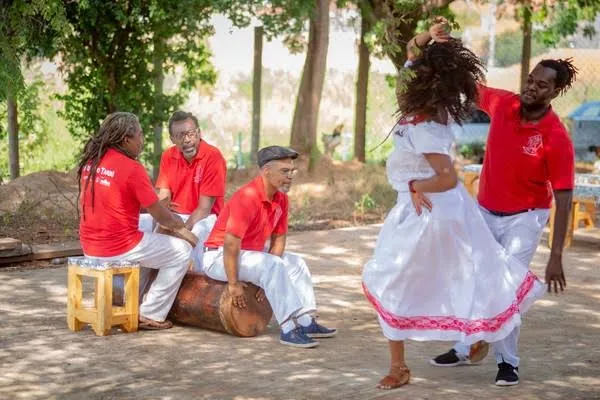
Contemporary jongo groups use the instruments both in traditional celebrations dedicated to Saint Benedict and Our Lady of the Rosary, and in public festivals of Black culture.
In recent decades, young Black people in São Paulo have given new meaning to the use of these rustic drums, incorporating them into urban stage performances, anti-racist education workshops at schools, and political demonstrations in the periphery.
Read more: How to tune a fandango viola from the Brazilian coast.
Regardless of the geographical location, the rules of traditional etiquette remain untouched, requiring anyone to ask permission from the elders and the sacred drum before beginning the drumming session.
By expanding the The role of the Paulista tambu Beyond the original rural quilombos, new generations ensure the survival of Afro-Paulista memory in the face of advancing historical amnesia and structural racism.
The perpetual echo of Afro-Brazilian cultural resistance.
The batuque rhythms of São Paulo demonstrate that traditional drums are not mere relics of the folkloric past, but rather living social technologies that keep urban communities integrated and strengthened.
Valuing the knowledge of the master builders and the mystical power of each beat on the leather represents an act of historical justice towards the population that laid the foundations of the Southeast region.
Learn more: African instruments that inspired Brazilian music.
To access in-depth academic research, historical documentary collections, and rare phonographic recordings about traditional Brazilian music, explore the digital collections of... National Library of Brazil.
FAQ (Frequently Asked Questions)
What is the basic difference between the tambu and the candongueiro?
The tambu is the larger drum, responsible for the bass sounds and the basic beat of the music, while the candongueiro is smaller, higher-pitched, and used for rhythmic flourishes and embellishments.
Can anyone play the Paulista tambu in a jongo circle?
Traditionally, prior training with masters and a request for spiritual permission from the ancestors of that specific community are required in order to sit and lead the drumming.
How does the fire tuning process work for this instrument?
Since the skin is attached to the wood without modern tuning pegs, the players bring the leather close to a fire so that the moisture comes out and the skin stretches, raising the pitch of the sound.
Does the jongo from São Paulo use instruments other than tree trunk drums?
Yes. In addition to the tambu and the candongueiro, the rodas often use bells tied to the dancers' shins or the guaiá, a metal rattle that helps keep time.
